
When factories talk about a ball mill for non-metallic minerals, they’re usually targeting a few core materials. Each has its own hardness, purity needs, and fineness targets depending on the downstream industry.
Quartz & Silica Sand (Ultra-fine ball mill for quartz)
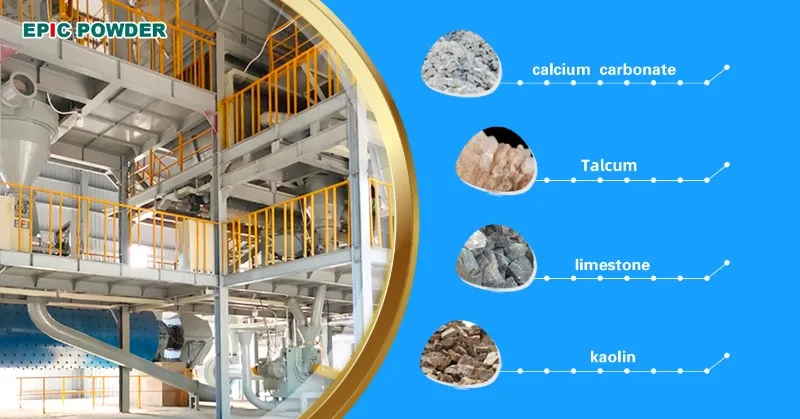
- Typical products: high-purity silica, glass sand, quartz powder
- Common fineness:
- Glass / foundry: 75–250 μm
- Solar glass / high-end glass: 45–120 μm
- Filler / functional quartz: D97 20–45 μm
- Electronic / high-purity: D97 5–20 μm with ceramic liner ball mill
- Key points: abrasive, high SiO₂, strict iron control. Often run with ceramic liners + alumina balls to protect whiteness and purity.
Takeaway: Quartz needs stable, low-contamination grinding and benefits most from ceramic liner ball mills.
Feldspar & Potassium Feldspar
- Used in: ceramics, glass, enamel, fillers
- Typical fineness:
- Ordinary ceramic body: 200–325 mesh (75–45 μm)
- High-grade tiles / sanitary ware: D97 20–38 μm
- Functional fillers: D97 10–25 μm
- Often processed with ball mill + classifier system for tight particle size control.
Takeaway: Feldspar focuses on 325 mesh and finer, with consistent PSD more important than extreme ultra-fine.
Calcite & Heavy Calcium Carbonate (Ball mill for calcite powder)
- Applications: plastics, paints, paper, rubber, cables
- Typical fineness by industry:
- General filler: 325 mesh (D97 ~44 μm)
- PVC / cable / rubber: D97 10–20 μm
- High-end coating grade: D97 5–10 μm
- Masterbatch / functional filler: D50 1–3 μm (often wet ball mill for calcium carbonate)
- For D97 10 μm ball mill projects, Epic Powder often uses ball mill + turbo classifier to lock in narrow PSD.
Takeaway: Heavy calcium is the classic case where a ball mill system can economically hit 5–20 μm at high capacity.
Talc (Talc ultra-fine grinding mill)
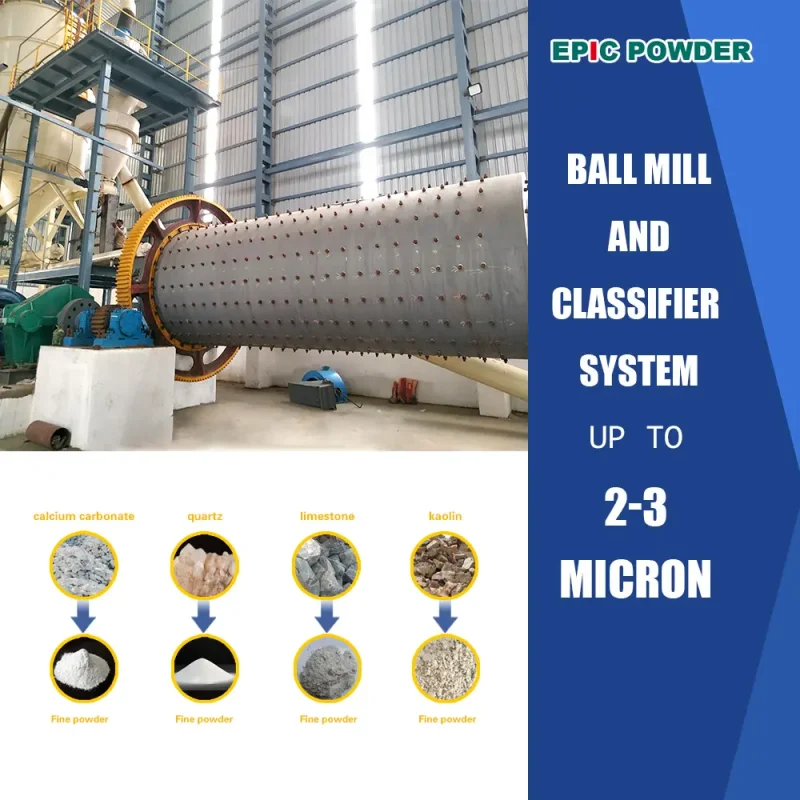
- Used in: plastic, paper, cosmetics, cables, coatings
- Typical fineness:
- Paper / low-end filler: D97 20–45 μm
- Plastic grade: D97 5–15 μm
- Cosmetics / high-end: D97 3–8 μm with very narrow distribution
- Talc is soft but sensitive to iron and heat, so ceramic liner ball mill + alumina balls is often preferred.
Takeaway: For talc, purity, whiteness, and lamellar structure retention matter more than just “smaller is better.”
Wollastonite
- Markets: plastics, friction materials, building materials
- Typical fineness:
- Construction / fillers: D97 20–45 μm
- Reinforced plastics: D97 10–20 μm, controlled aspect ratio
- Needs controlled over-grinding to keep needle-like shape.
Takeaway: Ball mills must be tuned to avoid destroying the acicular structure while still hitting target fineness.
Kaolin
- Used in: ceramics, paper coating, paints, cables
- Typical fineness:
- Ceramic body: 325–600 mesh (45–20 μm)
- Paper coating: D97 10–20 μm
- High-end coating / calcined kaolin: D97 5–10 μm
- Often processed in wet ball mills to protect plate structure and improve brightness.
Takeaway: Kaolin grinding is usually a balance between fineness, brightness, and dispersion performance.
Barite
- Core market: oil & gas drilling, chemicals, fillers
- Typical fineness:
- Drilling grade: majority <75 μm, often 200–325 mesh
- Chemical / filler grade: D97 10–25 μm
- For high-capacity, coarse barite, ball mills offer low kWh/t and stable throughput.
Takeaway: Barite doesn’t always need ultra-fine, but stable 200–325 mesh at low cost is where ball mills work well.
Mica
- Fields: insulation, coatings, plastics, welding rods
- Typical fineness:
- Pearlescent / decorative: D97 45–75 μm with good flakes
- Plastic / rubber filler: D97 20–45 μm
- The challenge is to grind without completely destroying the flake structure.
Takeaway: Low-impact, controlled ball milling preserves mica flakes better than aggressive impact mills.
Graphite
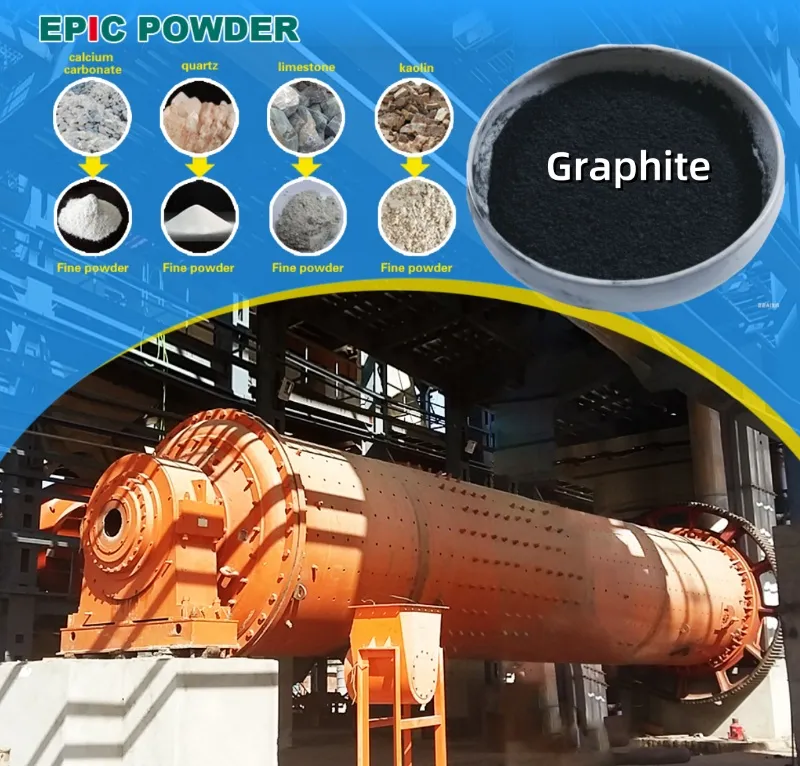
- Uses: batteries, refractories, lubricants, conductive fillers
- Typical fineness:
- Refractory: D97 45–75 μm
- Conductive fillers: D97 10–25 μm
- Battery / special graphite: often D50 5–10 μm, narrow PSD
- Needs low contamination; often processed in ceramic or high-purity steel-lined ball mills.
Takeaway: For graphite, particle shape and purity directly affect conductivity and battery performance.
Quick Fineness Snapshot (Typical D97 Ranges)
| Mineral | Typical D97 Range (μm) | Main Uses |
|---|---|---|
| Quartz / Silica sand | 5–75 μm | Glass, fillers, electronics |
| Feldspar / Potassium feldspar | 20–75 μm | Ceramics, glass, fillers |
| Calcite / Heavy calcium carbonate | 5–44 μm | Plastics, paints, paper, rubber |
| Talc | 3–45 μm | Plastic, paper, cosmetics |
| Wollastonite | 10–45 μm | Plastics, construction, friction |
| Kaolin | 5–45 μm | Ceramics, coatings, paper |
| Barite | 10–75 μm | Drilling, chemicals, fillers |
| Mica | 20–75 μm | Coatings, insulation, plastics |
| Graphite | 5–75 μm | Batteries, refractories, conductive |
Overall takeaway:
For most non-metallic mineral powder processing, the realistic industrial window is D97 5–75 μm. In this band, a well-designed ball mill for non-metallic minerals—especially with the right liners and media—delivers the best balance of capacity, cost per ton, and product stability. Epic Powder designs its ball mill systems precisely around these mineral types and fineness targets.
Why choose a ball mill for non-metallic minerals?
For most non-metallic mineral powder projects, a ball mill for non-metallic minerals is still the safest, most economical, and most flexible choice.
Ball mill vs other grinding mills
| Item | Ball Mill | Raymond Mill | Vertical Mill | Jet Mill |
|---|---|---|---|---|
| Product fineness | 5–75 μm, D97 stable with classifier | 60–325 mesh mainly | 10–60 μm typical | 1–20 μm, very fine |
| Capacity range | 0.5–100 t/h+ | Small–medium | Medium–large | Small–medium |
| Best for | Quartz, calcite, talc, GCC, kaolin, etc. | Coarse powders | Cement, slag, some GCC | Ultra-high value tiny-volume powders |
| Operating cost (per ton) | Low–medium (very competitive) | Low, but limited fineness | Medium–high | Highest (air + power cost) |
| CAPEX (initial investment) | Medium, modular | Low | High | High |
| Flexibility (materials, grade) | Very high (liners + media options) | Medium | Medium | Medium |
| Iron contamination control | Excellent with ceramic / PU liner | General | General | Good |
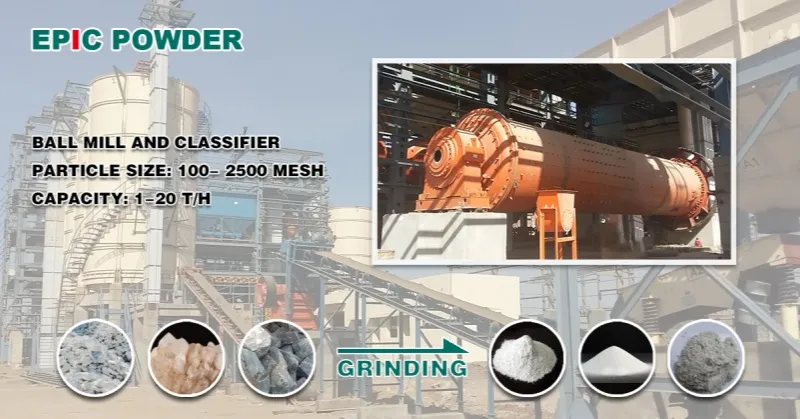
Core advantages of ball mills for non-metallic minerals
1. High capacity with fine powder
- Easy to scale from 0.5–100 t/h
- With classifier, can get D97 10 μm or even finer for calcite, talc, quartz, heavy calcium
- Ideal for coating grade GCC, plastic-grade talc, and ultra-fine quartz
2. Stable, mature, low-risk technology
- Structure is simple and proven worldwide
- Easy to run 24/7 with standard operators
- Spare parts and service are available in almost every market
3. Lowest total cost for 5–75 μm
- When target fineness is 5–75 μm, jet mill OPEX is usually 2–3x higher
- Vertical mills often cost more in CAPEX and maintenance for the same fineness window
- With the right liner and media, energy-saving ball mill design can cut kWh/t significantly
4. Flexible for purity and product portfolio
- Use ceramic liner ball mill + alumina balls for high-purity silica, feldspar, and electronic-grade materials
- Switch to rubber liner or steel balls when iron is allowed, cutting cost per ton
- One line can serve multiple products with small changeover
When is a ball mill the best economic choice?
Choose a non-metallic mineral grinding ball mill when:
- You need D97 5–75 μm (not nanoscale)
- Your capacity is > 1 t/h, especially 5–50 t/h
- You care about cost per ton, not just single-equipment efficiency
- You need to control contamination with ceramic liners and media
- You want a ball mill with classifier system to get sharp cut size and stable PSD
For projects where powder flow behavior also matters (like high-end quartz and GCC), pairing the mill with a good classifier and process design is key; our experience in optimizing superfine powder flowability helps avoid common issues like caking and poor fluidity, as discussed in our article on secrets of superfine powder flowability.
Key Technical Parameters for a Ball Mill for Non-Metallic Minerals
When you choose a ball mill for non-metallic minerals, a few core technical points decide if the project makes money or burns cash. I focus on these four every time: fineness, capacity, energy, and lining/media strategy.
Target Product Fineness (5–75 μm)
For non-metallic minerals, this is the real, industrially achievable range:
| Indicator | Typical Range | Application Examples |
|---|---|---|
| D50 | 5–40 μm | High-end fillers, coatings, plastic, paper |
| D97 | 10–75 μm | Quartz sand, calcite, talc, kaolin, barite |
Key points:
- For D97 10–20 μm (e.g. coating-grade calcite), ball mill + classifier is usually the most economical setup.
- For ultra-fine 5–10 μm D50, use ceramic liner + high-alumina media and stable classification (e.g. with an ITC series air classifier).
Capacity Range (0.5–100 t/h)
We design ball mills to cover both small and large plants:
| Scale | Capacity (t/h) | Typical Use Case |
|---|---|---|
| Lab / Pilot | 0.5–1 | Formula testing, new product trials |
| Small plant | 1–10 | Niche powders, regional markets |
| Standard | 10–50 | Mainstream fillers and functional powders |
| Large plant | 50–100 | Bulk quartz, heavy calcium, feldspar |
Tip: Don’t oversize. A “too big” mill raises energy cost, liner wear, and maintenance without real output gain.
Energy Consumption per Ton
This is the hidden profit killer if you ignore it.
| Material / Fineness | Typical Power Consumption* |
|---|---|
| Calcite D97 20–25 μm | ~18–22 kWh/t |
| Calcite D97 10 μm | ~25–32 kWh/t |
| Quartz D97 20 μm | ~28–35 kWh/t |
| Talc D97 10 μm | ~20–26 kWh/t |
Actual values depend on hardness, moisture, and classifier efficiency.
Ways we cut kWh/t:
- Frequency converter on main motor
- Correct ball charge filling rate
- Optimized circulating load of classifier
- Regular inspection of grinding efficiency issues (see our guide on low ball mill grinding efficiency factors).
Ball mill liner materials – the core of long-term performance
For non-metallic minerals, the liner choice decides your real cost per ton, not just the mill price. Here’s how I look at it.
Main ball mill liner types
High manganese steel liners
Best when some iron contamination is acceptable (e.g. barite, some calcite, general fillers).
- Pros:
- Strong impact resistance
- Handles large feed and high load
- Lower purchase price
- Cons:
- Iron contamination – not suitable for high-purity quartz, silica, talc, kaolin, etc.
- Higher noise, heavier weight
- Typical life: 8–18 months depending on hardness, feed size, and operating hours.
Ceramic liners (alumina / high-alumina) – best for high-purity & ultra-fine grinding
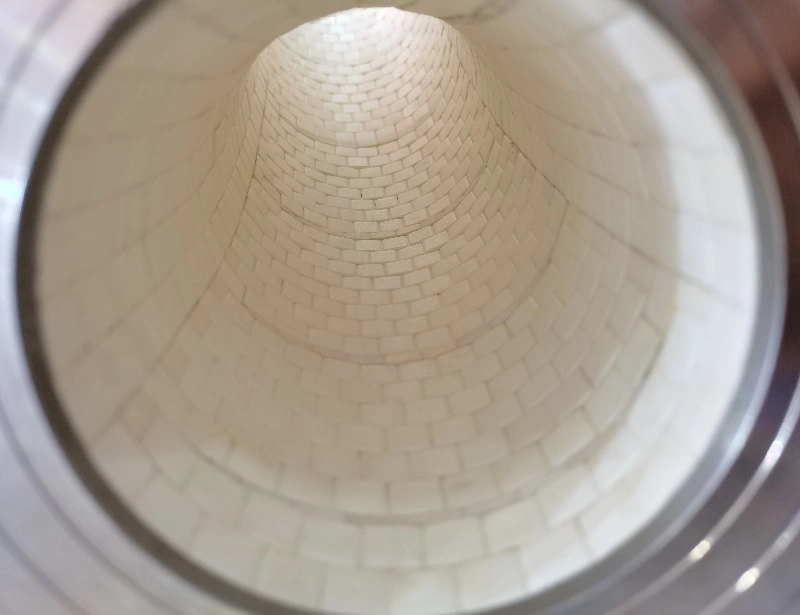
For ultra-fine ball mills for quartz, silica, feldspar, talc, kaolin, and high-grade calcium carbonate, ceramic liners are usually the most economical long-term choice.
- Pros:
- Ultra-low contamination – keeps Fe, Mn, Cr below tight limits
- Very strong wear resistance in fine grinding (D97 5–20 μm)
- Stable performance for 24/7 high-precision production
- Cons:
- Higher initial cost
- Needs correct media and loading to avoid cracking
- Typical life: 3–8 years, and often much longer in closed-circuit systems with fine feed and proper design.
For high-end calcium carbonate coating lines, we often pair ceramic liner ball mills with dedicated coating equipment such as a three-roller coating machine to keep both purity and surface treatment quality under tight control.
Grinding media selection for non‑metallic minerals
Choosing the right grinding media is what decides purity, fineness, and cost per ton in a ball mill for non‑metallic minerals.
Alumina balls (92%, 95%)
For most quartz, feldspar, calcite, talc, kaolin, and heavy calcium projects, I normally push customers to high‑alumina balls:
- 92% alumina balls
- Good balance of price vs life
- Suitable for D97 10–25 μm products
- Widely used in general non-metallic mineral grinding
- 95% alumina balls
- Higher hardness, lower wear
- Better for ultra-fine ball mill lines targeting D97 ≤ 10 μm / 10 micron ball mill
- Lower contamination – ideal for high-whiteness calcium carbonate, ceramics, fillers
When to use alumina balls:
- You want low iron contamination
- You run a ceramic liner ball mill
- You need stable fineness and long media life with reasonable cost
Zirconia beads
Zirconia is for customers that care more about purity and micron-level fineness than media cost:
- Extremely low wear, ideal for sub‑10 μm and 5–7 μm D97 products
- Perfect for high-value minerals (talc for plastics, high-purity silica, battery materials)
- Often used in wet ball mill for calcium carbonate when brightness and gloss matter
Use zirconia beads when:
- You target D97 5–8 μm or finer
- Product goes into plastics, paints, electronics, or high-end functional fillers
- Any trace iron or color change is unacceptable
High‑chrome steel balls
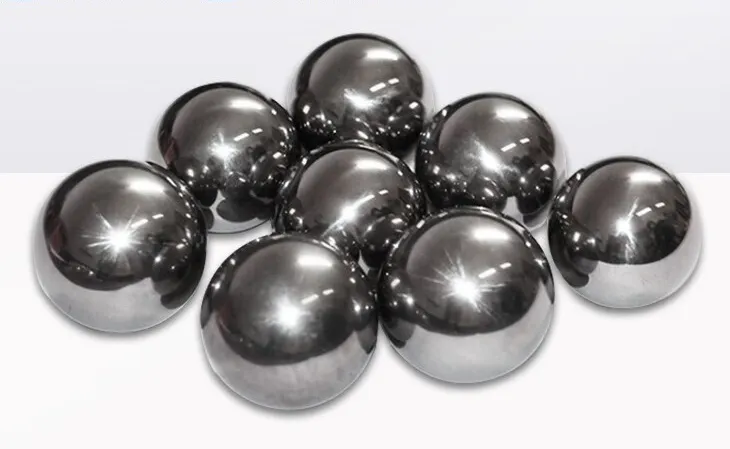
High‑chrome media is still the most cost‑effective for some non‑metallic applications where iron is acceptable:
- High density = good impact grinding, higher capacity
- Lowest media cost per ton of throughput
- Suitable for barite, some graphite, and minerals going into cement or construction-grade products
Only choose high‑chrome steel balls when:
- Iron contamination is allowed
- You don’t need ultra-high brightness or whiteness
- You focus more on capacity and low grinding cost
How media affects purity and fineness
The grinding media directly changes:
- Purity & contamination
- Steel balls introduce Fe – OK for some, a disaster for others
- Alumina and zirconia keep Fe, Cr, Ni contamination extremely low
- Achievable fineness
- Harder, denser media → easier to hit D97 5–10 μm
- For a D97 10 μm ball mill line, we usually pair ceramic liner + 95% alumina or zirconia
- Operating cost
- Steel: low purchase cost, high contamination risk
- 92% alumina: best overall ROI for most non-metallic mineral powder processing
- Zirconia: premium, but pays off in high-end, high-margin products
If you’re also processing gypsum-based products, it’s worth comparing ball-milling media strategies with our dedicated setups for non-metallic minerals and gypsum mineral processing to see where purity and cost targets line up.
Wet vs Dry Ball Milling for Non-Metallic Minerals
When wet ball milling is the better choice
Wet ball mill systems are usually my first choice when you need:
- High fineness with narrow PSD (e.g. D97 5–10 μm for calcium carbonate, talc, kaolin)
- High product purity – less dust, better control of temperature and contamination
- Slurry-based downstream use – like slurry for coating, papermaking, or wet mineral processing
Typical wet applications:
- Wet ball mill for calcium carbonate / heavy calcium before drying and classifier
- Alumina ball mill with ceramic liner for ultra-clean quartz, feldspar, and kaolin
- Talc ultra-fine grinding mill setups where 5–10 μm plastic-grade talc is required
Pros in real production:
- Better grinding efficiency at sub-10 μm
- Lower dust and easier environmental control
- Stable operation for 24/7 continuous production
When dry ball mill + classifier is more economical
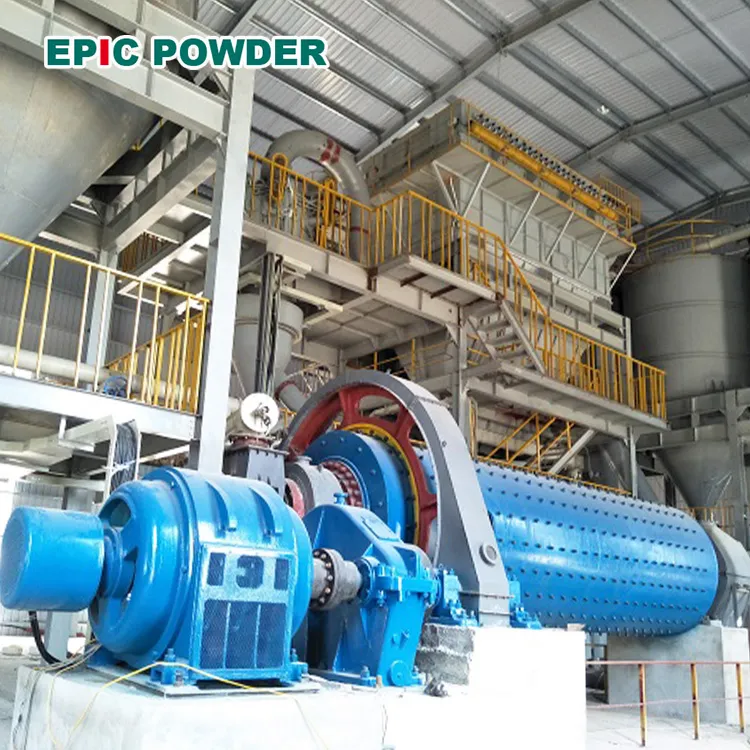
Dry grinding with a ball mill + classifier system is usually the best economic choice when:
- Target fineness is D97 10–75 μm
- Final product is sold as dry powder (fillers, functional powders, masterbatch)
- You want lower drying cost and a simpler plant layout
Typical dry applications:
- Ultra-fine ball mill for quartz / silica sand: 325–1250 mesh
- Ball mill for calcite powder: D97 10–20 μm coating grade
- Ball mill for heavy calcium: general filler from D97 15–30 μm
A well-matched classifier is critical. Media size and loading also strongly affect fineness, as explained in this guide on how grinding balls determine powder fineness: grinding media vs product size control.
Real application cases of ball mill for non-metallic minerals
20 t/h ultra-fine ball mill for quartz sand (1250 mesh)
For a Southeast Asian customer producing high-purity silica, we designed an ultra-fine ball mill for quartz with a ceramic liner ball mill + classifier system:
- Capacity: 20 t/h
- Product fineness: 1250 mesh (D97 ≈ 10 μm)
- Configuration: ceramic liner + alumina ball mill media to keep Fe₂O₃ ultra-low
- Result: Stable PSD, narrow cut, high whiteness, and >98% yield in target size
You can see how we control particle size curve in similar quartz ball mill grinding applications where a tighter distribution significantly improves downstream performance.
10 t/h ball mill for calcite powder (D97 10 μm, coating grade)
For a Middle East calcium carbonate plant, we supplied a ball mill for calcite powder aimed at coating-grade GCC:
- Capacity: 10 t/h
- Fineness: D97 10 μm, D50 around 3–4 μm
- Process: Dry ball mill with classifier, followed by stearic acid coating
- Media: High-alumina balls to avoid yellowing and keep brightness > 95
Compared to their old mill, the new line cut specific energy by ~18% and reduced over-grinding, giving a much smoother PSD curve in the 2–10 μm range.
8 t/h talc ultra-fine grinding mill (5 μm plastic grade)
For a European plastics filler producer, we built an 8 t/h talc ultra-fine grinding mill line:
- Capacity: 8 t/h
- Fineness: D50 ≈ 5 μm for high-end plastic masterbatch
- Mill type: Wet ball mill for talc, then drying and classification
- Liner & media: Ceramic liner + zirconia beads to keep maximum whiteness and low abrasion
The before/after particle size distribution showed:
- Less coarse tail >20 μm
- Higher proportion in the 3–8 μm “sweet spot” for impact strength and smooth surface in plastic parts.
If you care about PSD shape and efficiency, this type of setup is exactly what we optimize in our ball mill with classifier systems, similar to the approach discussed in our article on improving ball mill particle size distribution control.
How to Choose a Reliable Ball Mill Supplier in 2026?
Picking the right ball mill supplier for non‑metallic minerals is a cost decision, not just a price decision. Here’s how I would shortlist in 2026.
9 Key Evaluation Criteria (Quick Checklist)
| # | What to Check | What It Means for You |
|---|---|---|
| 1 | Real factory, not a trader | On-site audit, production lines, CNC machining, welding, dynamic balancing. |
| 2 | Test center & lab | Can run your quartz, calcite, talc, kaolin, graphite and give PSD + energy data before purchase. |
| 3 | Non‑metallic mineral experience | At least 5–10 years + real cases for D97 5–75 μm ball mill with classifier systems. |
| 4 | Process capability, not just equipment | Can design full flow: feeding–grinding–classification–dust collection–packing–automation. |
| 5 | Global after‑sales network | Local installation, remote support, fast spare parts, clear response time. |
| 6 | Energy‑saving design | Variable-frequency drives, optimized internals, proven kWh/t reductions. |
| 7 | Liner & media engineering | Can match ceramic / rubber / steel liners |

“Thanks for reading. I hope my article helps. Please leave a comment down below. You may also contact Zelda online customer representative for any further inquiries.”
— Posted by Emily Chen
 English
  العربية
  Español
  Português
  Français
  Türkçe
  Tiếng Việt
  Русский