
In 2026, the demand for ultra-fine non-metallic mineral powders continues to grow strongly, driven by industries such as construction, plastics, paints, cosmetics, and electronics. These sectors require powders with precise particle size distributions. Many applications target D97 fineness between 3μm and 45μm to achieve superior product performance. Despite advances in milling technology, the ball mill combined with an air classifier remains the mainstream solution for ultra-fine powder production.
The ball mill + classification closed-circuit system offers critical advantages over vertical mills and jet mills for many materials and fineness ranges.
- Broad particle size control
- Lower energy consumption for certain fineness
- Material versatility
- Consistent product quality
- Easier scale-up and customization
While vertical mills and jet mills offer unique strengths for ultra-fine and nano-scale powders, the ball mill + air classifier system remains the workhorse technology for non-metallic mineral powder production in 2026. Its robustness, energy efficiency, and precise control over particle size distribution make it ideal for mainstream micronization.
At Epic Powder, we continue to evolve this technology. We integrate the latest classifier designs and energy-saving solutions to meet the growing global demand for high-quality ultra-fine non-metallic mineral powders.
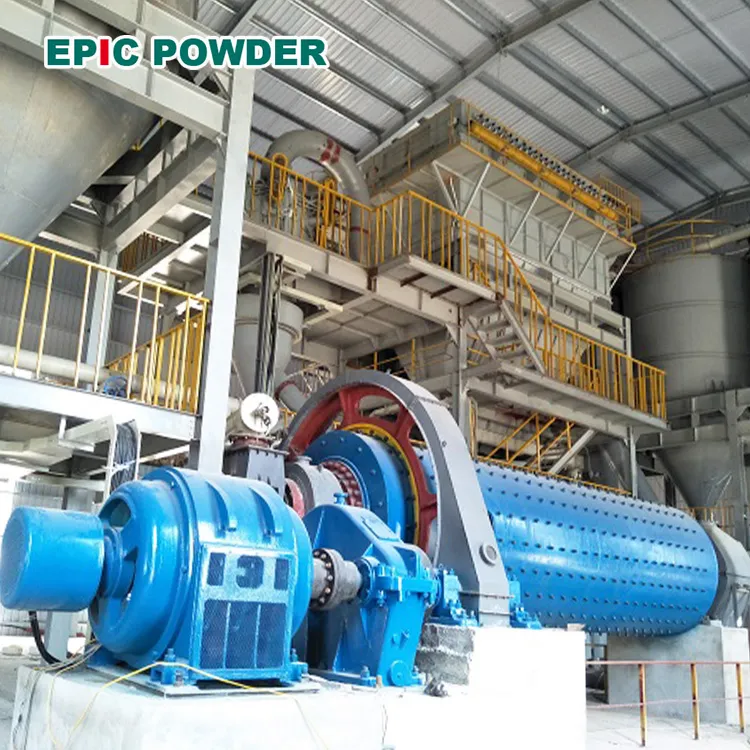
Core Principle of Ball Mill +Air Classifier Closed-Circuit System
The ball mill and classification system operate together in a closed loop to ensure consistent and efficient ultra-fine powder production. Inside the ball mill, raw materials are ground by rotating steel or ceramic media until they reach the target particle size. The ground material then passes into the air classifier, which serves as the key control point for particle size distribution.
The high-efficiency dynamic air classifier separates fine particles from coarse ones using adjustable rotating blades and controlled airflow. Fine particles that meet the set size criteria flow to the finished product stream. Oversized particles return to the ball mill for re-grinding.
This return loop maintains a stable particle size range and enhances grinding efficiency. Classification logic is based on controlling the classifier speed and airflow to achieve precise D97 fineness targets. These typically range from 5μm to 45μm in non-metallic mineral powder production. By continuously circulating material between the mill and classifier, the system minimizes over-grinding, reduces energy consumption, and ensures a narrow particle size distribution—an essential factor for high-quality products.
Typical Process Flow Diagram
The typical ball mill and classification production line follows a clear and efficient sequence designed for precise ultra-fine powder production:
- Raw material feeding: Consistent, controlled feeding ensures steady throughput.
- Ball mill grinding: Materials enter the ball mill, where grinding media reduce particle size through impact and attrition.
- Primary classification: A high-efficiency air classifier separates coarse and fine particles. Coarse particles return to the mill for regrinding.
- Secondary fine classification: A second-stage classifier further refines particle size, improving uniformity and fineness control (typically within the D97 range).
- Dust collection: Pulse dust collectors capture airborne fines, reduce product loss, and maintain a clean environment.
- Finished product packaging: Ultra-fine powders are conveyed to automated packing stations for safe storage and shipment.
An optional large-particle returning system can be added to recirculate oversized materials directly to the mill. This increases system efficiency and overall yield.
Key Equipment Selection and Latest Models (2026)
Choosing the right equipment is crucial for an efficient ball mill and classification production line. In 2026, we see several updated options tailored for different needs:
Ball Mill Types
- Continuous vs Batch: Continuous mills are preferred for steady, large-scale production, while batch mills suit smaller, flexible outputs.
- Wet vs Dry Grinding: Wet grinding improves fine particle dispersion and reduces dust but requires drying afterward. Dry grinding is simpler and energy-saving for moisture-sensitive materials.
- Liner Materials: Ceramic liners offer higher wear resistance and longer service life, especially for abrasive minerals. High-alumina liners remain a cost-effective, durable choice for less abrasive applications.
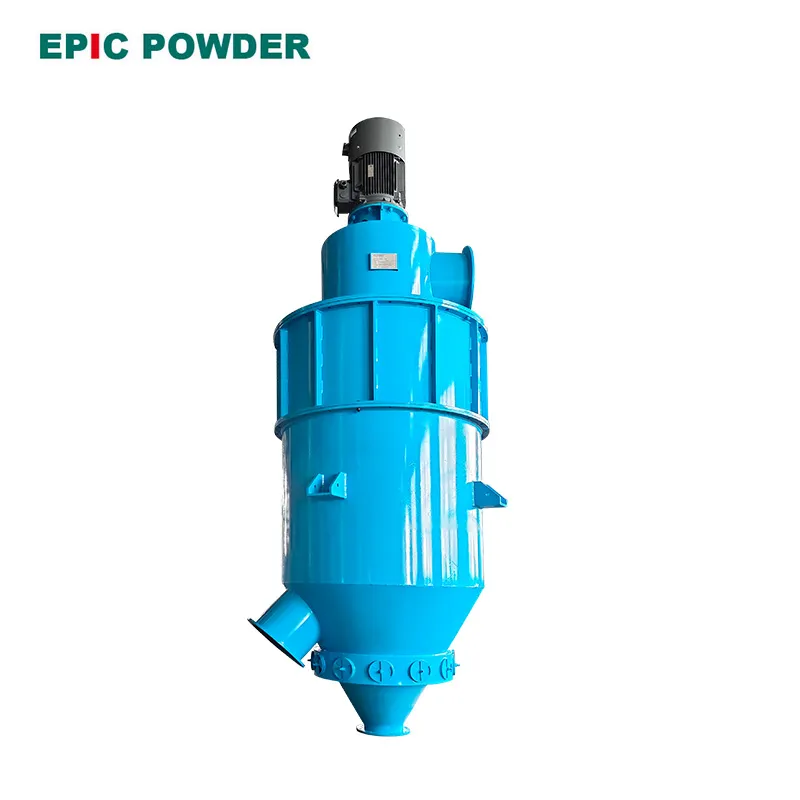
- Single-Rotor vs Multi-Rotor: Single-rotor classifiers are reliable for standard fineness control, but multi-rotor classifiers provide sharper cut points and better particle size separation, which is great for ultra-fine powders.
- Turbine Classifier Advances: The latest turbine classifiers enhance air flow control, improving classification efficiency and reducing energy consumption. These updates help maintain consistent D97 fineness with lower particle size deviations.
Auxiliary Equipment
- Bucket Elevator and Powder Conveyor: Designed to handle various powder characteristics gently and efficiently, minimizing breakage or segregation.
- Pulse Dust Collector: Essential for maintaining clean plant conditions and ensuring environmental compliance, especially in non-metallic mineral powder processing.
- Automatic Packing Machine: Streamlines packaging, reduces labor costs, and maintains product quality by preventing contamination and moisture ingress.
Selecting the best combination of these equipment types depends on your material properties, production capacity, and required powder fineness. For detailed insights on ball mill grinding efficiency and liner wear, check our expert analysis on common efficiency factors and solutions.
Production Capacity and Fineness Range Table
In 2026, the ball mill and classification production lines from Epic Powder cover a wide range of capacities to suit different plant sizes and product requirements. Common configurations include:
| Capacity (t/h) | Typical Fineness D97 (μm) | Energy Consumption (kWh/t) | Notes |
|---|---|---|---|
| 1 – 3 | 5 – 20 | 25 – 35 | Small-scale, high precision |
| 3 – 10 | 10 – 30 | 20 – 30 | Flexible mid-range lines |
| 10 – 20 | 15 – 35 | 18 – 28 | Popular for general use |
| 20 – 50 | 20 – 40 | 15 – 25 | Heavy calcium carbonate lines |
| 50 – 100 | 30 – 45 | 12 – 22 | Large-scale production |
The system typically controls particle size within the D97 5μm to 45μm range, meeting the production requirements of ultrafine non-metallic mineral powders such as talc, quartz, and calcium carbonate. Due to optimized grinding and classification efficiency in large-scale systems, the energy consumption per ton usually decreases as production capacity increases.
If you require cosmetic-grade or high-purity products, the finer end of the particle size spectrum (5–10μm) can be achieved through advanced classification technology and proper process control. For bulk minerals with lower fineness targets, using a coarser grinding approach helps optimize energy consumption.
This data reflects real case studies from Epic Powder production lines and helps you select the appropriate scale and expected output for your specific powder production needs.
Real Cases
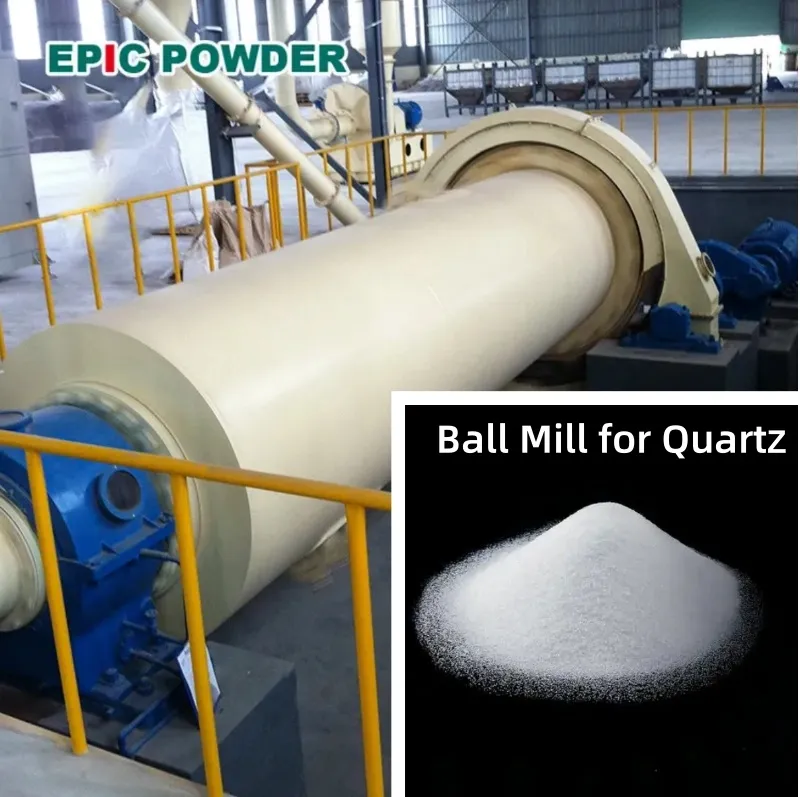
Here are some real-world examples of ball mill+ air classifier production lines tailored to different materials and fineness requirements:
20 t/h Heavy Calcium Carbonate Line (D97 10μm):
This setup delivers high throughput while maintaining a stable 10-micron particle size distribution. It’s ideal for industries requiring ultra-fine calcium carbonate powder with consistent quality. For more details on similar installations, check our calcium carbonate grinding plant solutions.
12 t/h Talc Micronization Line (5–8μm Cosmetic Grade):
Designed for cosmetic applications where smoothness and purity matter, this line achieves fine talc powder with a narrow D97 particle size range. Its closed-circuit design ensures minimal contamination and stable process control.
8 t/h Quartz Powder Grinding System (3–5μm High-Purity Line):
Producing extremely fine quartz powder for electronics and specialty applications, this system emphasizes ultra-clean operation and precision classification to meet strict purity and fineness standards.
30 t/h Wollastonite Needle-like Powder Retention Line:
This line specializes in retaining the needle-like structure of wollastonite particles while achieving uniform fineness. It’s perfect for reinforcing materials needing unique physical properties.
Each project highlights the flexibility of the ball mill air classifier system to handle different minerals and fineness targets while optimizing energy efficiency and product quality.
Common Problems and Solutions
Over-grinding and Low Yield
When the ball mill runs too long or the classifier is not properly adjusted, the powder may become too fine, reducing product yield.
Solutions include:
- Adjust classifier speed or vane angle to control cut size.
- Monitor grinding time and reduce it if particles become too fine.
- Select appropriate grinding media size and quantity for the required fineness.
Classifier Blockage and Reduced Efficiency
Dust accumulation or oversized particles may reduce airflow and accuracy.
To avoid this:
- Install an effective dust collection system upstream.
- Clean classifier rotors and air channels regularly.
- Ensure raw material feed size stays within recommended limits.
Ball Mill Liner and Grinding Media Wear
Liners and beads wear faster when grinding harder materials or under improper operation.
To extend service life:
- Choose high-quality liners such as ceramic or high-alumina.
- Use matched grinding media like zirconia beads for ultra-fine ranges.
- Monitor mill load, speed, and temperature to prevent overheating.
Epic Powder
Epic Powder, 20+ years of work experience in the ultrafine powder industry. Actively promote the future development of ultra-fine powder, focusing on crushing, grinding, classifying and modification process of ultra-fine powder. Contact us for a free consultation and customized solutions! Our expert team is dedicated to providing high-quality products and services to maximize the value of your powder processing. Epic Powder—Your Trusted Powder Processing Expert !

“Thanks for reading. I hope my article helps. Please leave a comment down below. You may also contact Zelda online customer representative for any further inquiries.”
— Posted by Emily Chen
 English
  العربية
  Español
  Português
  Français
  Türkçe
  Tiếng Việt
  Русский