
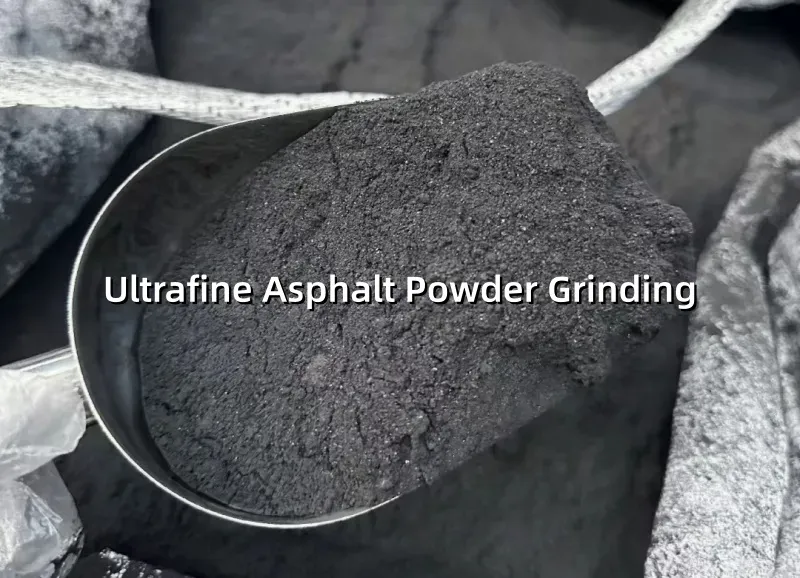
Ultrafine asphalt powder, often derived from natural asphaltites like Gilsonite (also known as uintaite or natural bitumen), refers to asphalt ground to very fine particle sizes, typically in the micron or submicron range (e.g., D50 < 10 μm, with some applications requiring < 5 μm or even submicron levels). This powder is widely used in industries such as drilling fluids (for fluid loss control and shale stabilization), asphalt modification for roads, paints, inks, sealants, and foundry applications. The fineness enhances properties like dispersion, solubility, surface area, and performance in composites, improving binding, anti-friction, and thermal stability.
Achieving ultrafine sizes is challenging due to asphalt’s brittle yet sometimes sticky or heat-sensitive nature, which can lead to agglomeration, contamination, or excessive energy use during grinding.
How Ball Mills Work for Powder Grinding
Ball mills are mechanical grinding devices that use rotating cylinders filled with grinding media (e.g., steel, ceramic, or zirconia balls) to impact, shear, and attrite materials. As the mill rotates, balls tumble and crush the feed material, reducing particle size through repeated collisions.
- Standard ball mills: Effective for coarse to medium grinding (down to ~10-100 μm).
- High-energy variants (e.g., planetary ball mills or stirred ball mills): Achieve finer results by increasing energy input, with speeds up to 2,000 rpm and smaller media, potentially reaching submicron levels (e.g., 350-500 nm in lab settings with grinding aids).
- With classifiers: Closed-circuit systems can produce finer distributions, sometimes down to D50 < 2 μm for hard materials.
Ball mills are versatile, cost-effective for large-scale production, and commonly used for minerals, fly ash, and some bituminous materials.
Limitations of Ball Mills for Ultrafine Asphalt Powder
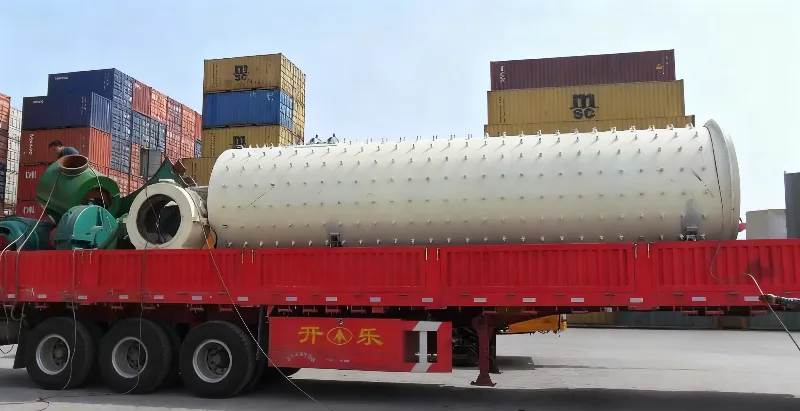
While ball mills can produce fine asphalt powder, they are generally not the most effective for true ultrafine or submicron scales, especially for asphalt:
- Particle size limits: Conventional ball mills struggle below 10 μm efficiently; high-energy versions may reach ~1-5 μm, but submicron (e.g., <1 μm) is rare and energy-intensive without additives. Asphalt’s properties can cause sticking, heat buildup (softening asphalt), or agglomeration.
- Contamination risk: Metal from balls or liners can introduce impurities, undesirable for high-purity applications like drilling fluids.
- Energy inefficiency: Ultrafine grinding requires prolonged milling, high energy consumption, and potential overheating, leading to material degradation.
- Heat generation: Asphalt softens at elevated temperatures, making dry grinding problematic; wet grinding may be needed but adds drying steps.
- Production of natural asphalt powder: Often involves mechanical pulverizing or milling of lumps, but for micronized grades (e.g., 200 mesh or finer), specialized processes are preferred over standard ball mills.
In practice, ball mills are used for related materials (e.g., fly ash in asphalt mixes), but for asphalt itself, they fall short compared to alternatives.
Superior Alternatives: Jet Mills for Ultrafine Grinding
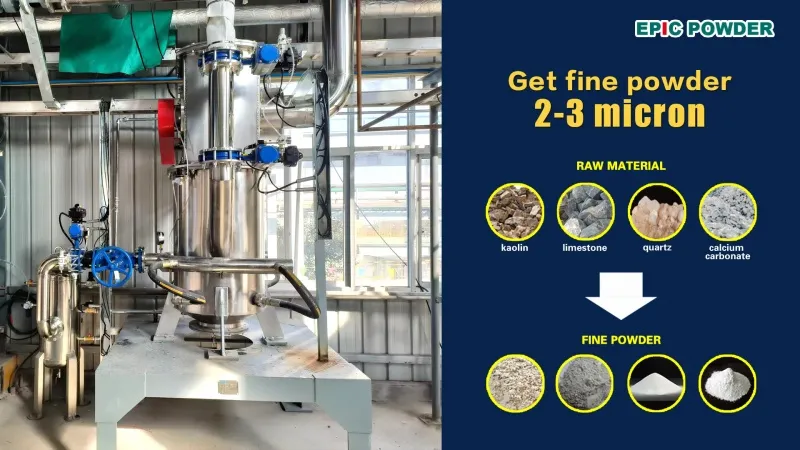
Air jet mills (fluidized bed or spiral jet mills) are the preferred method for ultrafine asphalt powder:
- Mechanism: High-speed compressed air/gas accelerates particles, causing self-collision (no media, no contamination). This produces narrow distributions down to 1-10 μm average, easily achieving submicron for friable materials like asphalt.
- Advantages:
- No heat buildup (ideal for heat-sensitive asphalt).
- High purity (no metal contact).
- Efficient for brittle/crystaline materials; Gilsonite and similar asphaltites are highly suitable.
- Common in commercial production: Micronized Gilsonite powder (e.g., <75 μm with 95% fines) is often made via jet milling or advanced pulverization.
- Examples: Jet mills routinely produce drilling-grade asphalt powders with excellent dispersion and stability.
Other methods include cryogenic grinding (for sticky materials) or high-pressure homogenization, but jet mills dominate for scale and quality.
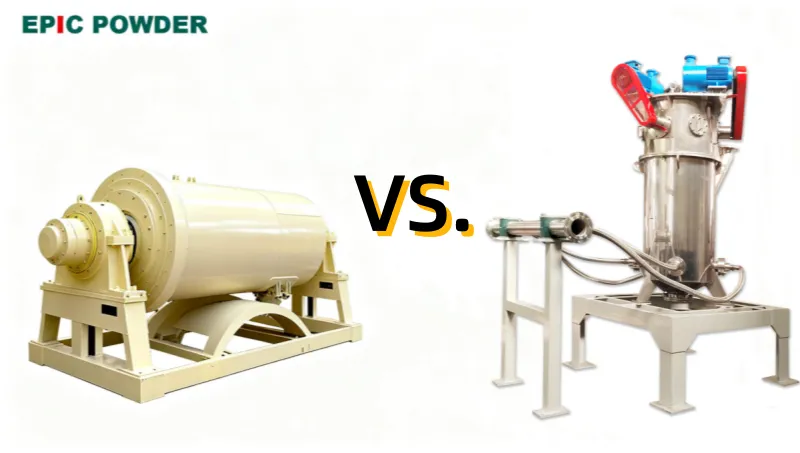
Comparison: Ball Mill vs. Jet Mill for Asphalt Powder
| Aspect | Ball Mill | Jet Mill (Air Jet Mill) |
|---|---|---|
| Typical Particle Size | 5-100 μm (submicron possible but inefficient) | 1-10 μm (submicron common) |
| Contamination | Possible (from media/liners) | None (particle-on-particle) |
| Heat Generation | High (risk of softening asphalt) | Low (cooling effect from air expansion) |
| Energy Efficiency | Lower for ultrafine | Higher for fine/submicron |
| Suitability for Asphalt | Moderate (better for coarse) | Excellent (standard for micronized Gilsonite) |
| Scale & Cost | Good for large volume, lower initial cost | Higher efficiency, but compressed air costs |
Conclusion
Ball mills can produce fine asphalt powder and are effective for medium-scale grinding or related materials, but they are not ideal for achieving true ultrafine (micron to submicron) asphalt powder due to limitations in fineness, contamination risks, heat issues, and energy demands. For high-performance applications requiring precise, contamination-free ultrafine particles, jet mills are far more effective and widely used in industry. If your goal is ultrafine asphalt powder (e.g., for advanced drilling fluids or modified asphalt), consider jet milling technology for superior results. Advances in high-energy ball mills may bridge the gap in some cases, but jet mills remain the gold standard.

“Thanks for reading. I hope my article helps. Please leave a comment down below. You may also contact Zelda online customer representative for any further inquiries.”
— Posted by Emily Chen
 English
  العربية
  Español
  Português
  Français
  Türkçe
  Tiếng Việt
  Русский