
Understanding the Physics: Why Fineness Equals Activity. Achieving higher fineness in slag ball mill grinding directly enhances the slag’s hydraulic reactivity index. This is because grinding reduces particle size distribution (PSD), increasing surface area and exposing more reactive sites on ground granulated blast-furnace slag (GGBS). The Blaine specific surface area, often targeted above 4500 cm²/g for effective slag activation, is a key measure here.
Particle Size Distribution (PSD)
PSD plays a crucial role in slag reactivity. A narrow PSD with a higher proportion of fine particles accelerates hydration reactions, boosting early strength development in slag cement activation. Optimized grinding shifts PSD towards finer particles without excessive over-grinding, which can reduce mill output and increase specific energy consumption (kWh/t).
Breaking the Glass Structure
Slag glasses are inherently amorphous, making them less reactive unless their glassy structure is fractured. Effective ball mill grinding disrupts this structure, increasing surface defects and creating fresh reactive surfaces. This process, known as attrition, is vital to improving slag’s cementitious properties.
The Wall Effect
During ball mill grinding, the “wall effect” can reduce grinding efficiency. This occurs when grinding media and slag particles accumulate near the mill liners, preventing effective impact and grinding. Managing mill speed, filling rate, and liner design helps minimize this effect, ensuring uniform particle breakage and consistent PSD.
By understanding these physical principles—fineness linked to activity, targeted PSD, glass structure breaking, and mitigating the wall effect—you can optimize slag ball mill grinding to produce highly reactive, fine slag powders that meet industry demands efficiently.
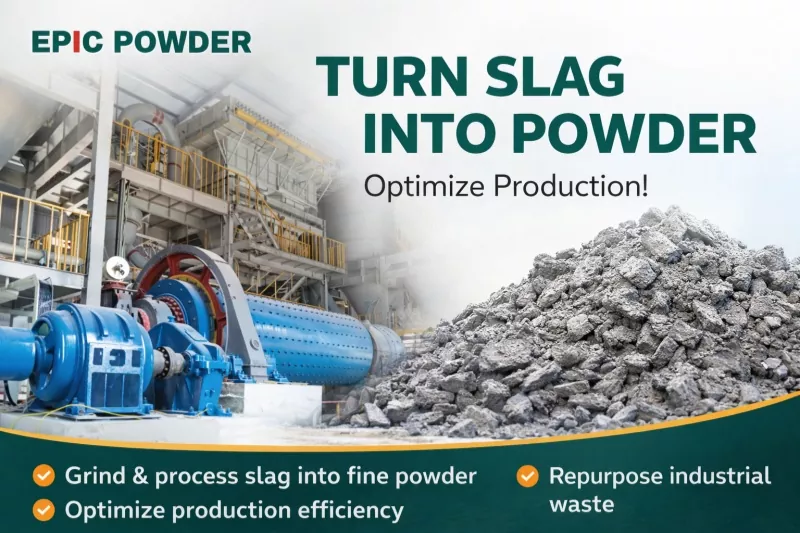
Critical Process Parameters for Optimization
Optimizing slag activity via ball mill grinding means dialing in key process parameters that impact fineness and reactivity effectively. Here’s a quick breakdown of the essentials:
| Parameter | Key Considerations |
|---|---|
| Grinding Media Gradation | Proper ball charge mix boosts fracture efficiency and wear balance. Use a blend of sizes suited to slag hardness. |
| Ratio Optimization | Ball-to-material ratio affects grinding energy. Too low means under-grinding; too high wastes energy and causes over-grinding. |
| Material Hardness | Harder slag demands larger or more durable grinding media to break glassy phases efficiently. |
| Filling Rate | Mill filling with grinding media and material should be balanced to ensure adequate impact and attrition without overload. |
| Mill Speed and Liner Design | Speed controls impact force; running close to but under critical speed maximizes grinding action. Liners protect the shell and assist media motion. |
| Critical Speed | Keep mill rotational speed between 65-80% of critical speed for optimal media cascading. This maximizes ball-media impact on slag particles. |
| Liner Profiles | Select liners to promote media lift and cascade flow—this directly affects grinding quality and liner wear life. |
| Ventilation & Temperature Control | Proper airflow prevents overheating, protects grinding media, and inhibits moisture buildup that can cause agglomeration. |
| Airflow Management | Optimized mill ventilation manages dust and keeps temperature steady, both vital for consistent slag fineness. |
| Temperature Regulation | Elevated temperatures can alter slag reactivity; controlling mill internal temperature safeguards material properties. |
Balancing these parameters is critical for achieving higher Blaine specific surface area and boosting the hydraulic reactivity index of Ground Granulated Blast-furnace Slag (GGBS).
For advanced equipment that supports effective mill ventilation and optimized liner design, check out the auxiliary equipment solutions designed specifically for ball mill grinding systems.
The Role of Chemical Grinding Aids
Chemical grinding aids play a crucial part in optimizing slag ball mill grinding by boosting fineness and hydraulic reactivity. These additives help in several key ways:
- Preventing Agglomeration: Grinding aids reduce the tendency of fine slag particles to stick together. This prevents clumping and ensures a more consistent particle size distribution (PSD), which is essential for improving the Blaine specific surface area and overall slag reactivity.
- Improving Flowability: By enhancing particle separation, chemical aids improve the flowability of ground granulated blast-furnace slag (GGBS) inside the mill and classifiers. This smooth flow reduces blockages and increases milling efficiency.
- Chemical Activation: Some grinding aids work by chemically activating the surface of slag particles. This activation increases the hydraulic reactivity index of the slag, resulting in higher early strength development in slag cement.
Using the right chemical grinding aids can noticeably reduce specific energy consumption (kWh/t) and help maintain a stable grinding process. For insights into how grinding media and mill conditions affect these additives’ performance, check out our detailed guide on maintenance and care of ball mills.
Integrating High-Efficiency Classifiers (The Epic Powder Advantage)
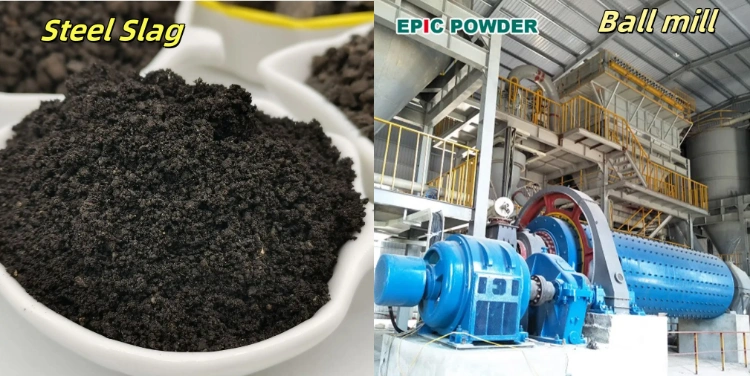
When it comes to optimizing slag activity via ball mill grinding, integrating a high-efficiency air classifier is a game-changer. Epic Powder’s advanced classifier technology ensures a precise particle size distribution (PSD) by separating fine, reactive particles from coarser material. This closed-circuit grinding system significantly boosts separator efficiency, which is crucial to achieving higher Blaine specific surface area and improved hydraulic reactivity index in Ground Granulated Blast-furnace Slag (GGBS).
Closed-Circuit Grinding
Implementing a closed-circuit system with Epic Powder’s high-efficiency classifiers recirculates oversized particles back into the mill for further grinding. This loop minimizes wasted energy and enhances the mill’s output quality. More importantly, it prevents the loss of fine particles that contribute to the slag’s reactivity, helping to maximize cementitious material performance.
Separator Efficiency
Epic Powder’s classifiers are designed for sharp cut sizes, ensuring that only particles meeting the desired fineness pass through. This precision helps maintain an optimal particle size distribution (PSD) that directly improves the slag’s surface area and reactivity, which are key for cement performance at 7-day and 28-day strength milestones. Efficient classification reduces the incidence of coarse and unreactive particles diluting the mix.
Reducing Over-Grinding
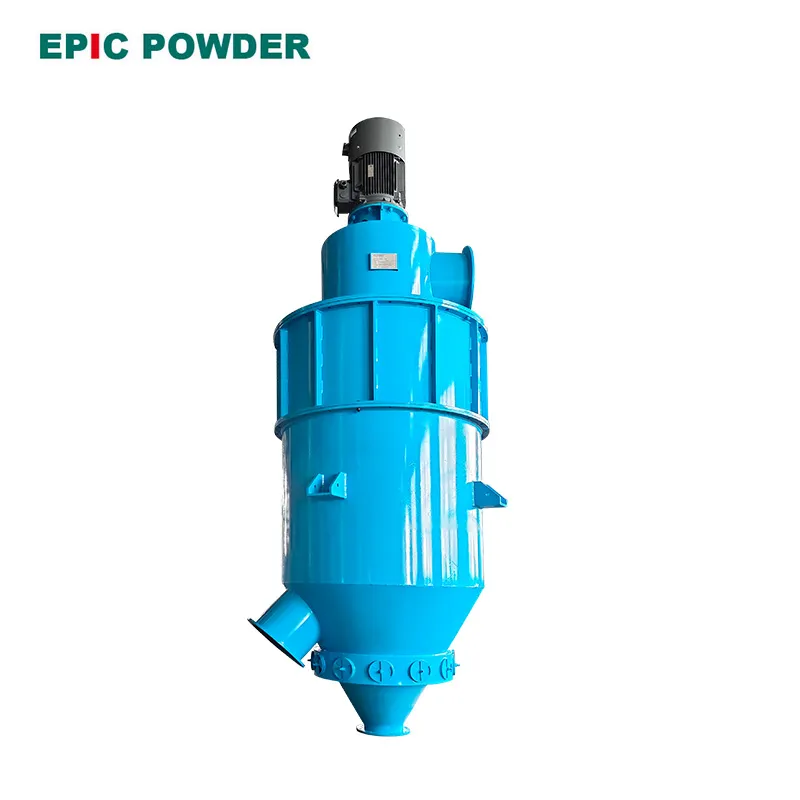
Over-grinding is a common issue in slag ball mill grinding—it not only wastes energy but also damages particle integrity, reducing activity. Epic Powder’s integration of high-efficiency classifiers mitigates this by quickly removing finely ground particles from the mill circuit. This control prevents excessive grinding, lowers specific energy consumption (kWh/t), and preserves the slag’s reactive glass structure.
For those interested in enhancing slag processing with reliable mill operation, exploring equipment such as the Turbo Mill offers synergy with classifier tech to further optimize grinding efficiency and product quality.
Troubleshooting Common Slag Grinding Issues
Slag ball mill grinding can sometimes run into common issues that hurt performance and product quality. Here’s how to tackle them effectively:
Low Mill Output and Circulating Load
When output drops, it often means your grinding circuit is clogged or the circulation rate is off. Adjusting the grinding media gradation and checking for worn liners can help boost throughput. Maintaining an optimal filling rate and mill speed is key to preventing bottlenecks in the closed-circuit grinding system.
High Energy Consumption (kWh/t) and Media Optimization
Excessive energy use usually indicates inefficient grinding media size or poor mill ventilation system performance. Fine-tuning the ball charge and incorporating proper classification liners can drastically reduce specific energy consumption. Using chemical grinding aids may also lower the grinding resistance, optimizing energy use.
Low 7-Day Strength and Surface Area Increase
If the slag cement activation is weak, your product may lack sufficient hydraulic reactivity index due to poor fineness or low Blaine specific surface area. Ensuring the slag powder reaches higher fineness without over-grinding boosts early strength development. Balancing PSD (Particle Size Distribution) is crucial to achieve the targeted 7-day and 28-day strength in cementitious materials.
For more on optimizing grinding parameters, explore how to achieve ultra-fine particle size grinding for limestone using a ball mill—many principles apply to slag ball mill grinding as well.
Why Choose Epic Powder for Slag Processing?
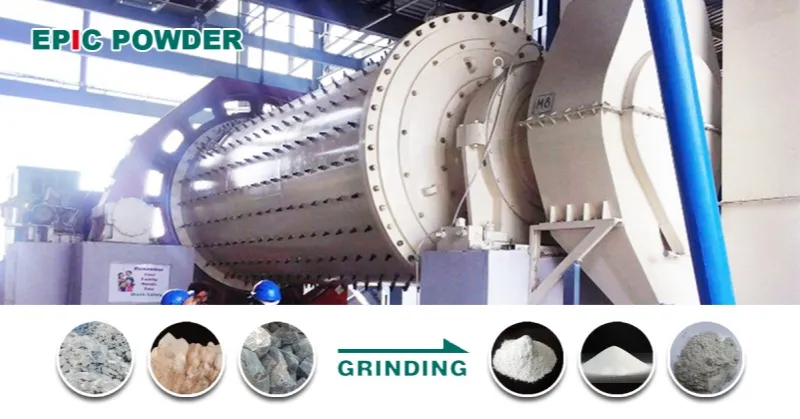
Epic Powder stands out as the ideal partner for optimizing slag ball mill grinding, especially for abrasive materials like Ground Granulated Blast-furnace Slag (GGBS). Here’s why:
Customized Solutions for Abrasive Slag
- Tailored grinding media gradation and mill settings to match the hardness and abrasiveness of slag, reducing wear and improving efficiency.
- Specialized liner profiles and mill components designed for maximum durability.
- Adaptations to tackle the over-grinding phenomenon, increasing throughput while preserving particle quality.
Advanced Classification Technology
- Integration of high-efficiency air classifiers ensures superior Particle Size Distribution (PSD), delivering a finer Blaine specific surface area and higher hydraulic reactivity index.
- The closed-circuit grinding system minimizes energy consumption (kWh/t) and maximizes the mill ventilation system’s effectiveness, keeping temperatures in check.
- Enhanced separator efficiency reduces circulating load, promoting consistent 7-day and 28-day strength gains in slag cement activation.
| Feature | Benefit |
|---|---|
| Customized grinding media | Lower wear, optimized energy use |
| Advanced air classifiers | Better PSD, improved slag reactivity |
| Closed-circuit system | Reduced energy costs and over-grinding |
| Mill ventilation system | Controlled temperature, enhanced mill life |
Case Study and Application
Epic Powder has helped numerous global clients boost slag cement activation by refining specific process parameters. For example, a major cement producer reported:
- A 15% increase in Blaine surface area
- 10% reduction in specific energy consumption
- Improved 7-day strength, directly linked to better slag activity
For detailed insights on improving mill efficiency and classifier integration, check out this guide on ball mill air classifier delivering better particle size distribution.
By combining technical expertise with tailored solutions, Epic Powder ensures your slag grinding process reaches peak performance—achieving higher fineness and enhanced reactivity every time.

“Thanks for reading. I hope my article helps. Please leave a comment down below. You may also contact Zelda online customer representative for any further inquiries.”
— Posted by Emily Chen
 English
  العربية
  Español
  Português
  Français
  Türkçe
  Tiếng Việt
  Русский