
2500 mesh refers to a screen with 2500 openings per inch, corresponding to an average particle size of approximately 5 μm (more precisely, the D97 of material passing through a 2500 mesh screen is typically in the 4–6 μm range, depending on classification precision). The ability to stably produce granite ultrafine powder with D97 ≤ 5 μm holds significant value in applications such as functional building fillers, high-end coatings, precision ceramic raw materials, and electronic packaging materials. Granite, a typical acidic igneous rock, mainly consists of quartz (hardness 7), feldspar (hardness 6), and minor amounts of mica, with an overall Mohs hardness generally between 6–7. Its quartz content usually ranges from 25% to 40%. This high hardness combined with strong abrasiveness makes granite one of the recognized “difficult-to-grind” materials in the field of ultrafine grinding.
Core viewpoint: Relying solely on a conventional overflow or grate ball mill makes it almost impossible to economically and stably achieve 2500 mesh (D97 ≈ 5 μm). However, it is technically feasible when using a closed-circuit ultrafine grinding system equipped with high-efficiency ultrafine classification equipment, optimized grinding media, and process parameters.
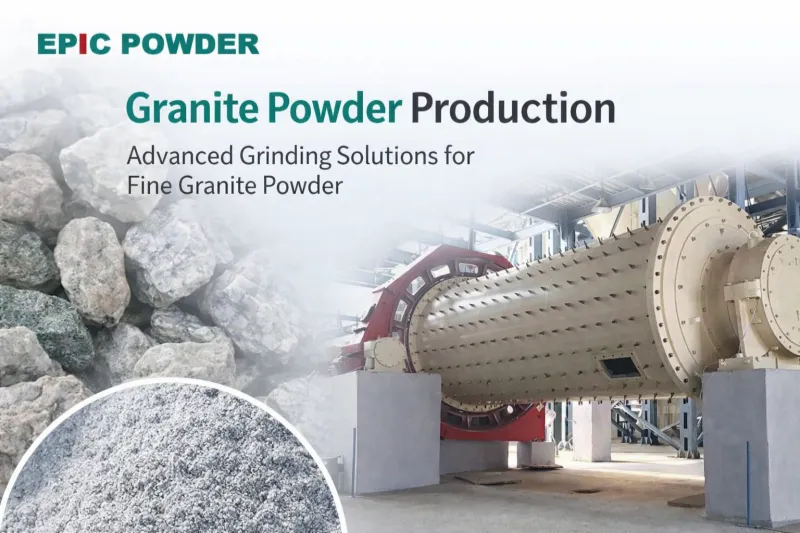
Particle Size Challenges: Physical Limits of 2500 Mesh
The primary grinding mechanisms of a ball mill are impact + attrition. As particle size decreases continuously, several key physical limitations emerge:
- Sharp increase in surface area: Reducing particle size from tens of microns to 5 μm increases the specific surface area by dozens of times, significantly enhancing van der Waals forces and electrostatic forces between particles, leading to severe agglomeration.
- “Grinding–agglomeration dynamic equilibrium”: When particle size enters the few-micron to sub-micron range, the agglomeration rate of newly generated fine particles approaches or even exceeds the grinding rate, forming a so-called “limit particle size” or “equilibrium state.”
- Exponential rise in specific energy consumption: According to Rittinger’s law, grinding energy is proportional to the new surface area created. Below 10 μm, the specific energy required for further size reduction increases dramatically, often following an exponential relationship.
Therefore, simply extending grinding time or increasing the ball-to-material ratio has limited effect on reaching 2500 mesh; instead, it often leads to excessive over-grinding, intensified agglomeration, and wasted energy.
Key Technical Pathways to Achieve 2500 Mesh
To stably produce 2500 mesh granite powder using a ball mill, an efficient closed-circuit ultrafine grinding system must be established. The core components include:
Closed-Circuit Circulation System (Most Critical)
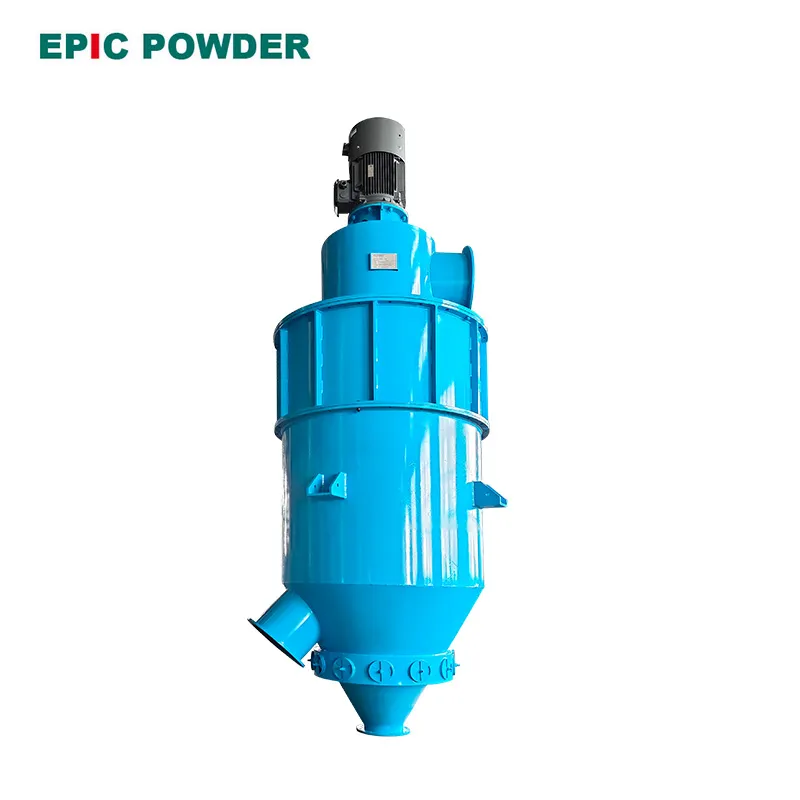
- Must be equipped with an ultrafine turbine air classifier (capable of 8000–20000 r/min) or a multi-rotor ultrafine classifier.
- The classification cut point must be precisely controlled in the 4–7 μm range, returning coarse particles to the ball mill for further grinding while discharging fine particles as finished product.
- Typical flow: Ball mill → elevator/screw conveyor → ultrafine classifier → product collection (cyclone + bag filter) → coarse return to ball mill.
Optimization of Grinding Media
- Prioritize high-density, small-diameter grinding media: zirconia balls (density ≈ 6.0 g/cm³) or alumina balls (density ≈ 3.6–3.9 g/cm³), commonly in sizes φ3–10 mm.
- Use multi-level grading ratios (e.g., φ10 : φ6 : φ3 = 3 : 4 : 3 or similar) to improve grinding efficiency and achieve a more uniform particle size distribution.
- Avoid ordinary steel balls (insufficient hardness and severe contamination).
Application of Grinding Aids and Dispersants
- Add appropriate amounts of polycarboxylate-based, alkanolamine, triethanolamine, propylene glycol, etc. (dosage typically 0.05%–0.3%) to effectively reduce particle agglomeration, improve flowability, and minimize wall buildup in the system.
- For particularly difficult-to-grind granite, composite use of surfactants + grinding aids may be required.
Advantages and Limitations Analysis
Advantages:
- Compared to stirred mills or jet mills, ball mills offer large single-unit capacity (several to tens of tons per hour) and relatively lower capital investment and maintenance costs.
- The technology is mature, with easy operation for workers and readily available spare parts.
Main limitations:
- Extremely high energy consumption: Producing D97 ≈ 5 μm granite powder typically results in system specific energy consumption of 180–350 kWh/t or higher—far exceeding ordinary cement ball milling (20–40 kWh/t).
- Severe wear and contamination: The high-hardness quartz in granite causes serious abrasion to steel balls and manganese steel liners, easily leading to excessive iron impurities. Using full ceramic liners + ceramic balls significantly increases costs.
- System complexity: Requires supporting facilities such as high-efficiency classification, dust collection, and material return, resulting in longer process flows and increased control difficulty.
Comparison with Alternative Technologies
| Equipment Type | Typical Fineness (D97) | Specific Energy (kWh/t) | Single-unit Capacity | Investment Cost | Suitability Evaluation for Granite |
|---|---|---|---|---|---|
| Conventional ball mill + ultrafine classification | 4–8 μm | 180–350 | Large | Medium | Feasible but high energy consumption |
| Vertical/horizontal stirred mill | 1–5 μm | 80–200 | Medium–Small | High | Higher efficiency; mainstream for ultrafine |
| Vibration mill | 2–6 μm | 150–300 | Small | Medium | Suitable for small batches/lab scale |
| Fluidized bed opposed jet mill | 1–4 μm | 400–1000+ | Small–Medium | Very high | Highest purity but extremely costly |
From the perspective of energy efficiency and economics, vertical ultrafine stirred mills are currently the mainstream choice for industrial production of granite powder below 5 μm. However, an optimized ball mill + closed-circuit classification system remains competitive in scenarios requiring high throughput and moderate fineness (D97 5–8 μm).
Conclusion
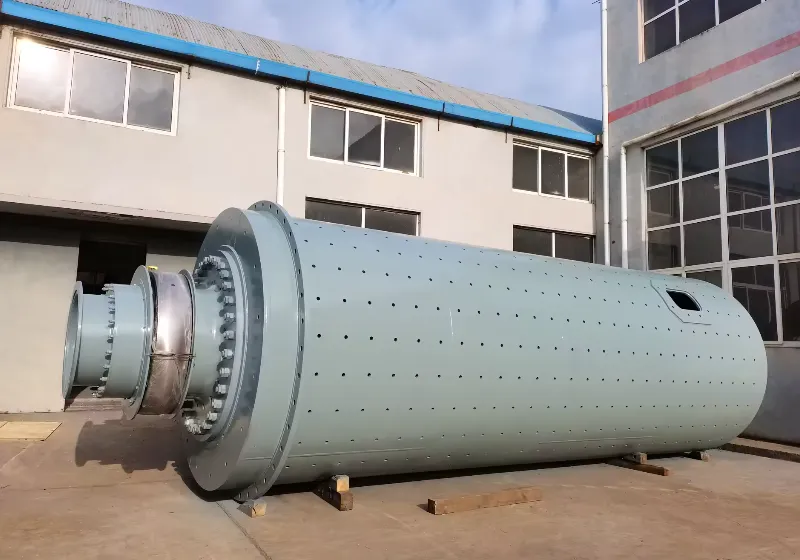
A ball mill can theoretically produce 2500 mesh (D97 ≈ 5 μm) granite ultrafine powder, but this requires the prerequisite of being equipped with a high-efficiency ultrafine air classifier to form a closed-circuit system, combined with ceramic grinding media, grinding aids, and precise process control.
In practical industrial applications, it is recommended to conduct a comprehensive techno-economic comparison based on specific requirements for throughput, fineness, electricity costs, and product added value. For projects with annual output in the tens of thousands of tons and fineness targets in the 5–8 μm range, an optimized ball mill closed-circuit system still offers certain economic feasibility. If the target fineness strictly requires D97 ≤ 4 μm or extreme sensitivity to iron impurities exists, switching to stirred mills or jet mills is more advisable.

“Thanks for reading. I hope my article helps. Please leave a comment down below. You may also contact Zelda online customer representative for any further inquiries.”
— Posted by Emily Chen
 English
  العربية
  Español
  Português
  Français
  Türkçe
  Tiếng Việt
  Русский