
If you’re aiming to turn slag from industrial waste into a valuable cement additive, mastering slag ultrafine grinding is non-negotiable. Achieving that critical d97≤45μm particle size unlocks slag’s full hydraulic potential, making it a game-changer in producing high-quality GGBS. But grinding slag isn’t simple—its hardness demands the right machinery and process control to hit fineness targets efficiently without burning energy. In this post, you’ll discover why a Ball Mill + Air Classifier system, expertly engineered by Epic Powder, leads the way in delivering consistent, ultrafine slag powder. Let’s cut through the noise and get straight to what really works.
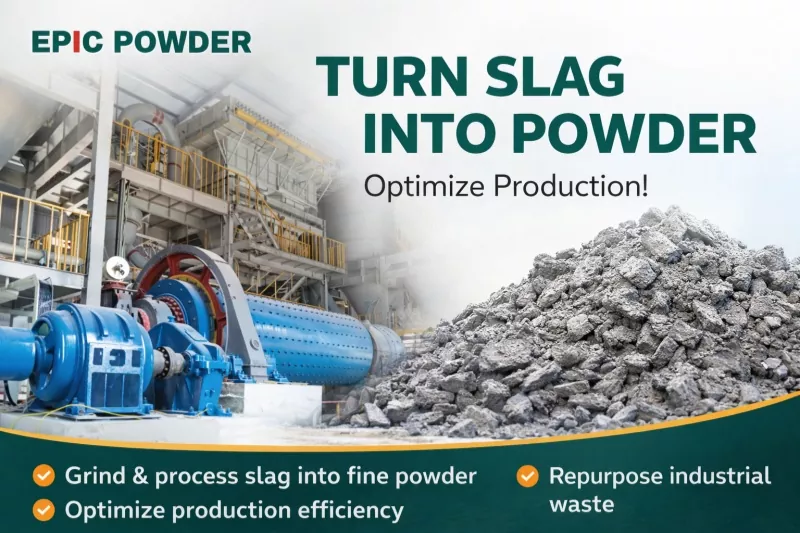
The Economic Value of Slag: From Waste to High-Value Cement Additive
Slag, once regarded as industrial waste, has evolved into a valuable resource in cementitious materials production. Today, its economic value lies in transforming slag into high-performance supplementary cementitious materials (SCMs), crucial for sustainable construction.
The Shift: Waste to Cement Additive
- Historically discarded, slag is now recycled as Ground Granulated Blast Furnace Slag (GGBS) in concrete admixture technology.
- This shift supports industrial waste recycling goals and reduces carbon footprint in cement manufacture.
- The hydraulic properties of slag enhance concrete durability and strength, increasing its market demand.
The Critical Factor: Fineness Equals Value
- Slag’s performance directly depends on its particle size distribution (PSD).
- Ultrafine grinding improves slag activity index and hydraulic reactivity.
- Finer particles enable better pozzolanic reactions, optimizing concrete admixture performance.
The Goal: Target Specification d97 ≤ 45μm
- Industry standards recommend slag powder fineness with d97 ≤ 45μm to ensure optimal reactivity.
- Achieving a specific surface area (Blaine fineness) aligned with this PSD is critical.
- Controlling d97 guarantees consistent quality and compliance in GGBS production.
Epic Powder’s Role in Slag Processing
- Epic Powder specializes in ball mill classifier systems, delivering finely ground slag powders meeting strict d97 ≤ 45μm specifications.
- Our solutions enhance grinding efficiency while optimizing energy consumption.
- By integrating advanced closed-circuit grinding technology, Epic Powder helps producers achieve superior S95 slag powder quality and maximize economic returns.
Why Ultrafine Matters in Slag Ultrafine Grinding
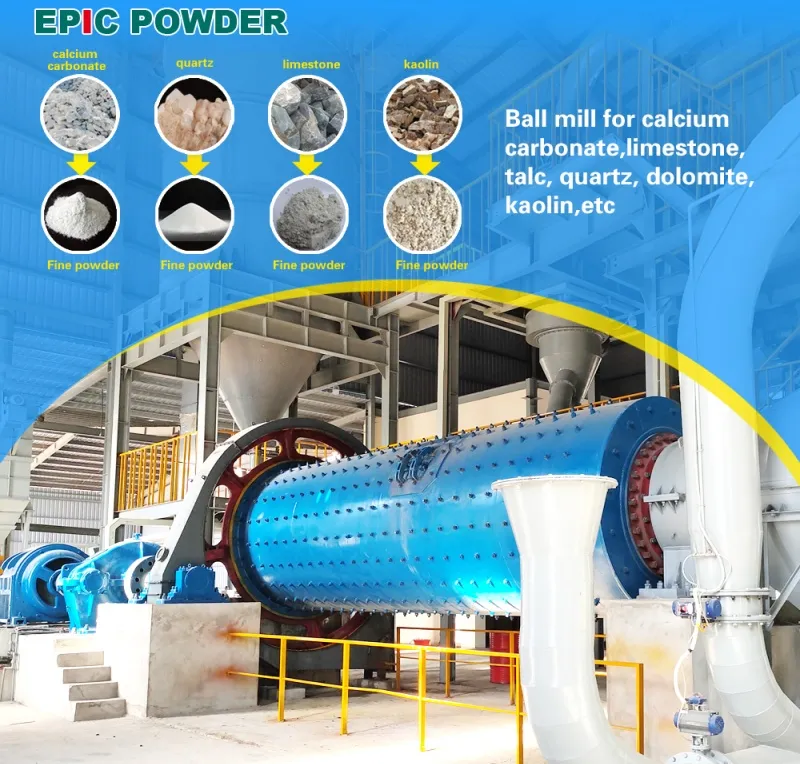
When it comes to slag ultrafine grinding, particle size directly impacts the slag activity index—a key measure of how reactive the slag is when used as a cement additive. Finer particles expose more surface area, boosting the hydraulic properties of slag and enhancing its cementitious behavior.
Specific surface area (SSA), often expressed as Blaine fineness, is crucial here. The higher the SSA, the better the slag’s reactivity and strength contributions. This is why the industry strives to achieve a target particle size distribution with d97≤45μm in slag powders. Meeting this benchmark ensures the slag performs well in concrete admixture technology, providing consistent quality and reliable performance.
Ultrafine grinding is not just about size but achieving the right balance between particle fineness and energy consumption. Grinding slag to this level optimizes its industrial waste recycling potential while improving GGBS production quality.
For more on grinding efficiency and equipment options suited to achieve such fine particle sizes, see how a ball mill classifier system plays a crucial role in superfine powder processing.
Grinding Technology for Slag
Slag is tough to grind due to its hardness and abrasiveness, which put a strain on grinding equipment. A ball mill remains the most reliable solution for slag ultrafine grinding because it handles these challenging material properties well and produces consistent particle size distribution (PSD).
However, using a standalone ball mill has limitations. It can struggle to achieve the critical ultrafine target specification (d97≤45μm) efficiently on its own. This is where Epic Powder’s combined ball mill and high-efficiency air classifier system comes into play. The air classifier separates fine particles from coarse ones in real time, feeding the coarse back into the mill, ensuring a closed-circuit grinding process. This setup optimizes energy use, improves grinding media wear rates, and consistently delivers slag powder with excellent Specific Surface Area (SSA) and a high slag activity index.
For more on how powder surface modification and advanced grinding techniques boost cementitious materials, check out the insights on high-efficiency ball mill classifier systems. This integrated approach is key to producing S95 slag powder that meets industry standards for superfine powder processing.
Optimizing the Grinding Process
Getting the best out of slag ultrafine grinding means focusing on a few key areas:
- Grinding Media Selection and Wear Choosing the right grinding media is crucial. It affects grinding efficiency and wear rates. For slag, harder and more wear-resistant media help maintain stable particle size distribution (PSD) and reduce downtime caused by media replacement.
- Wear-Resistant Lining Plates Using wear-resistant lining plates inside the ball mill protects the shell and improves grinding performance. They extend maintenance intervals and help maintain the desired particle size, especially targeting the d97≤45μm specification.
- Use of Grinding Aids Grinding aids are chemical additives that improve grinding efficiency by reducing particle agglomeration and enhancing grinding media movement. This leads to higher output and better energy savings without compromising slag activity index or specific surface area.
- Process Control and Circulating Load Management Maintaining an optimized circulating load in a closed-circuit ball mill classifier system is key. Proper control ensures the right balance between overgrinding and undergrinding, stabilizing product quality. Careful monitoring of mill speed, classifier settings, and feed rates helps keep energy use low while meeting the superfine powder processing goals.
For a deeper dive into how these factors improve powder quality and process efficiency, you might find our detailed explanation on key factors affecting the specific surface area of powders helpful.
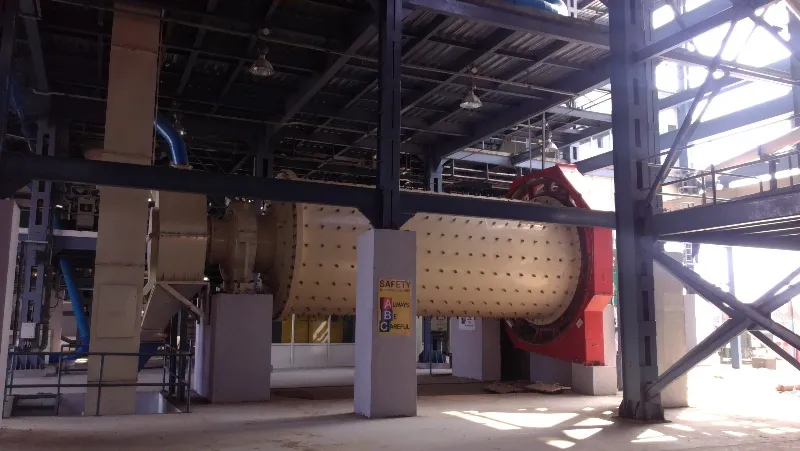
Case Study: Achieving S95 Grade Slag Powder with Epic Powder Solution
At Epic Powder, we helped a processing plant upgrade their slag ultrafine grinding setup to consistently produce high-quality S95 slag powder with a target particle size of d97 ≤ 45μm. The key was integrating our proven ball mill plus high-efficiency air classifier system customized for slag’s unique hardness and abrasiveness.
Plant Setup and Input-Output Specifications
| Parameter | Input | Output (S95 Slag Powder) |
|---|---|---|
| Feed Material | Granulated Blast Furnace Slag | Ultrafine Slag Powder |
| Target Particle Size (d97) | – | ≤ 45 μm |
| Specific Surface Area (Blaine) | – | ≥ 450 m²/kg |
| Activity Index | – | ≥ 95% (slag hydraulic activity) |
| Throughput | 10 tons/hour | 9.8 tons/hour |
| Energy Consumption | – | ~15% energy savings compared to older setups |
Energy Savings and Quality Benefits
- Using Epic Powder’s closed-circuit ball mill classifier system, the plant reduced energy consumption by about 15% while maintaining the high GGBS production standard.
- Optimized grinding media and wear-resistant linings lowered maintenance needs and downtime.
- Achieving a stable particle size distribution ensured a slag activity index above 95%, improving cementitious performance in concrete admixtures.
- The superfine powder produced exhibited excellent hydraulic properties, making it a superior cement additive and contributing to sustainable industrial waste recycling.
This case highlights how targeted ultrafine grinding with the right technology, like Epic Powder’s ball mill + classifier system, delivers both economic value and product excellence in slag processing. For more on grinding solutions, exploring our ball mill classifier system reveals why this approach stands out in the industry.
Common Challenges and Troubleshooting in Slag Ultrafine Grinding
Grinding slag ultrafine to a d97≤45μm specification brings clear benefits, but it’s not without challenges. One of the biggest issues is high energy consumption. Ultrafine grinding demands more power due to increased surface area and resistance. To reduce energy use, consider:
- Optimizing the circulating load in your closed-circuit grinding system to prevent over-grinding.
- Using grinding aids to lower resistance and improve mill efficiency.
- Maintaining the right grinding media size and wear rate to avoid inefficient mill operation.
Proper maintenance for the mill and grinding media is another crucial factor. Regular inspection helps catch worn-out grinding balls or lining plates early. Replace these before they drastically reduce grinding efficiency or cause machine damage.
Stabilizing particle size distribution is essential for consistent slag powder quality. Adjustments to the air classifier settings help fine-tune the cut size, keeping the product consistent at the target d97≤45μm. This is where a high-efficiency air classifier integrated within a ball mill classifier system shines, helping maintain stable output quality.
For more on optimizing your ball mill and classification system, exploring solutions like the ball mill classification production line can provide insights into enhancing grinding efficiency and controlling particle size.
Common Questions on Slag Ultrafine Grinding
Question 1: Why is achieving a particle size of d97 ≤ 45μm so important for slag powder in GGBS production, and what does it relate to in terms of performance?
Answer:
Achieving d97 ≤ 45μm is critical because slag’s hydraulic reactivity and overall performance as a supplementary cementitious material (SCM) depend heavily on its fineness. Finer particles provide greater specific surface area (SSA, measured as Blaine fineness), which exposes more reactive surface for pozzolanic and hydraulic reactions. This boosts the slag activity index (a measure of reactivity when mixed with cement), enhances concrete strength, durability, and long-term performance in admixtures. Industry standards for high-quality GGBS, such as S95 grade, typically align with this fineness target (often paired with Blaine ≥ 450 m²/kg) to ensure consistent quality, optimal cementitious behavior, and compliance. Coarser slag would limit reactivity, reduce economic value, and hinder its role in sustainable, low-carbon concrete production.
Question 2: What are the main advantages of using Epic Powder’s ball mill + air classifier system compared to a standalone ball mill for slag ultrafine grinding?
Answer:
A standalone ball mill often struggles to efficiently reach and maintain the ultrafine target of d97 ≤ 45μm due to slag’s high hardness and abrasiveness, leading to higher energy use, inconsistent PSD, and potential overgrinding. Epic Powder’s integrated closed-circuit system with a high-efficiency air classifier addresses this by separating fine particles in real time and recirculating coarse ones back to the mill. Key advantages include:
- Significantly improved grinding efficiency and energy savings (e.g., ~15% reduction in the case study).
- More stable and consistent particle size distribution and specific surface area.
- Better control over product quality, achieving high slag activity index (≥95% for S95 grade) and reliable throughput.
- Reduced wear on grinding media and linings through optimized circulating load and process parameters.
This setup excels for tough materials like slag, delivering superior S95-grade GGBS while maximizing economic returns from industrial waste recycling.

“Thanks for reading. I hope my article helps. Please leave a comment down below. You may also contact Zelda online customer representative for any further inquiries.”
— Posted by Emily Chen
 English
  العربية
  Español
  Português
  Français
  Türkçe
  Tiếng Việt
  Русский