
Fundamentals of High-Energy Ball Mill
High-energy ball milling (HEBM) is a powerful technique used to process ceramic powders by applying intense mechanical energy. Unlike traditional ball milling, which mainly mixes and grinds materials at low energy, HEBM delivers high-impact forces that drastically alter powder properties.
Working Principle and Energy Transfer
- Impact and Friction: Ceramic powders are placed in a rotating mill jar with grinding media (balls). The balls collide at high speed, transferring kinetic energy to the powders.
- Energy Intensity: These collisions induce plastic deformation and fracture, leading to particle size reduction and structural changes.
- Mechanochemical Activation: The high energy can trigger chemical reactions and phase transformations within the powders.
The process involves repeated fracturing and cold welding, which refines both particle and crystallite sizes, and increases lattice strain—a key factor influencing ceramic behavior.
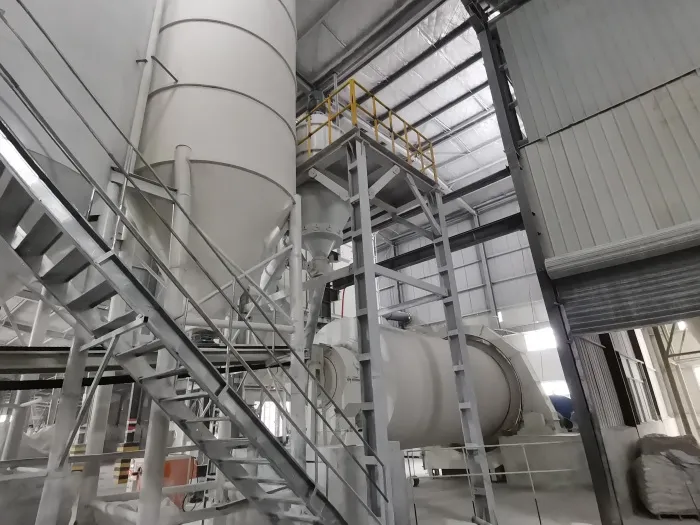
Key Process Parameters Influencing Powder Properties
| Parameter | Effect on Ceramic Powders |
|---|---|
| Rotation Speed | Higher speeds increase impact energy, enhancing size reduction, but may cause overheating. |
| Milling Time | Longer milling refines crystallites further but risks contamination and agglomeration. |
| Ball-to-Powder Ratio (BPR) | Higher ratios improve milling efficiency but increase wear debris. |
| Ball Size & Material | Larger balls deliver stronger impacts; material affects contamination risk. |
| Atmosphere Control | Inert gases can prevent oxidation and contamination during milling. |
Balancing these parameters is crucial to optimize powder characteristics like particle size, surface area, and structural integrity.
Comparison with Traditional Ball Milling
| Feature | Traditional Ball Milling | High-Energy Ball Milling |
|---|---|---|
| Energy Input | Low to moderate | High |
| Particle Size Reduction | Limited | Submicron to nanocrystalline sizes achievable |
| Structural Changes | Minimal | Significant lattice strain and defects introduced |
| Processing Time | Longer | Shorter due to higher energy transfer |
| Powder Reactivity | Low | Mechanochemical reactions possible |
HEBM stands out for its ability to produce nanocrystalline ceramic powders with enhanced properties in a shorter time span. It’s an essential method for advanced ceramic powder processing where superior microstructure and functionality are needed.
By understanding these fundamentals, you can better tailor the milling process to your ceramic materials’ specific requirements, achieving optimal performance in downstream applications.
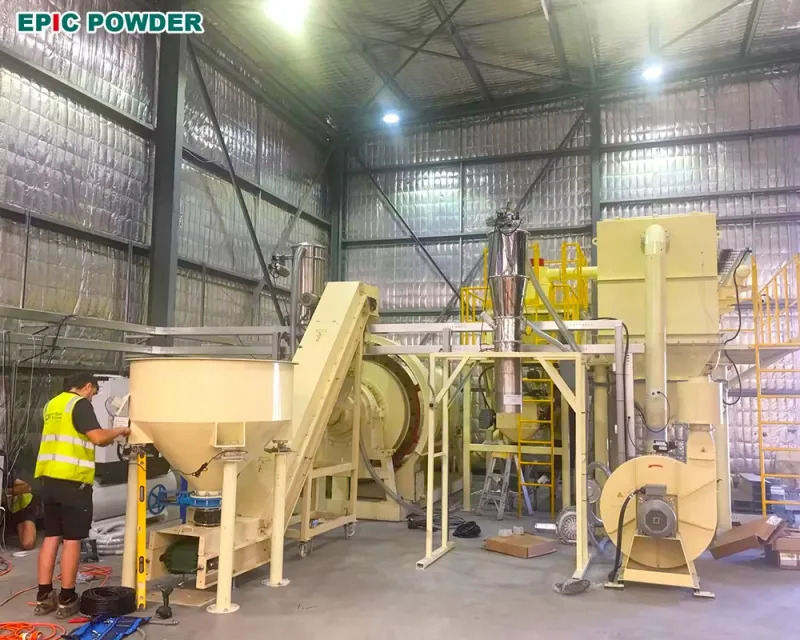
Primary Effects on Powder Physical Properties
High-energy ball milling (HEBM) significantly impacts the physical properties of ceramic powders, making it a go-to process for enhancing material performance. One of the main effects is particle size reduction. The intense collisions during milling break down larger particles into fine, often sub-micron sizes, creating a more uniform particle size distribution. This helps in achieving better packing density and improved sintering behavior later on.
Along with size reduction, HEBM induces crystallite size refinement. The constant stress and strain during milling reduce crystallite dimensions down to the nanoscale, which often leads to lattice strain changes. This strain can influence mechanical properties and sometimes improve reactivity in downstream processes.
Another key change is the increase in specific surface area. As particles become finer and morphologies evolve from irregular shapes to more uniform, sometimes plate-like or spherical forms, their surface area grows considerably. This facilitates better bonding during sintering and can boost functional properties like thermal or piezoelectric behavior.
For a deeper dive into particle size control and mill performance, an insightful read is available on the characteristics of mica powder, which shares practical milling insights applicable to ceramic powders.
In , HEBM’s physical modifications—particle size, crystallite refinement, lattice strain, and morphology—are crucial to unlocking enhanced ceramic properties downstream.
Chemical and Structural Transformations in Ceramic Powders
High-energy ball milling (HEBM) does more than just shrink particle size—it triggers significant chemical and structural changes in ceramic powders. The intense mechanical forces initiate mechanochemical reactions, leading to new phases or altered crystal structures that are often unattainable through traditional methods. These phase changes can improve material properties by enhancing reactivity or creating metastable phases with unique characteristics.
However, the vigorous milling environment also raises concerns about contamination. Common contamination sources include wear debris from the milling media, oxygen or moisture intrusion, and impurities from the milling container. These contaminants can compromise powder purity and affect the final ceramic performance.
To control purity, several strategies are essential:
- Use of high-quality, wear-resistant milling media and containers
- Milling in controlled atmospheres like inert gas to minimize oxidation
- Regular monitoring and cleaning of equipment
- Selection of milling parameters that limit excessive media wear
Adopting these approaches ensures that mechanochemical activation ceramics retain the desired phase composition with minimal impurities, optimizing their functionality in downstream applications.
For further insight on milling equipment that helps maintain powder quality, check out the details about pneumatic hammer technology, which can improve milling efficiency while reducing contamination risks.
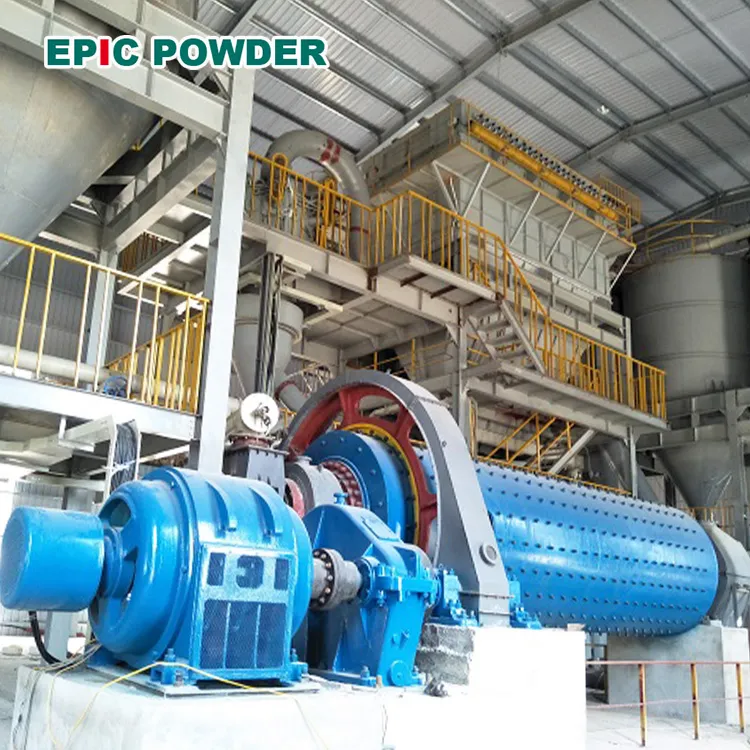
Impact on Downstream Ceramic Properties
High-energy ball milling (HEBM) significantly influences the final performance of ceramic materials by improving their downstream properties. One of the key benefits is the enhanced sintering behavior of the milled powders. Due to the refined crystallite size and increased surface area achieved through particle size reduction ball milling, ceramics densify more uniformly and at lower temperatures. This densification boost leads to fewer pores and better structural integrity in the final product, making sintered ceramics stronger and more reliable.
Mechanical properties such as toughness and hardness also see clear improvements. The microstructure evolution ceramic powders undergo during HEBM creates finer grains and introduces lattice strain, which act to toughen the ceramic matrix and prevent crack propagation. This results in ceramics that withstand wear and mechanical stress better, crucial for demanding industrial applications.
Moreover, functional properties—like piezoelectric and thermal behaviors—are enhanced by the mechanochemical activation ceramics experience during milling. For example, the refined nanocrystalline ceramic powders exhibit improved piezoelectric responses due to more uniform phase distributions and optimized grain boundaries. Thermal stability and conductivity can also benefit, which is vital in electronics and high-temperature components.
Balancing process parameters high energy mill is essential to achieve these benefits without causing excessive powder agglomeration high energy milling or contamination. These improvements collectively expand the utility of ball-milled ceramic powders in advanced sectors.
For more insights on optimizing milling setups that enhance ceramic powder properties, exploring the ore grinding conditions and grinding mechanism can be helpful.
Practical Considerations and Optimization
When working with high-energy ball milling of ceramic powders, preventing powder agglomeration is crucial for maintaining consistent particle size and avoiding defects during later processing stages. Agglomeration can lead to uneven microstructure evolution and compromise final ceramic properties. To control this, it’s important to optimize milling parameters such as rotation speed, milling time, and ball-to-powder ratio specifically for each ceramic type.
Additives also play a vital role in improving powder behavior during milling. Dispersants, surfactants, or process control agents can help reduce cold welding and agglomerate formation, enhancing particle size reduction and surface area increase. Choosing the right additives tailored to your ceramic system improves powder flowability and prevents contamination.
Epic Powder offers customized solutions that carefully balance these factors, ensuring optimal process parameters for your specific ceramic powders. Our expertise in mechanochemical activation and contamination control during high-energy milling helps clients achieve superior crystallite size refinement, enhanced sintering behavior, and better mechanical and functional properties in their final ceramic products.
For more insights into optimizing milling processes and equipment selection, explore our detailed guide on common types of mineral powder processing equipment.

“Thanks for reading. I hope my article helps. Please leave a comment down below. You may also contact Zelda online customer representative for any further inquiries.”
— Posted by Emily Chen
 English
  العربية
  Español
  Português
  Français
  Türkçe
  Tiếng Việt
  Русский