
The ball milling process is a widely used method for the size reduction, homogenization, and morphology control of ceramic powders. At its core, ball milling involves the input of mechanical energy, which triggers a complex series of physical and chemical changes in the powder. These changes collectively determine the final particle morphology, size distribution, and surface properties. The fundamental mechanisms can be summarized as four interrelated and dynamically competing processes: fragmentation, plastic deformation, cold welding, and surface reconstruction. Understanding these mechanisms is critical for optimizing ball milling processes, especially for high-performance ceramic materials such as alumina (Al₂O₃), silicon carbide (SiC), zirconia (ZrO₂), and other advanced oxides.
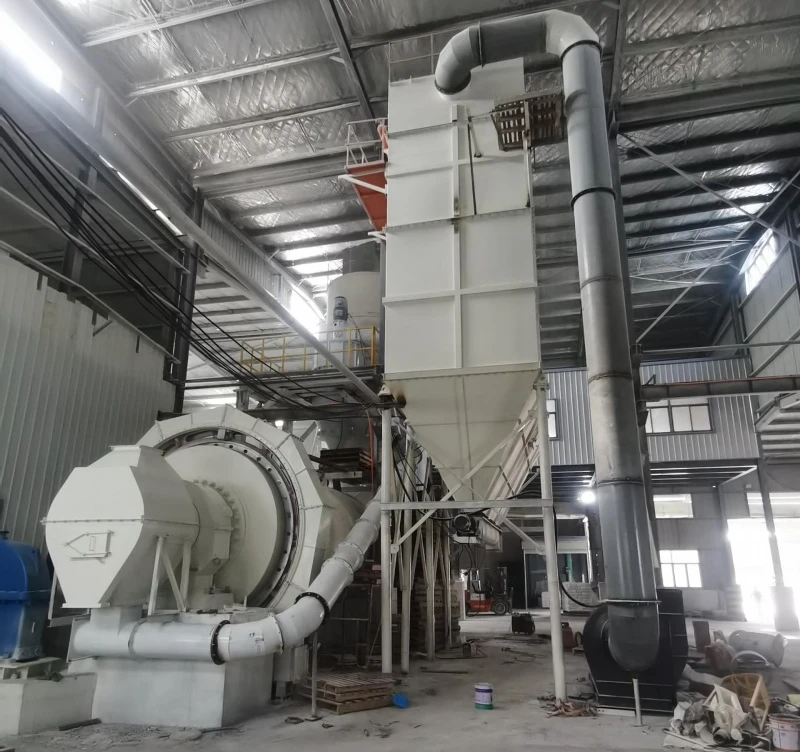
1. Fragmentation: Initial Particle Breakage
During the initial stage of ball milling, powder particles are primarily subjected to high-energy impacts from the grinding media (balls). For brittle ceramic materials, such as alumina and silicon carbide, this impact predominantly induces brittle fracture.
Microcracks within the particles, often concentrated at corners, edges, or inherent defects, propagate rapidly under stress, leading to fragmentation into smaller pieces. This fragmentation process significantly reduces the average particle size but simultaneously exposes new high-energy fracture surfaces. These surfaces increase particle angularity and result in irregular polyhedral shapes.
For example, plate-like alumina particles initially exhibit flat surfaces, but during the early stages of milling, edge breakage generates sharp corners and jagged features. This sharpness can be critical in downstream processing, as highly angular particles tend to agglomerate more easily and exhibit poor flowability.
Fragmentation is influenced by milling parameters such as rotational speed, ball-to-powder ratio, milling time, and ball size. Higher rotational speeds and larger ball-to-powder ratios increase impact energy, leading to more intense fragmentation. However, excessive fragmentation may introduce defects or amorphization on the particle surface, affecting sintering behavior.
2. Plastic Deformation and Friction: Morphology Smoothing
As milling continues, the cumulative energy input and frequent particle collisions begin to emphasize plastic deformation and frictional shearing mechanisms. Repeated collisions and sliding forces induce displacement of atomic layers on the particle surface. Sharp edges, protrusions, and irregular surfaces are gradually “worn down,” resulting in smoother particle contours.
This process, often referred to as mechanical rounding, gradually transforms angular particles into more spherical shapes, improving particle packing, flowability, and bulk density. Long-duration milling can effectively convert initially irregular, jagged particles into near-spherical forms, which are highly desirable for ceramic processing and powder metallurgy applications.
The efficiency of this mechanism depends on the ductility of the material. While brittle ceramics undergo limited plastic deformation, small-scale surface atom displacements and microfractures can still facilitate edge rounding. Additionally, temperature rises during high-energy milling can promote localized plasticity, especially for metal or metal-oxide composite powders.
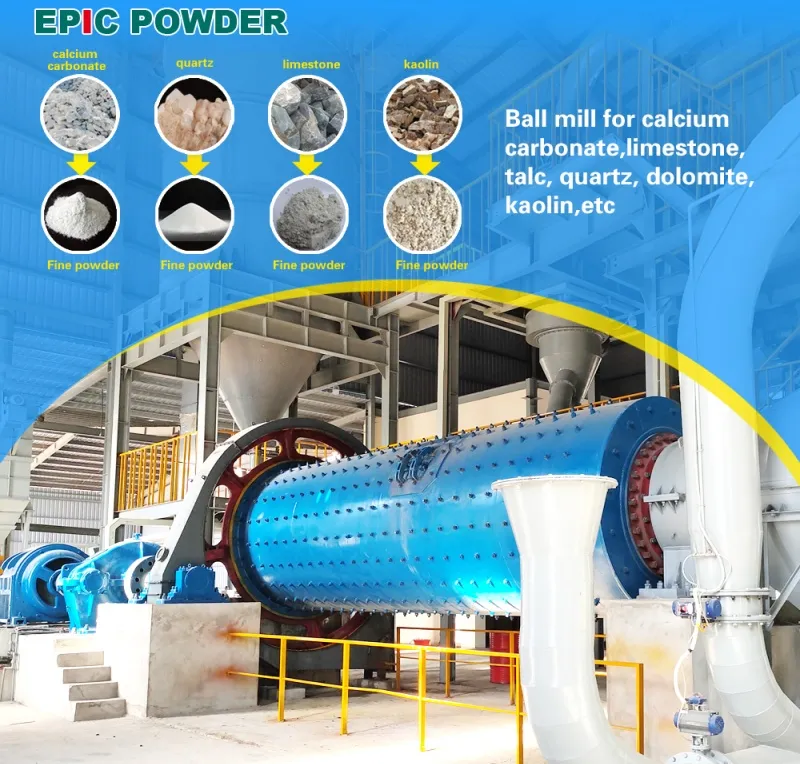
3. Cold Welding: Particle Aggregation and Re-Breakage
Under specific conditions, cold welding can occur during ball milling. When two particles or fragments collide, high-energy surface sites may come into contact. If the oxide layer on the surface is disrupted and the material possesses sufficient ductility (as in certain metals or intermetallics), atomic bonding can occur, forming metallic or ionic bonds that cause the particles to adhere.
Cold welding temporarily increases particle size. However, subsequent impacts often re-fragment the welded aggregates. This cycle of fragmentation–welding–re-fragmentation is fundamental to mechanical alloying, where multiple components can be intimately mixed at the atomic level.
For single-component ceramic powders, cold welding adds complexity to morphology evolution. It can increase heterogeneity and create irregular clusters, potentially complicating downstream processing such as compaction or sintering. To mitigate unwanted cold welding, process parameters such as milling atmosphere, ball size, and milling speed can be adjusted. For example, milling in inert atmospheres or adding small amounts of surfactants or process control agents (PCAs) can reduce particle adhesion.
4. Surface Reconstruction: Microstructural Activation
High-energy ball milling induces significant surface reconstruction, which forms the microstructural basis for particle morphology evolution. Prolonged mechanical energy input causes lattice distortion, dislocations, grain boundary formation, and partial amorphization on particle surfaces.
These surface defects serve multiple roles:
- They enhance sintering activity by providing high-energy sites.
- They alter surface energy distribution, facilitating preferential material rearrangement along energy-minimizing pathways.
- They promote shape evolution toward spherical particles by enabling atoms or small clusters to migrate and reduce surface energy.
Surface reconstruction also contributes to chemical reactivity in subsequent modifications or coatings, such as dopant addition or surface functionalization. For ceramic powders used in advanced applications (e.g., electronic ceramics or thermal barrier coatings), this activation is essential for achieving uniform microstructures and dense sintered bodies.
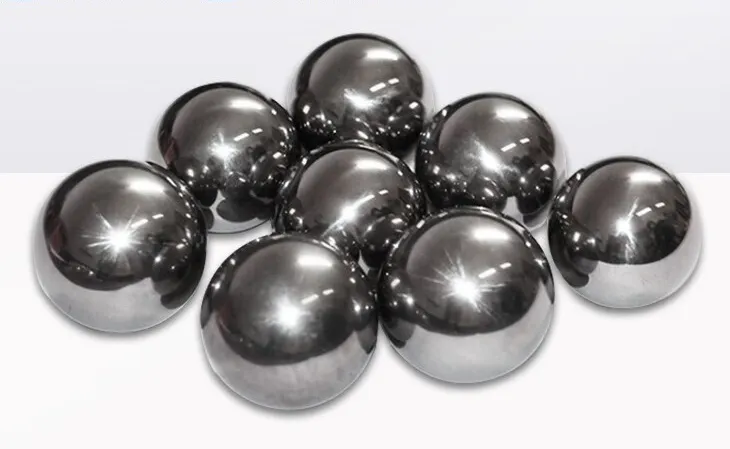
5. Dynamic Balance Between Fragmentation and Rounding
The final particle morphology is determined by a dynamic equilibrium between fragmentation, plastic deformation, and surface smoothing. Fragmentation increases angularity, while plastic deformation and friction reduce it.
Key factors affecting this balance include:
- Milling time: Short milling favors fragmentation; prolonged milling favors rounding.
- Rotational speed: High speed increases impact energy and fragmentation.
- Ball-to-powder ratio: Higher ratios increase collision frequency and energy.
- Material properties: Brittle ceramics fragment easily, while ductile materials favor plastic deformation.
- Process atmosphere: Inert or reducing atmospheres can minimize oxidation and cold welding.
For example, high-speed milling with a large ball-to-powder ratio enhances early-stage fragmentation. Extended milling under moderate speeds allows gradual rounding and near-spherical particle formation. Optimizing these parameters is crucial for tailoring powder morphology for specific applications, such as dense ceramics, composite materials, or additive manufacturing powders.
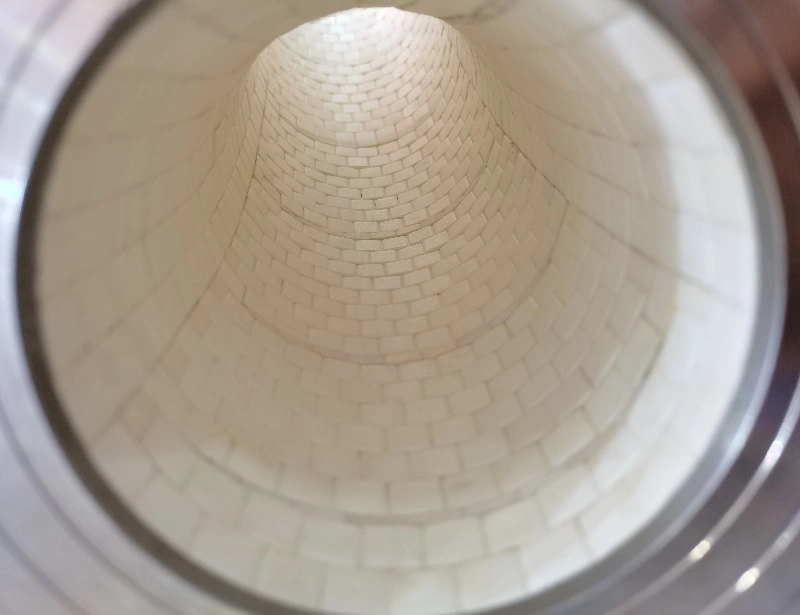
6. Implications for Industrial Applications
The morphology evolution during ball milling directly affects the performance and processability of ceramic powders:
- Packing Density and Flowability: Spherical particles pack more efficiently and exhibit better flowability, reducing defects during molding and pressing.
- Sintering Behavior: Surface-activated particles with rounded morphologies densify more uniformly, reducing porosity and enhancing mechanical strength.
- Composite Formation: Controlled particle size and morphology improve dispersion in polymer matrices, metals, or ceramic composites.
- Additive Manufacturing: Spherical powders with narrow size distribution are essential for powder-bed fusion and extrusion-based 3D printing.
- Mechanical Alloying and Doping: The interplay of cold welding and fragmentation allows atomic-level mixing, critical for producing high-performance multi-component ceramics.
7. Conclusion
Ball milling is far more than a simple size reduction technique. It is a mechanically driven physicochemical process that simultaneously involves fragmentation, plastic deformation, cold welding, and surface reconstruction. These mechanisms collectively shape particle morphology, influence surface energy, and activate powders for subsequent processing.
Optimizing milling parameters—time, speed, ball-to-powder ratio, and atmosphere—is essential to achieving the desired balance between particle breakage and rounding. By understanding the interplay of these mechanisms, engineers can tailor ceramic powders for diverse applications, from high-performance structural ceramics to advanced composite materials and additive manufacturing feedstocks.
Ultimately, the evolution from angular, irregular fragments to near-spherical, surface-activated particles is a controlled, dynamic process governed by the energy input, material properties, and milling environment, providing a robust foundation for modern powder processing technology.

“Thanks for reading. I hope my article helps. Please leave a comment down below. You may also contact Zelda online customer representative for any further inquiries.”
— Posted by Emily Chen
 English
  العربية
  Español
  Português
  Français
  Türkçe
  Tiếng Việt
  Русский