
In the rapidly evolving world of secondary battery materials, graphite remains a cornerstone for anode preparation in lithium-ion batteries (LIBs). As demand for high-performance energy storage surges with the rise of electric vehicles (EVs), renewable energy systems, and portable electronics, optimizing graphite anodes has become crucial. One key technique revolutionizing this field is ball milling, a mechanochemical process that enhances graphite’s structural and electrochemical properties. If you’re searching for insights on “ball mill in graphite anodes preparation” or “graphite anode for secondary battery materials”, this comprehensive guide dives deep into its applications, benefits, and latest advancements as of 2026.
Ball milling involves grinding graphite particles in a rotating container with milling media, such as balls made from zirconia or tungsten carbide. This method not only reduces particle size but also introduces defects, exfoliates layers, and facilitates composite formation with other materials like silicon. By improving ion diffusion, capacity, and cycle life, ball milling addresses key limitations of natural or artificial graphite anodes, making it indispensable in modern battery manufacturing.
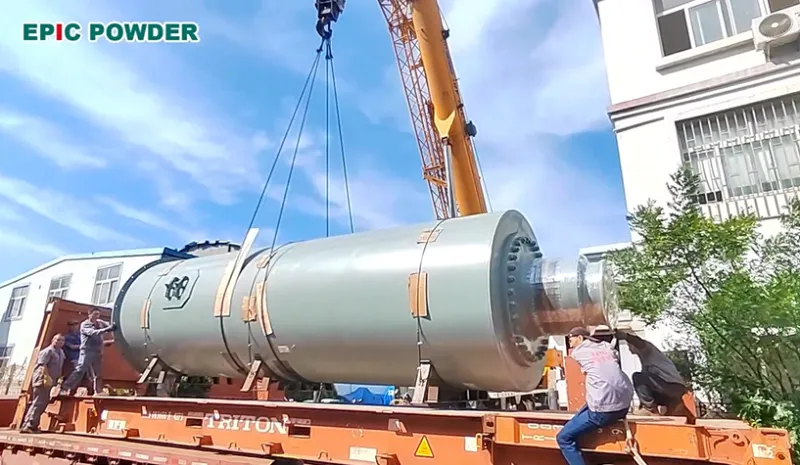
Understanding Ball Mill: A Core Technique in Graphite Anodes Optimization
Ball mill, also known as mechanochemical milling, is a versatile, scalable process used in secondary battery materials production. It dates back to early experiments in the 1990s, where researchers like Wang et al. demonstrated that prolonged ball milling of graphite creates nanostructures with enhanced lithium insertion capabilities. Today, it’s widely applied to prepare high-rate graphite anodes for LIBs.
The process works by subjecting graphite powder to high-energy impacts and shear forces. In a typical setup, graphite is loaded into a planetary ball mill with grinding balls and rotated at speeds ranging from 300 to 2000 rpm. This leads to pulverization, amorphization, and the creation of defects like vacancies and interstitials, which boost electrochemical performance.
There are two primary variants: dry ball milling and wet ball milling. Dry milling is simpler but can lead to overheating, while wet milling uses solvents like isopropanol (IPA) to control temperature and enhance exfoliation. For instance, wet ball milling has been shown to produce silicon@graphite composites with capacities up to 850 mAh/g and excellent rate capabilities.
In graphite anode preparation, ball milling serves multiple roles:
- Particle Size Reduction: Graphite particles are milled to nanoscale (e.g., 50 nm after 150 hours), increasing surface area for better lithium intercalation.
- Exfoliation into Graphene Flakes: High-energy milling disrupts van der Waals forces, producing graphene flakes that can coat other materials.
- Composite Formation: Mixing graphite with silicon or manganese dioxide during milling creates hybrids with superior capacity and stability.
- Defect Engineering: Introduces oxygen vacancies and structural water, which facilitate ion diffusion in zinc-ion batteries as well.
This technique aligns with sustainable practices, as it enables recycling of spent graphite from LIBs. Ball-milled recycled graphite can achieve 10-20% capacity improvements, supporting circular economy goals in battery production.
The Process of Ball Mill in Graphite Anodes Preparation in Secondary Battery Materials
Preparing graphite anodes via ball mill involves several steps, optimized for industrial scalability.
- Material Selection: Start with natural or artificial graphite powder (e.g., SFG15L grade). For composites, add silicon nanoparticles or other additives in ratios like 37.5:62.5 (Si:graphite).
- Milling Setup: Use planetary mills like Pulverisette or high-energy ball mills (HEBM) with zirconia bowls and yttria-stabilized zirconia (YSZ) balls (0.5-3 mm diameter). For wet milling, incorporate solvents to prevent agglomeration.
- Milling Parameters: Key variables include speed (400-1000 rpm), time (2-24 hours), and ball-to-powder ratio (e.g., 180-250 balls per batch). Pauses for cooling are essential to avoid overheating. In high-energy mills like Emax, finer particles (d90 = 1.7 μm) are achieved in just 1 hour compared to 8 hours in standard planetary mills.
- Post-Processing: After milling, dry the slurry (if wet), sieve for uniform particle size, and optionally anneal to remove impurities or introduce structural modifications. For porous artificial graphite (PAC)-Si composites, ammonium bicarbonate is added during milling and removed via heating to create pores.
- Electrode Fabrication: Mix milled graphite with binders (e.g., PVDF or PAA) and conductive agents, then cast onto copper foil. The resulting anodes show reversible capacities of 850 mAh/g at 100 mA/g.
This workflow ensures high-purity, high-performance anodes suitable for next-gen secondary batteries.
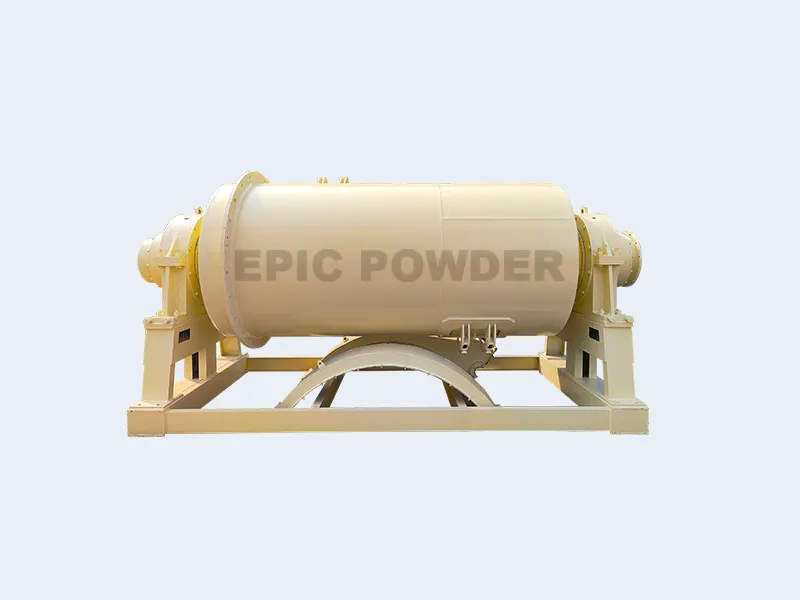
Advantages of Ball Mill for Graphite Anodes in Secondary Battery Materials
Ball milling offers significant benefits over traditional methods like jet milling or turbo milling.
- Enhanced Capacity: Milled graphite can intercalate up to Li2C6, exceeding the theoretical LiC6 limit, with capacities over 700 mAh/g.
- Improved Rate Performance: Nanostructures reduce diffusion paths, enabling high-rate cycling (e.g., 800 mAh/g at 5 A/g).
- Better Cycle Life: Defects and composites mitigate volume expansion in Si-graphite anodes, retaining 80% capacity after 1000 cycles.
- Cost-Effectiveness: Scalable and eco-friendly, especially for recycling waste graphite into battery-grade materials.
- Versatility: Applicable to LIBs, zinc-ion batteries, and even fuel cells.
Recent studies highlight its role in graphene-based anodes, where ball milling disrupts graphite layers to form 2D structures, boosting energy density.
Addressing Key Questions: Common Queries on Ball Milling in Graphite Anode Preparation in Secondary Battery Materials
To provide deeper insights, let’s tackle two related questions often searched in the context of ball milling for graphite anodes.
Question 1: How Does Ball Mill Improve the Electrochemical Performance of Graphite Anodes?
Ball milling enhances graphite anodes by altering their microstructure and introducing beneficial defects. During the process, high-energy impacts create stacking faults, reduce crystallite size, and decrease the intensity of the 2D Raman band, indicating disrupted basal planes. This results in higher lithium storage capacity due to increased active sites for intercalation.
For example, in MnO2/graphite nanocomposites for zinc-ion batteries, wet ball milling introduces structural water and oxygen vacancies, promoting Zn2+ diffusion and delivering capacities of 312 mAh/g at 0.1 A/g—more than double that of unmilled materials. Density functional theory (DFT) calculations confirm that structural water adsorbs on specific crystal planes like (102) and (110), facilitating ion transport.
In LIBs, ball-milled graphite shows reduced hysteresis and improved reversibility, with capacities up to 372 mAh/g (theoretical limit) often exceeded through nano-engineering. Overall, it addresses issues like low rate capability and capacity fading, making anodes more efficient for high-power applications.
Question 2: What Are the Advantages and Challenges of Using Ball Mill for Graphite-Silicon Composite Anodes?
Graphite-silicon composites are popular for high-capacity anodes, and ball milling excels in their preparation by ensuring uniform dispersion and strong interfacial bonding. Advantages include:
- High Capacity: Si@graphite anodes achieve 850 mAh/g, combining silicon’s 4200 mAh/g with graphite’s stability.
- Volume Expansion Mitigation: Graphene coatings from milled graphite buffer silicon’s 300% expansion, improving cycle life.
- Scalability: Wet milling processes are facile and semi-mass producible, using eco-friendly methods like ultrasonication and spray drying.
Challenges include excessive surface area increase leading to side reactions, potential contamination from milling media, and energy consumption during long milling times. Solutions involve optimized parameters, like using IPA in wet milling to control pressure and particle size. Recent innovations, such as adding ammonium bicarbonate for porosity, have yielded composites with 600 mAh/g at high rates (2000 mA/g).
By balancing these factors, ball mill enables sustainable, high-performance Si-graphite anodes for advanced secondary battery materials.
Case Studies and Latest Advancements in 2026
Real-world applications underscore ball milling’s impact. In a 2024 study, recycled graphite from spent LIBs was ball-milled for 3 hours, boosting capacities by 10-20% and tuning discharge potentials. Another breakthrough involves green synthesis of graphene flake/Si composites via 24-hour ball milling followed by ultrasonication, yielding eco-friendly anodes with enhanced mechanical transfer.
Patents like CN103367749A detail wet ball milling for artificial graphite cathodes (though typically anodes), emphasizing uniform slurry formation. In lab settings, RETSCH’s ball mills with temperature control are pivotal for R&D, achieving d90 particle sizes as low as 1.7 μm.
As of March 2026, trends focus on integrating ball milling with AI-optimized parameters for zero-waste production and hybrid anodes for solid-state batteries.
Challenges and Future Prospects
Despite its strengths, ball milling faces hurdles like potential impurities and high energy use. Mitigation strategies include inert atmospheres and advanced mills like the Emax. Future directions include combining with other techniques like chemical vapor deposition for superior graphene coatings.
In summary, ball mill in graphite anode preparation is transforming secondary battery materials , offering pathways to higher energy densities and sustainability. For battery engineers and researchers, mastering this technique is key to unlocking next-gen energy storage. If you’re exploring “graphite anode optimization” or related topics, stay tuned for more innovations driving the green energy revolution.

“Thanks for reading. I hope my article helps. Please leave a comment down below. You may also contact Zelda online customer representative for any further inquiries.”
— Posted by Emily Chen
 English
  العربية
  Español
  Português
  Français
  Türkçe
  Tiếng Việt
  Русский