
A ball mill is a key piece of equipment used for pulverizing materials after they have been crushed. It is suitable for industries such as non-ferrous metal beneficiation, new building materials, silicate products, refractory materials, and glass ceramics. It can grind various ores and other grindable materials in either dry or wet conditions. So, when selecting a ball mill for grinding materials, how should one choose between dry grinding and wet grinding? Let’s analyze this from the following aspects:
What Are Dry Grinding and Wet Grinding?
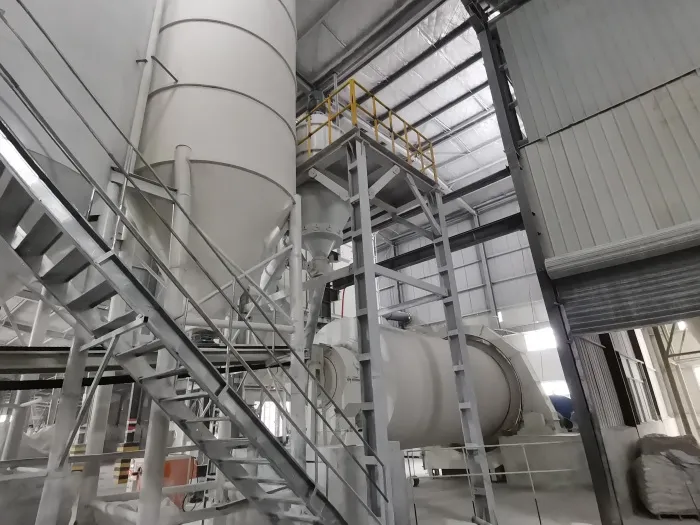
Dry Grinding
Dry grinding is the process in which, after the ore undergoes a certain level of crushing inside the ball mill, airflow carries it out of the mill once it reaches the required fineness. Operators use a dry ball mill for this process. During dry grinding, they do not add water in the production process, and the material must remain dry, hence the name “dry grinding.” The equipment has a straight cylindrical shape and comes with a draft system, dust pipes, and a dust collector. It plays an important role in grinding during the beneficiation of various minerals.
Wet Grinding
Wet grinding occurs when ore enters the mill and the grinding media and ore interact to break it down, while water assists the movement of the material. Operators use a wet ball mill for this process. Depending on its motion characteristics, they classify wet ball mills into simple swing-type, complex swing-type, and mixed swing-type.
Differences Between Dry and Wet Grinding
Equipment Structure
Both types of ball mills consist of main components including a feeding part, discharging part, rotating part, and transmission part (reducer, small drive gears, motor, and electrical control).
The structural differences are as follows:
- Dry ball mill: The discharge port is cylindrical and equipped with a draft system and dust removal.
- Wet ball mill: The discharge port is funnel-shaped, with an internal screw device to facilitate material discharge. Most ball mills sold on the market are wet ball mills, which have higher grinding fineness and better beneficiation effects.
Working Principle
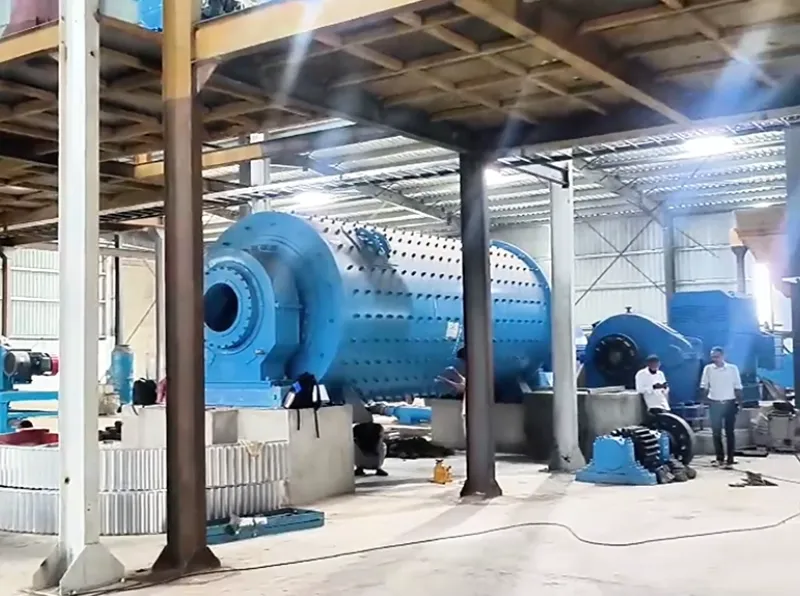
It is a cylindrical rotating device with peripheral gear transmission, usually two compartments, and a grid-type design. Material enters the first compartment through a hollow shaft spiral feeder. The compartment contains stepped or corrugated liners and steel balls of various sizes. As the cylinder rotates, centrifugal force lifts the steel balls, which then fall to crush and grind the material. After coarse grinding in the first compartment, the material passes through a single-layer partition into the second compartment with flat liners and steel balls for further grinding. The powdered material is discharged through a grate plate, completing the grinding process.
Wet ball mill:
The working principle is basically the same as in dry grinding, except that operators add a liquid medium during grinding. They must properly control the slurry concentration. They generally determine the water addition according to the intended use of the slurry, the clay content in the formula, and the clay’s water absorption. Impact and grinding gradually pulverize the ore. Workers then discharge the ground ore from the mill. Operators classify the discharged minerals with a spiral classifier, collect the qualified product, and return coarse sand to the mill for further grinding. The feeder continuously and evenly feeds ore into the ball mill, while workers continuously discharge the ground material.
Applicable Conditions
- In dry grinding, the cylinder design can sometimes create dead zones where the material does not grind effectively.
- Wet grinding also has a disadvantage: after grinding, operators must dry the material to remove water or other liquid media, which increases energy consumption and cost.
- Cement manufacturers cannot grind cement using wet methods. Therefore, each method has its characteristics, and operators should choose the appropriate grinding method according to the material and processing requirements.
Advantages
Advantages of Dry Ball Mill:
The dry ball mill adopts a grate-type discharge, ensuring smooth output without mill clogging. The cylinder does not require cooling, has a long service life, and low failure rate.
Dry ball mills have more auxiliary equipment and an improved integrated structure. The main body and base frame are integrated, allowing one-time installation on the foundation. The main bearing uses double-row spherical roller bearings, reducing energy consumption by about 30%.
Advantages of Wet Ball Mill
Wet ball mills have superior performance, higher grinding efficiency, and can handle ores with high moisture and clay content.
The wet ball mills require fewer auxiliary devices, and material transport is simpler, so investment is generally 5%-10% lower than for dry ball mills.
Wet grinding can grind aggregates into fine particles (mainly spherical rather than split particles) and mix lean materials evenly with plastic materials.
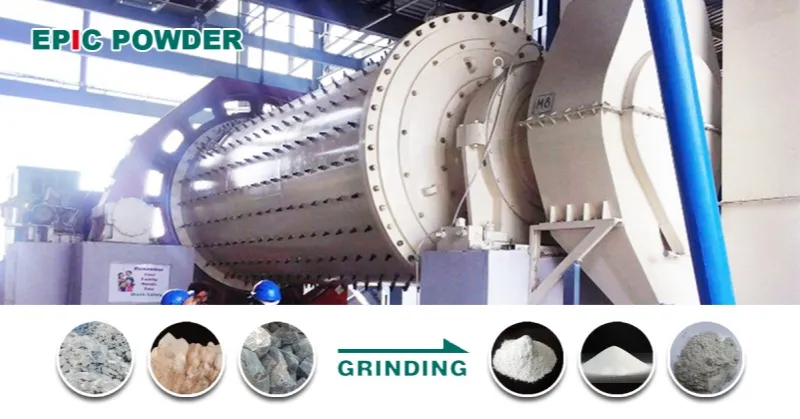
How to Choose Between Dry and Wet Grinding
Correctly Choose the Feeding Method
Whether to feed the material dry or wet depends entirely on the subsequent operations in the ball mill and the nature of the product. Some materials require dry grinding because adding water would cause physical or chemical changes. In fine grinding inside the ball mill, dry grinding causes less wear on liners and media, while producing a higher proportion of fine particles—sometimes the desired grinding method. Choosing the correct grinding method ensures high-quality, efficient operation of the ball mill.
Wet Grinding Is More Economical and Commonly Used
From the perspective of overall economic efficiency in ball mill grinding, wet grinding is generally preferred for beneficiation. Wet ball mills have strong adaptability to materials, allow continuous production, achieve high crushing ratios, and make it easy to control the fineness of the product. Therefore, wet ball mills are most widely used. The funnel-shaped discharge port with an internal screw facilitates material discharge. Most ball mills sold on the market are wet types, offering high fineness and good beneficiation results.
Precautions When Choosing Between Dry and Wet Grinding
- When the required particle size is not very fine, or when manufacturers plan to store or sell the ground product as powder (e.g., glaze or pigment grinding), or when workers press products such as floor tiles into shape, they should use dry grinding. For example, in cement production, operators must use dry grinding, because wet grinding cannot achieve the required results.
- Dry grinding is generally for materials that do not react with a liquid medium. If a reaction occurs, other substances may form, making grinding ineffective.
- In dry grinding, due to the design of the mill cylinder, dead zones may form where material cannot be ground, which requires special attention during daily operation.

“Thanks for reading. I hope my article helps. Please leave a comment down below. You may also contact Zelda online customer representative for any further inquiries.”
— Posted by Emily Chen
 English
  العربية
  Español
  Português
  Français
  Türkçe
  Tiếng Việt
  Русский