
In the preparation of advanced ceramic materials, powder processing is one of the key factors determining final material performance. Whether it is alumina, aluminum nitride, silicon nitride, zirconia, or boron nitride high-performance ceramics, their final density, mechanical properties, electrical performance, and thermal behavior are closely related to particle size distribution, uniformity, and purity of the powder. Ball mill, as one of the most widely used and mature methods for powder refinement and mixing, is extensively applied in the pretreatment of advanced ceramic raw materials, formulation blending, and slurry preparation stages. This article provides a brief introduction to the common ball mill equipment used in the advanced ceramics industry.
The Role of Ball Mill in Advanced Ceramic Powder Preparation
In ceramic powder processing, ball milling mainly performs the following functions:
- Particle size reduction: grinding coarse powders to submicron or even nanometer scale
- Homogeneous mixing: uniform dispersion of multi-component ceramic formulations
- Improving forming performance: enhancing powder flowability and packing density
- Laying the foundation for subsequent processes: such as spray granulation, tape casting, injection molding, dry pressing, or isostatic pressing
Different ceramic materials have significantly different requirements regarding milling methods, equipment structure, and grinding media materials.
Common Types of Ball Mills Used in the Advanced Ceramics Industry
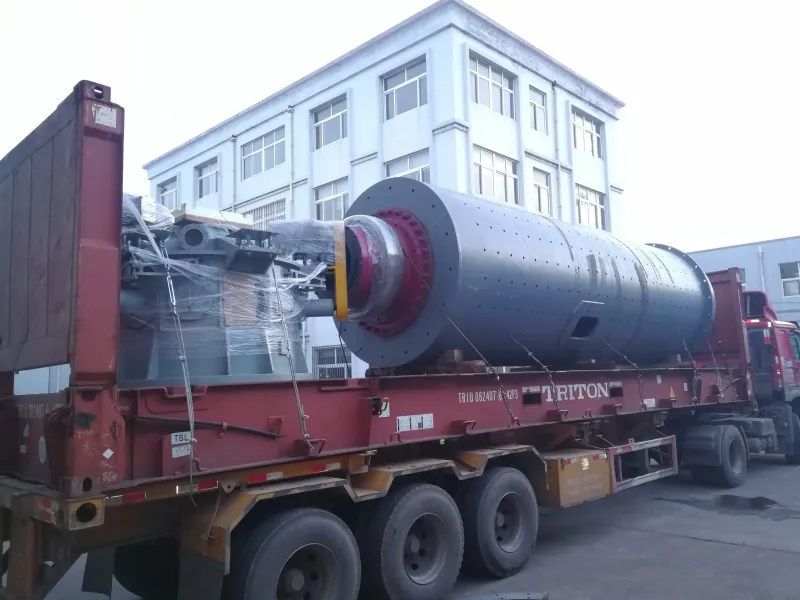
Drum Ball Mill
Working Principle
The cylinder rotates, lifting grinding balls to a certain height under gravity and centrifugal force before they fall, generating impact and grinding action on the powder.
Features
- Simple structure and broad applicability
- Suitable for continuous or batch operation
- Low investment and operating costs
Typical Applications
- Primary crushing, coarse grinding, and mixing of conventional ceramic powders such as alumina and zirconia
- Basic powder processing in laboratories and small-to-medium scale production
Disadvantages
- Relatively low grinding efficiency and higher energy consumption
- Wider particle size distribution
- Long milling times may introduce impurities due to media and liner wear
- In large-scale equipment, heavy loads on main bearings and other key components increase wear and maintenance costs
Planetary Ball Mill
Working Principle
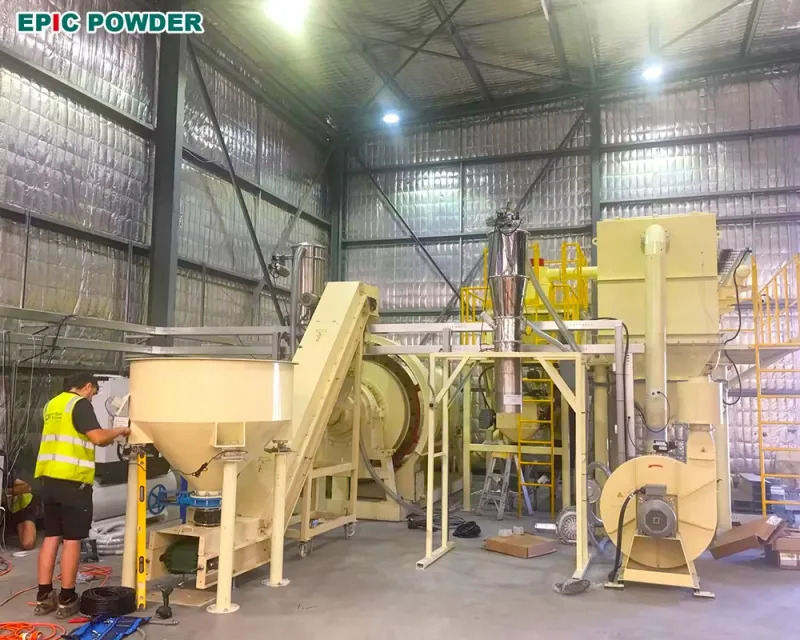
The grinding jar revolves around a central axis while simultaneously rotating at high speed in the opposite direction. Under extremely high centrifugal forces, grinding balls generate intense impact and shear forces, enabling high-energy milling.
Features
- Extremely high energy input density and significantly higher grinding efficiency than traditional drum mills
- Capable of producing submicron powders; one of the primary laboratory methods for obtaining nanopowders
- Ideal for small-batch, multi-variety, high-purity powder processing
Typical Applications
- R&D and preparation of high-end powders for functional and electronic ceramics
- Formula verification and small-scale trial production of new materials such as solid electrolytes and high-entropy ceramics
- Applications requiring special control over powder purity, reactivity, or alloying
Disadvantages
- Limited single-batch capacity and high cost for large-scale production
- Strict control required for rotational speed, ball-to-powder ratio, and grinding media
- Grinding jar and media materials must be carefully matched to powder properties to prevent contamination
Stirred Ball Mill (Bead Mill)
Working Principle
A high-speed rotating agitator (disc, pin, or turbine type) vigorously stirs small grinding media (typically 0.1–3 mm) within the grinding chamber. Strong shear forces and high-frequency collisions between media particles efficiently disperse and refine powder particles.
Features
- Extremely high grinding efficiency and excellent energy utilization
- Uniform particle size distribution and superior dispersion
- Concentrated energy input and high grinding intensity
- Easily designed for continuous or circulation operation, suitable for large-scale production
Typical Applications
- Wet ultrafine grinding of high-performance ceramic powders such as silicon nitride and aluminum nitride
- Precision dispersion and refinement of ceramic slurries for tape casting or coating
- Final dispersion treatment of slurry before spray granulation
Advantages
- Modular design for easy integration into automated production lines
- Clear scale-up pathway from laboratory to industrial production
Disadvantages
- High initial investment
- Media wear and separation challenges
- Complex process control and risk of overheating
Vibratory Ball Mill
Working Principle
The grinding chamber generates high-frequency, small-amplitude circular vibrations under motor drive. Grinding media and materials produce intense multidirectional impact and friction under inertial forces, enabling rapid grinding.
Features
- Much faster grinding speed than drum mills
- Effective for refining high-hardness and brittle ceramic powders such as silicon carbide and cubic boron nitride
- Compact structure and small footprint
Typical Applications
- Rapid dry fine grinding of high-hardness ceramic powders
- Specific coarse grinding or mixing processes where efficiency is prioritized over extremely narrow particle size distribution
Disadvantages
- High noise and vibration during operation
- Rapid wear of media and liners under intense impact, potentially introducing impurities
- Springs, bearings, and other mechanical components may suffer fatigue damage under continuous vibration, requiring frequent maintenance
Key Considerations in Selecting Ball Mill Equipment
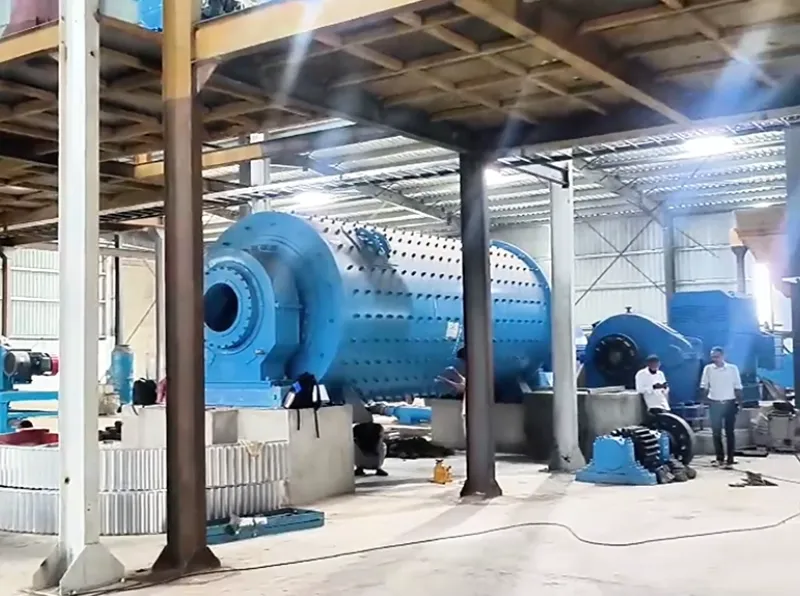
Beyond production capacity and budget, the key factor is matching powder characteristics with process objectives.
For high-hardness powders such as boron carbide, equipment with higher impact energy, such as vibratory mills, or planetary and stirred mills with high-hardness media (e.g., tungsten carbide), is typically preferred.
If extremely high purity is required, such as in bioceramics or electronic ceramics, equipment systems with compatible liners and media materials (e.g., zirconia liners with zirconia balls) should be selected, and direct contact between materials and metallic components should be minimized.
Regarding target particle size and distribution, if a very narrow particle size distribution is required (e.g., high-end conductive slurries), a horizontal bead mill with circulation grinding offers advantages. For R&D scenarios requiring extremely fine particle sizes at the nanometer scale, planetary ball mills remain a reliable option.
In terms of material state, wet grinding helps suppress agglomeration and reduce wear, making it the mainstream approach for preparing submicron slurries, where stirred mills show clear advantages. Dry grinding processes are simpler but require attention to dust control and heat accumulation; drum and vibratory ball mills are commonly used in such cases.
Selection of Grinding Media and Liner Materials
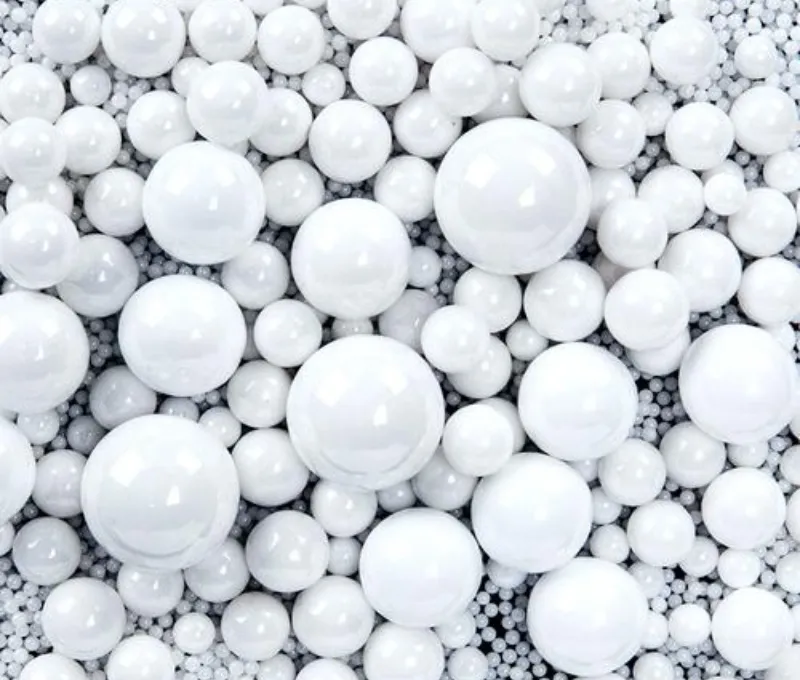
In advanced ceramic powder ball milling, compatibility between grinding media, liner materials, and the powder system should be the primary consideration to prevent contamination and ensure powder purity.
Common grinding media and liner materials include:
- Alumina balls / alumina liners: most widely used with high cost-performance ratio
- Zirconia balls: high density and low wear, suitable for high-purity systems
- Silicon nitride balls: high strength and low contamination, ideal for high-end ceramics
- Boron nitride liners: chemically inert, suitable for special powder systems
Material compatibility between grinding media and powder directly affects the final performance of ceramic products.
The size of grinding media must match the target particle size, which is also a key factor influencing grinding efficiency and particle size distribution:
- Ultrafine grinding (D50 ≤ 1 μm): typically uses 0.1–1 mm microbeads
- Conventional fine grinding (1–50 μm): usually uses 1–3 mm grinding balls
- Coarse grinding stage (>100 μm): 5–10 mm grinding balls may be selected
For stirred mills or bead mills, 0.5–3 mm microbeads are generally used, with a media filling rate of approximately 70%–80%.
In addition to ceramic liners, food-grade polyurethane liners are also used in certain ceramic systems that are highly sensitive to metal ion contamination, due to their zero metal pollution, wear resistance, and hydrolysis resistance characteristics.

“Thanks for reading. I hope my article helps. Please leave a comment down below. You may also contact Zelda online customer representative for any further inquiries.”
— Posted by Emily Chen
 English
  العربية
  Español
  Português
  Français
  Türkçe
  Tiếng Việt
  Русский