
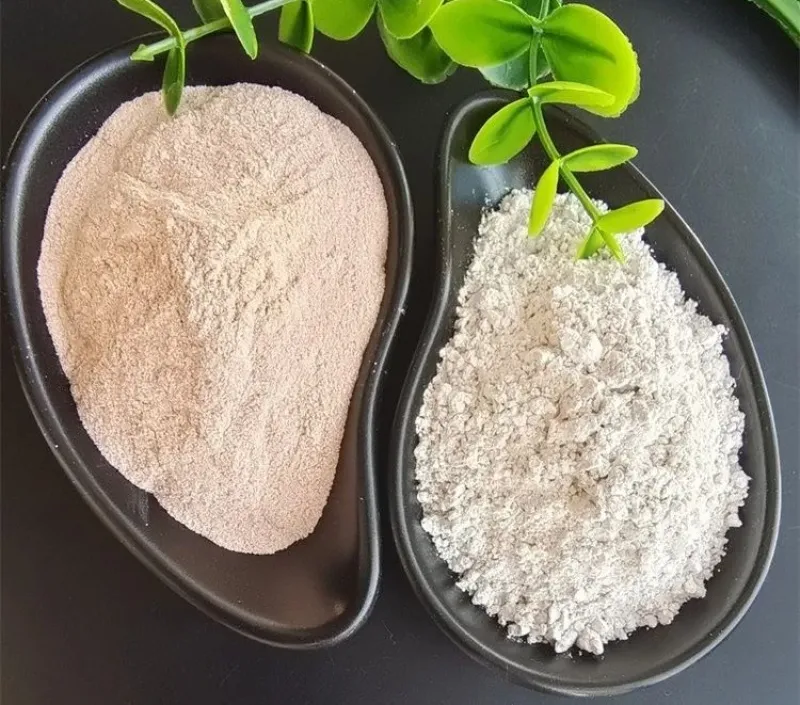
Feldspar (mainly potassium feldspar and sodium feldspar) is one of the most important non-metallic mineral raw materials in industries such as ceramics, glass, electrical porcelain, glazes, and fillers. The degree of its superfine processing directly affects key product indicators such as whiteness, transparency, sintering performance, and rheology. In recent years, with the rapid development of high-end ceramics (especially electronic ceramics, structural ceramics), high-end glazed tiles, and functional fillers, the demand for grinding feldspar ultrafine powder to D97 ≤ 10μm (even D50 in the 2~6μm range) has become increasingly common.
So the question arises: To achieve stable grinding of feldspar ultrafine powder to below 10μm, which is more suitable—an air jet mill or a ball mill (including stirred ball mills, planetary ball mills, conventional dry/wet ball mills with classification)?
Basic Principles of Air Jet Mill and Ball Mill
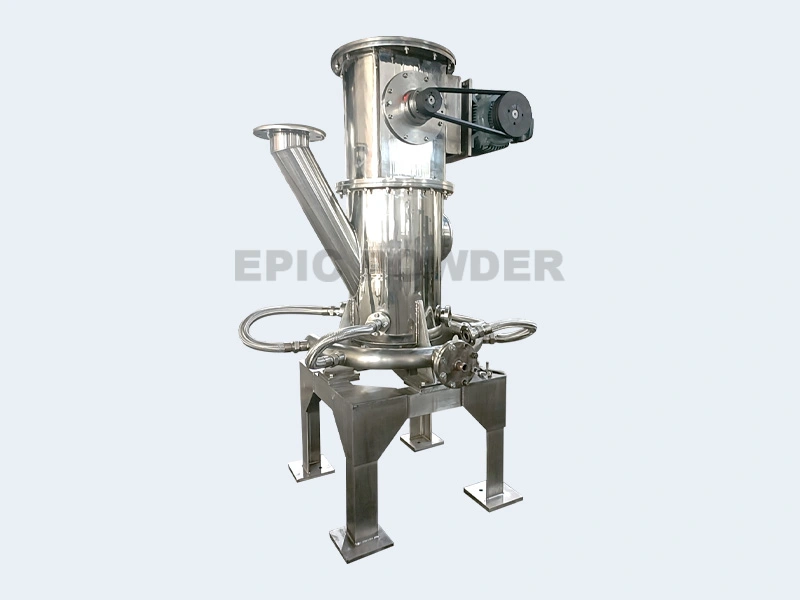
Jet Mill: The air jet mill works by using high-pressure air to feed the material into the grinding chamber, where it is ultrafinely ground through the action of a high-speed rotor and liner. The principle of operation makes it particularly suitable for ultrafine grinding, especially when extremely fine particle sizes are required for feldspar ultrafine powder.
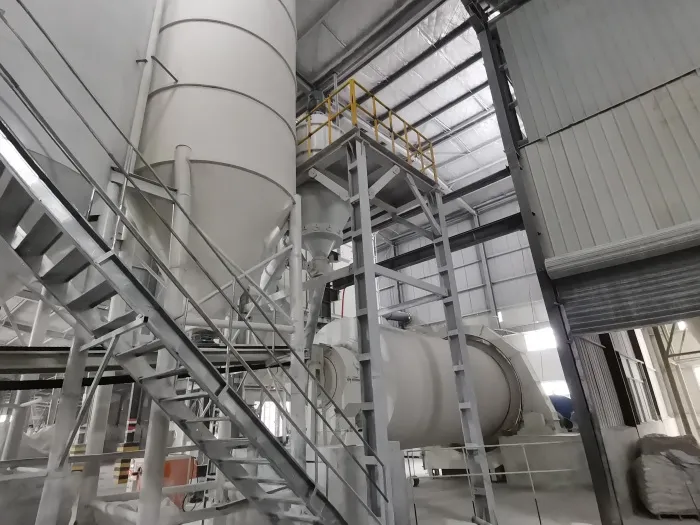
Ball Mill: A ball mill is a traditional grinding device that grinds materials through the collision and friction of grinding balls inside a rotating drum. Ball mills are suitable for medium to coarse particle size grinding and are especially ideal for large-scale material processing.
Core Comparison of the Two Devices (Target: Feldspar Ultrafine Powder < 10μm)
| Comparison Item | Air Jet Mill (Mainly Fluidized Bed / Opposed Jet) | Ball Mill (Dry/Wet + Ultrafine Classification) | Winner for Feldspar Ultrafine Powder Applications |
|---|---|---|---|
| Final Fineness (D97) | Easily achievable D97 2~8μm, D50 can easily reach 1~3μm | Common D97 8~12μm, further down is challenging and costly | Air Jet Mill |
| Particle Size Distribution (Span) | Narrow (usually 1.2~1.6) | Wider (usually 1.8~3.0, or wider) | Air Jet Mill |
| Particle Morphology | Nearly spherical/sub-spherical, few corners, smooth surface | More angular, irregular; longer ball mill time rounds off corners but still coarse | Depends on application |
| Contamination Control | Extremely low (no grinding media, almost no impurities introduced) | Significant (steel balls, liners, and stirrers wear and introduce Fe, Al₂O₃, etc.) | Air Jet Mill |
| Specific Surface Area/Activity | Moderate (relatively smooth surface) | Higher (many angles, surface defects) | Ball Mill |
| Energy Consumption (kWh/t) | Higher (usually 400~900) | Moderate to lower (dry ball mill + classification about 200~500, wet method lower) | Ball Mill |
| Equipment Investment | High (especially large fluidized bed air jet mills) | Moderate to low (especially ceramic-lined ball mills with turbine classifiers) | Ball Mill |
| Single Machine Capacity (t/h) | Medium to small (even large machines rarely exceed 2~4t/h) | Large (easily reaches 5~15t/h or higher) | Ball Mill |
| System Stability | Very stable, high automation | More variable (classification machine, media wear, temperature, etc. affect performance) | Air Jet Mill |
| Representative Feldspar Ultrafine Powder Fineness | Mainstream D97 4~7μm, D97 2~3μm is also mature | D97 8~12μm common, D97 ≤6μm requires significant optimization | Air Jet Mill |
Application Preferences Based on Different Feldspar End Uses
Strict Whiteness/Iron Content Control (High-end Electrical Porcelain, High-grade Daily-use Porcelain, Electronic Ceramic Substrates) → Strongly recommend air jet mill (especially ceramic-lined/full PTFE fluidized bed types)
Reason: Iron content can be controlled to below 50ppm, even 30ppm, and whiteness remains almost unaffected—something ball mills struggle to achieve.
Cost-sensitive, Fineness Requirement D97 8~10μm (General Building Ceramics, Mid-to-Low-End Daily-use Porcelain, Most Glazed Tile Feldspar) → Ceramic-lined ball mill + turbine/multi-stage classifier is still the cost-effective king
Reason: The cost per ton of powder can be 40~65% of that for air jet mills, and production capacity is 2~5 times higher than air jet mills.
High-end Functional Fillers (Engineering Plastics, High-end Coatings, Sealants, Electronic Packaging Materials, etc.) → Both have market potential, but air jet mills are gradually becoming more dominant
Reason: Especially when narrow particle size distribution, extremely low contamination, and better flowability are needed, air jet mills have a clear advantage.
Ultra-high Specific Surface Area Demand (Certain Special Active Fillers, Catalyst Supports) → Tends towards long-duration wet method stirred mills/sand mills, ball mills have the edge
Reason: Air jet mills typically have lower specific surface area.
Conclusion
In general, the choice between an air jet mill and a ball mill depends on your specific requirements. If your goal is to process feldspar ultrafine powder into sub-10μm powder with precise control over particle size and purity, an air jet mill is undoubtedly the better option. However, if you need large-scale production and are not as stringent about fineness, a ball mill may offer a more cost-effective solution.
Ultimately, the decision should consider production requirements, energy consumption budgets, particle size requirements, and equipment investment. Regardless of whether you choose an air jet mill or a ball mill, make sure the equipment is properly configured to achieve the best processing results.

“Thanks for reading. I hope my article helps. Please leave a comment down below. You may also contact Zelda online customer representative for any further inquiries.”
— Posted by Emily Chen
 English
  العربية
  Español
  Português
  Français
  Türkçe
  Tiếng Việt
  Русский