
In the modern cement and concrete industry, multi-component composite mineral admixtures—commonly including slag, fly ash, limestone, steel slag, phosphorus slag, and similar materials—have become an important means to reduce costs, enhance performance, utilize solid waste, and achieve green, low-carbon production. When producing such composite mineral powders, the debate between “separate grinding followed by blending” and “intergrinding” has continued for many years, and there is still no single, universally accepted answer.
So which approach is better?
In fact, the answer depends on what you value most.
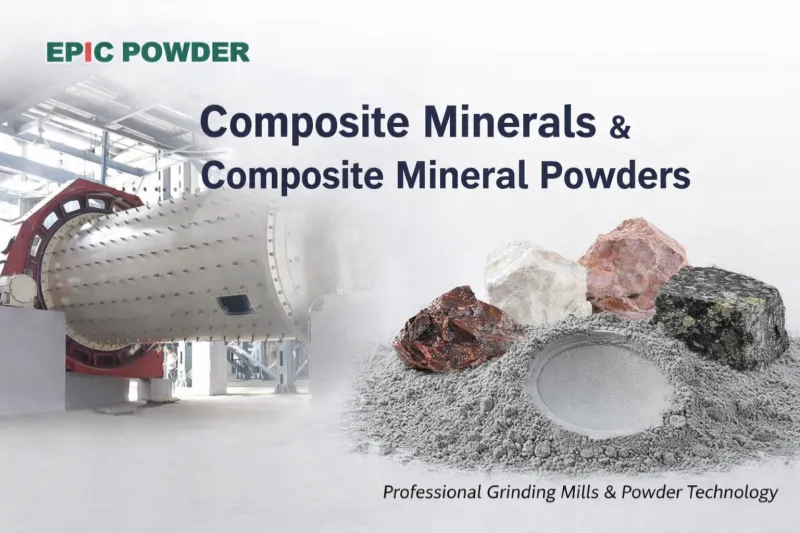
Comparison of the Two Processing Routes for Composite Mineral Powders
| Comparison Aspect | Separate Grinding + Blending | Intergrinding | Current Industry Preference |
|---|---|---|---|
| Fineness control of each component | ★★★★★ Independent and precise control of specific surface area | ★★☆☆☆ Strongly limited by differences in grindability | Separate grinding |
| Particle size distribution optimization | ★★★★★ Can deliberately design ideal grading (even using Kriging optimization) | ★★★☆☆ Mainly formed naturally by grindability differences | Separate grinding |
| Strength at the same specific surface area | ★★★★☆ Generally higher, especially early strength | ★★★☆☆ Requires finer grinding to catch up | Separate grinding |
| Power consumption (at equal strength) | ★★★★☆ Generally lower, especially with high slag content | ★★★★☆ May be slightly better at low–medium replacement levels | Depends on dosage |
| Process complexity and investment | ★★☆☆☆ Multiple mills, storage, and dosing systems | ★★★★★ Single mill, simple process, lower investment | Intergrinding |
| Production flexibility | ★★★★★ Easy ratio adjustment and multiple product grades | ★★☆☆☆ Very difficult to change proportions | Separate grinding |
| Friendliness to hard-to-grind materials | ★★★★★ Dedicated equipment can be selected for each component | ★★☆☆☆ Hard materials tend to remain overly coarse | Separate grinding |
| Mixing uniformity | ★★★★☆ Requires good blending equipment | ★★★★★ Naturally uniform inside the mill | Intergrinding |
| Ultrafine grinding capability | ★★★★★ Easy to achieve ultrafine levels (slag >500 m²/kg, ash >700 m²/kg) | ★★★☆☆ Further fineness increase is difficult and inefficient | Separate grinding |
Practical Selection Trends Under Different Objectives (Industry Status 2025–2026)
1. Highest performance priority
(High strength, high durability, very high replacement levels)
→ Strongly recommended: Separate grinding + blending
Typical applications: high-speed rail, nuclear power projects, mass concrete, high-replacement mineral admixture systems, ultra-early-strength or ultra-high-strength concrete.
Typical users: leading ready-mix concrete companies and suppliers of specialty binders for key infrastructure projects.
2. Cost and process simplicity priority
(Low to medium replacement levels, conventional ready-mixed concrete)
→ Intergrinding remains highly competitive
Typical applications: C30–C50 ordinary concrete, ready-mixed mortar, general industrial and civil construction.
Particularly advantageous when slag replacement is 30–50%, or when fly ash + slag total replacement is 40–60%, which is common in practice.
3. Systems containing hard-to-grind components
(Such as steel slag, phosphorus slag, coarse limestone, or hard coal gangue)
→ Almost unanimously choose separate grinding
In intergrinding, these hard components easily act as “protective bodies,” preventing sufficient fineness and wasting potential reactivity.
4. Frequent product changes or precise ratio control required
→ Separate grinding is almost the only practical option
Under intergrinding, changing proportions essentially means changing the product, making inventory management and quality control extremely difficult.
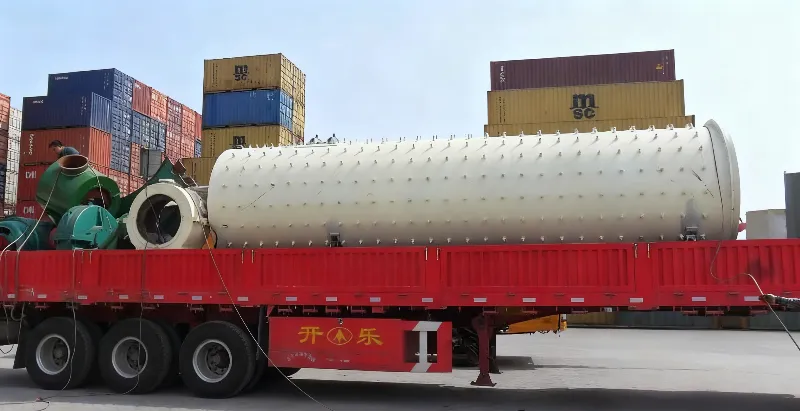
Summary of Typical Industry Practices for Composite mineral powders
- High-end route:
Slag is ground ultrafine separately using a vertical mill (450–550 m²/kg).
Fly ash (Grade I or ultrafine ash, 600–800 m²/kg) and limestone powder (400–500 m²/kg) are prepared separately.
Three or four components are then precisely blended.
→ Best performance, medium to high cost. - Mainstream pragmatic route:
Two- or three-component intergrinding of slag with fly ash (or limestone).
Total specific surface area controlled at 420–480 m²/kg.
→ Cost-effective approach and currently the most widely used in China. - Extreme low-cost route:
Multiple solid wastes interground together (steel slag + slag + fly ash + limestone + phosphorus slag, etc.) to maximize waste utilization.
→ Common in resource-rich regions and solid-waste utilization plants, but with larger performance fluctuations. - Technology-frontier route:
Separate grinding combined with particle morphology optimization and precise functional blending
(e.g., ultrafine silica fume or metakaolin + slag base + morphology modifiers).
→ Applied in UHPC, 3D-printed concrete, and other advanced materials.
Conclusion
At the current stage, the approach that offers the best overall cost-performance ratio, the greatest flexibility, and the strongest synergy among multiple components is usually separate grinding with scientific blending.
However, if your product positioning is conventional, large-scale, cost-sensitive, and with moderate replacement levels, and if investment capacity is limited, then intergrinding remains a very practical and highly cost-effective choice.
If you are planning or operating a composite mineral powder production line, which route are you leaning toward?
Epic Powder welcomes technical inquiries and collaboration regarding ultrafine grinding of composite mineral powders.

“Thanks for reading. I hope my article helps. Please leave a comment down below. You may also contact Zelda online customer representative for any further inquiries.”
— Posted by Emily Chen
 English
  العربية
  Español
  Português
  Français
  Türkçe
  Tiếng Việt
  Русский