
A ball mill is a type of grinding equipment widely used in various industries for size reduction and material processing. It operates by using a rotating cylindrical shell filled with grinding media—usually steel balls, ceramic balls, or other suitable materials—that crush and grind materials into finer powders. Ball mills are essential in industries such as mineral processing, chemical manufacturing, pharmaceuticals, cement, ceramics, and more. Understanding how a ball mill works, its types, and its applications across different sectors is crucial. This knowledge benefits professionals in materials engineering, production planning, and research.
How a Ball Mill Works
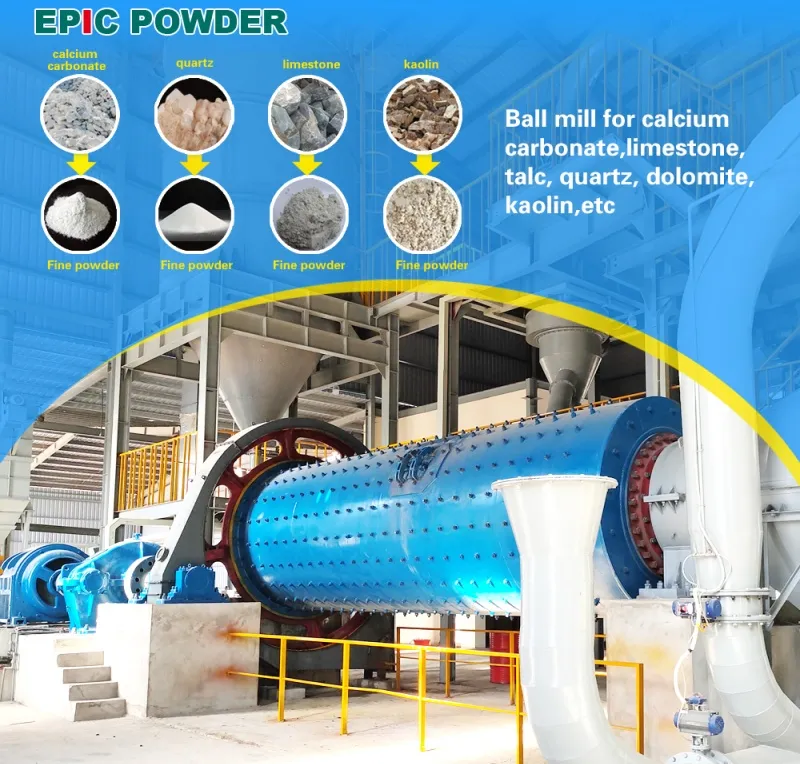
The working principle of a ball mill is relatively straightforward yet highly efficient. The core components of a ball mill include a cylindrical shell, grinding media, and a rotating mechanism. Some ball mills also have a discharge mechanism for the processed material.
- Rotating Cylindrical Shell:
The cylindrical shell rotates around its horizontal axis. The speed of rotation determines the centrifugal force applied to the grinding media and materials inside the mill. Electric motors power the rotation via gears or belts. - Grinding Media:
The grinding media inside the mill—balls made of steel, ceramic, or other materials—impact and grind the raw material. As the mill rotates, the rising side of the cylinder lifts the balls, which then cascade down and collide with the material. This repeated impact and friction gradually reduces the particle size. - Material Feeding and Grinding:
Raw materials are fed into the mill through a hopper or inlet. As the material passes through the rotating shell, it is continuously impacted by the grinding media. Depending on the design, the ball mill can operate in a dry grinding mode (without water) or a wet grinding mode (with a slurry of water or other liquid). Wet grinding often results in finer particle sizes and better dispersion. - Discharge:
Once the material reaches the desired particle size, the operator or system discharges it. This can be done through a grate, an overflow, or another outlet mechanism. Continuous ball mills provide a steady material feed and discharge. Batch mills operate in cycles. In these, the operator processes and removes the material after grinding.
Types of Ball Mills
Ball mills come in a variety of configurations and are classified based on their operation, grinding method, or structure. The major types include:
- Horizontal Ball Mills:
These are the most common type of ball mills. The cylindrical shell sits horizontally and rotates along its axis. Industries such as cement, minerals, and chemical manufacturing frequently use these mills for both wet and dry grinding. - Vertical Ball Mills:
Vertical mills have a vertical rotating shaft with grinding media and materials falling down under gravity. These mills are suitable for fine grinding of materials, such as in ceramic and pigment industries, and are often more compact compared to horizontal ball mills. - Planetary Ball Mills:
These mills consist of a main disc and several smaller containers (called planetary jars) that rotate around the disc while also spinning on their own axis. This motion creates high centrifugal forces, resulting in extremely fine grinding. Planetary ball mills are widely used in laboratories and research applications where micron or nanometer-scale powders are required. - Grid Type (or Lattice Type) Ball Mills:
These mills feature a grid at the discharge end that allows ground materials below a certain size to pass through while retaining larger particles for further grinding. They are commonly used in mineral processing and mining. - Overflow Ball Mills:
In this type, the overflow mechanism discharges the ground material, making it suitable for finer particles. Operators usually use overflow mills in combination with classification systems to produce uniform particle sizes.
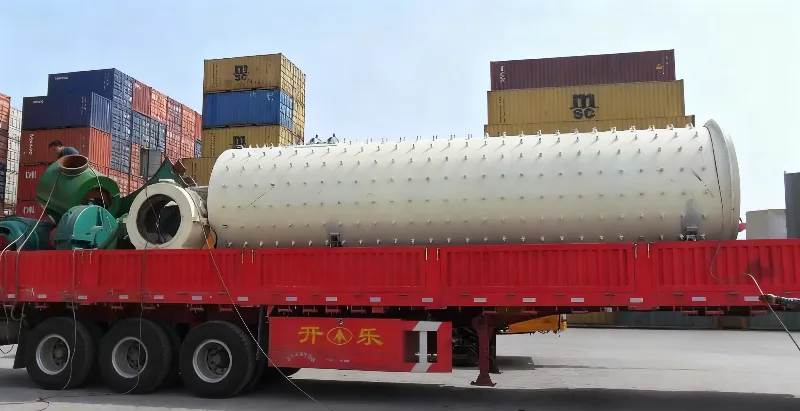
Key Factors Affecting Ball Mill Performance
Several factors influence the efficiency and effectiveness of a ball mill:
- Rotation Speed:
Too fast a rotation can cause the balls to stick to the cylinder walls due to centrifugal force, reducing grinding efficiency. Too slow a speed results in insufficient impact force. The optimal speed is typically 65–75% of the critical speed, which is the speed at which centrifugal forces balance the gravitational forces on the balls. - Ball Size and Material:
The diameter and material of the balls affect grinding efficiency and product fineness. Smaller balls produce finer particles, while larger balls are better for coarse grinding. - Filling Degree:
The proportion of the mill volume occupied by balls and materials influences grinding. Optimal filling ensures maximum collision efficiency without overloading the mill. - Material Properties:
Hardness, abrasiveness, moisture content, and particle size of the raw material affect grinding time and wear on the mill components.
Applications of Ball Mills
Ball mills are highly versatile and find applications in a wide range of industries:
- Mineral Processing:
In mining and metallurgy, ball mills are used to grind ores such as gold, copper, iron, and aluminum to liberate valuable minerals from the surrounding rock. - Cement Industry:
Ball mills are a critical component in cement manufacturing, used to grind clinker into fine cement powder. They ensure proper particle size distribution and optimize the hydration process. - Chemical Industry:
Chemical powders and pigments require fine grinding and mixing. Ball mills facilitate uniform particle size and homogeneity for dyes, fertilizers, and other chemical products. - Ceramics and Glass:
Ceramic powders, glazes, and glass powders require precise particle sizes. Ball mills ensure smooth surfaces, proper consistency, and improved product quality. - Environmental and Recycling Applications:
Ball mills can grind waste materials. Examples include industrial by-products or recycled glass. These materials can then be used as powders for construction, insulation, or other applications. - Food Industry:
Ball mills are also used for grinding cocoa, chocolate, spices, and other food ingredients, providing uniform particle sizes for better texture and flavor.
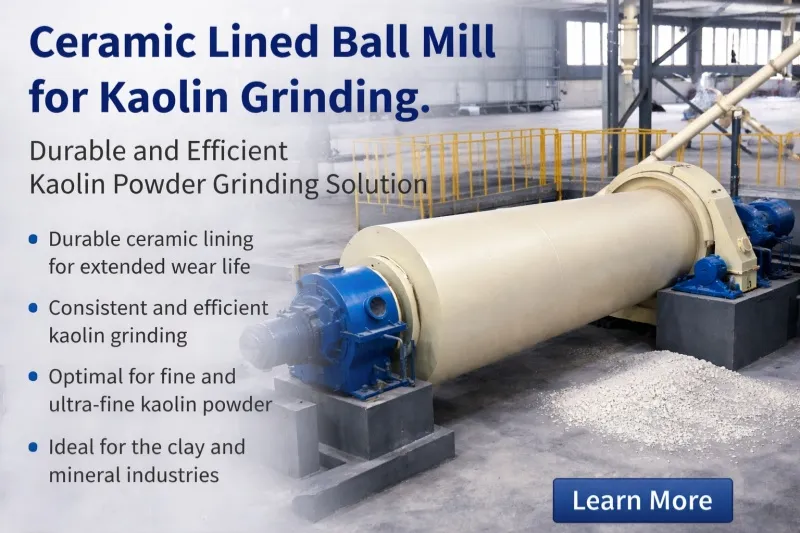
Advantages and Limitations of Ball Mills
Advantages:
- Capable of grinding various materials, including hard and abrasive ores.
- Can produce extremely fine particle sizes, including nano-scale powders.
- Simple construction and easy maintenance.
- Can operate continuously or in batches.
Limitations:
- High energy consumption compared to some modern grinding technologies like jet mills.
- Wear and tear on grinding media and mill liners.
- Requires careful control of operational parameters to avoid over-grinding or under-grinding.
- Noise and vibration can be significant in large industrial mills.
Conclusion
In summary, a ball mill is a versatile and essential piece of equipment used for grinding and size reduction across numerous industries. By understanding its working principle, types, and applications, industries can optimize production, improve product quality, and achieve cost efficiencies. From mining and cement to pharmaceuticals and food processing, ball mills continue to play a vital role in modern material processing and industrial development.

“Thanks for reading. I hope my article helps. Please leave a comment down below. You may also contact Zelda online customer representative for any further inquiries.”
— Posted by Emily Chen
 English
  العربية
  Español
  Português
  Français
  Türkçe
  Tiếng Việt
  Русский