
Project Background: A leading cement manufacturer in Lebanon sought to expand into the market for specialty concrete and high-performance construction materials. To achieve this goal, the customer required an advanced cement ultrafine grinding solution to further process conventional cement clinker into an ultrafine powder. The required product fineness was D90 ≤ 20 μm (corresponding to a specific surface area of approximately 600–800 m²/kg), which is significantly finer than ordinary Portland cement. The objective was to enhance early-age strength and matrix density by increasing particle reactivity.
Key Challenges:
- Material characteristics: Cement clinker has high hardness (Mohs 5–6). During grinding, it readily generates heat, which can negatively affect grinding efficiency.
- Stringent fineness requirement: D90 = 20 μm falls within the ultrafine powder range, beyond the capability of conventional cement separators to achieve such precise cut points.
- Energy consumption control: While maintaining ultrafine fineness, the system optimizes energy consumption per ton to remain cost-competitive.
Solution: Ball Mill + ITC Ultrafine Air Classifier Cement Ultrafine Grinding Line
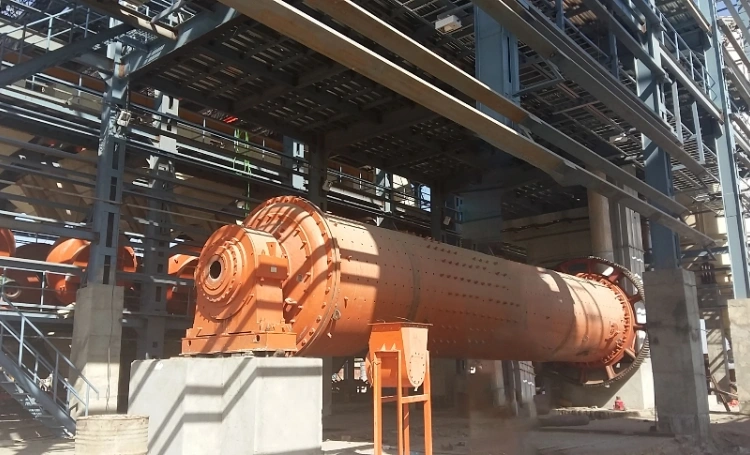
Epic Powder designed a customized closed-circuit “ball mill + classifier” system for this cement ultrafine grinding project, combining the stable grinding performance of a ball mill with the high-precision ultrafine classification capability of the ITC air classifier.
Core System Advantages
- Ball Mill: Serving as the primary grinding unit, the mill pre-grinds clinker to the target intermediate size by optimizing liner design and the grading of grinding media (steel balls / steel cylpebs).
- ITC Series Vertical Classifier: The key equipment for achieving D90 ≤ 20 μm.
- High-precision classification: The ITC classifier features a vertical single-rotor or multi-rotor design. A variable-frequency drive precisely controls the classifier wheel speed, ensuring an extremely stable cut point.
- Secondary air design: The system introduces filtered secondary air to completely detach fine particles from coarse grains, significantly improving classification efficiency.
Process Flow
- Grinding stage: Cement clinker is fed into the ball mill via the feeding system. As the mill rotates, grinding media impact and grind the material.
- Pneumatic conveying: The system transports the ground material to the ITC ultrafine classifier using a bucket elevator or a negative-pressure conveying system.
- Precise classification:
- Qualified fine product: The airflow carries fine powder that meets the D90 ≤ 20 μm requirement through the classifier wheel. A high-efficiency cyclone and a pulse bag filter then collect the product, which is subsequently packed as the final output.
- Coarse particle return: Gravity discharges oversized particles (>20 μm) from the bottom of the classifier. A screw conveyor transfers these coarse particles back to the ball mill inlet for secondary grinding.
- Cooling and dust control: The entire system operates under negative pressure. The process airflow helps remove grinding heat, preventing dehydration of the cement.
Project Results
| Key Parameter | On-Site Operating Data |
|---|---|
| Processed material | Cement clinker |
| Product fineness | D90 ≤ 20 μm |
| Specific surface area | 750 – 800 m²/kg |
| Classification accuracy | Very narrow particle size distribution, free of coarse particle contamination |
| Environmental performance | Emission concentration < 20 mg/Nm³ |
 English
  العربية
  Español
  Português
  Français
  Türkçe
  Tiếng Việt
  Русский