
If you’re involved in limestone ball mill grinding, you already know that achieving the right particle size isn’t just a matter of crushing rocks—it’s a precise balance of process control, equipment selection, and energy efficiency. Whether your goal is a standard 325 mesh product or an ultra-fine D97 3–5 µm powder for high-value applications like PCC or coatings, understanding the nuances of ball mill plus air classifier systems is critical. In real industrial settings, this means optimizing parameters such as mill speed, grinding media, and airflow to meet tight specifications without wasting energy.
In this guide, you’ll get a practical, no-fluff breakdown of how to master limestone grinding. It is backed by real-world data and system insights for 2025—so let’s dive in and get your operation grinding smarter, not harder.
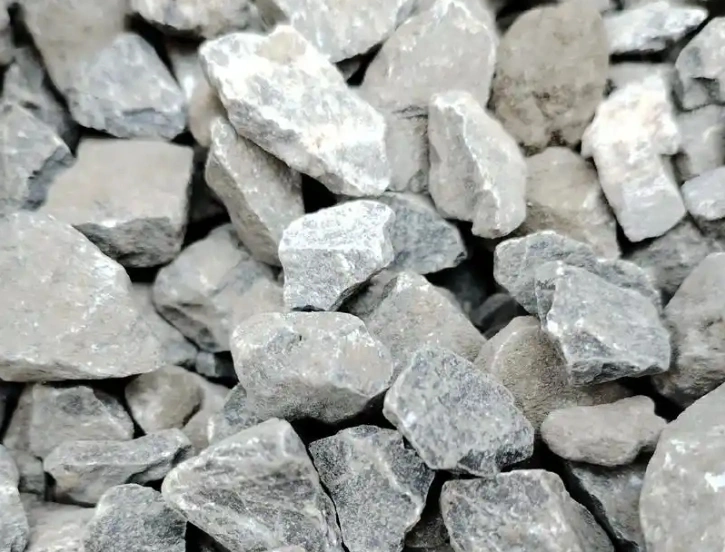
Fundamentals of Limestone Grinding in Ball Mill
Limestone grinding in ball mill is a foundational process in mineral processing and industrial applications where precise particle size and product quality are crucial. Understanding these fundamentals allows you to optimize performance and reduce energy consumption.
Physical Properties Affecting Limestone Grindability
Several limestone characteristics directly impact grinding efficiency:
- Hardness: Typically 3–4.5 on the Mohs scale. Harder limestone requires more energy and longer grinding time to reach the target fineness.
- Moisture Content: Higher moisture leads to agglomeration, reduced throughput, and increased energy consumption due to coating on grinding media.
- Crystal Size and Structure: Fine, uniform crystal structures grind more easily. Coarse or heterogeneous crystals require more intensive grinding.
Critical Speed, Filling Ratio & Grinding Media
- Critical Speed: Optimal ball mill speed is usually 65–75% of the critical speed to maintain effective cascading and grinding. Staying within this range prevents excessive wear and poor grinding efficiency.
- Filling Ratio: Grinding media and material typically occupy 30–45% of the mill volume. The correct filling ratio balances energy efficiency with throughput.
- Grinding Media Selection:
- Steel balls are durable and cost-effective, suitable for coarse-to-medium grinding.
- Ceramic balls are preferred for ultra-fine grinding or when metal contamination must be minimized.
Selecting the right media based on limestone properties and target fineness is essential for maximizing productivity and minimizing wear.
Traditional Open-Circuit vs. Modern Closed-Circuit Ball Mill Systems
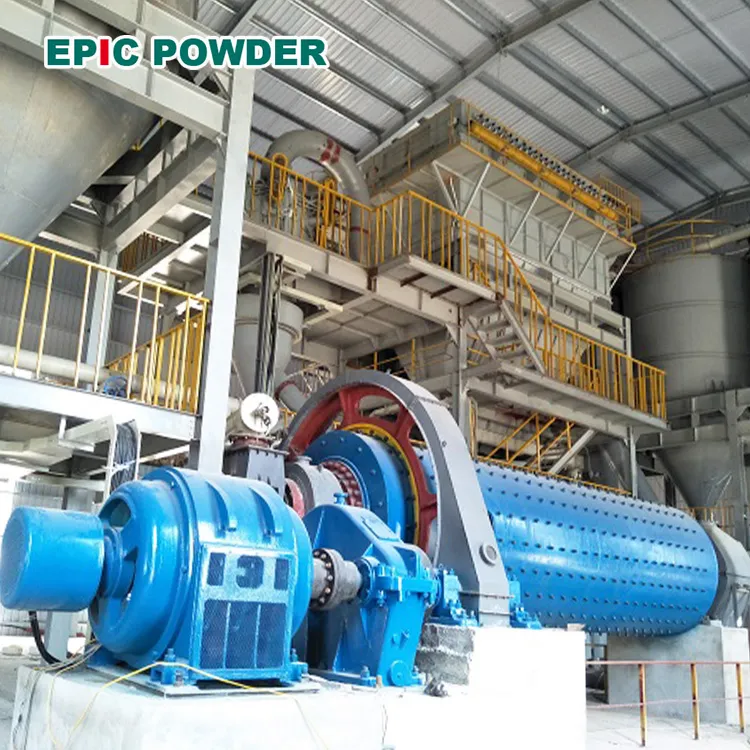
Open-circuit ball mills grind limestone without size control or recirculation of coarse particles. This setup has lower upfront cost and simpler maintenance. However, the disadvantages include inconsistent fineness, over-grinding of fines, and higher energy consumption.
Modern closed-circuit systems pair the ball mill with a high-efficiency air classifier. The classifier separates fine particles from coarse ones and returns the coarse fraction for regrinding. This ensures the product consistently reaches the target fineness (e.g., D97), with improved particle size distribution and reduced power consumption.
Adding a dynamic air classifier improves both product uniformity and energy efficiency. In many real installations, this configuration cuts energy use by 25–40% compared with open-circuit systems, especially for fine or ultra-fine limestone applications such as PCC or FGD.
Achieving Ultra-Fine Limestone Powder (D97 3–5 µm)
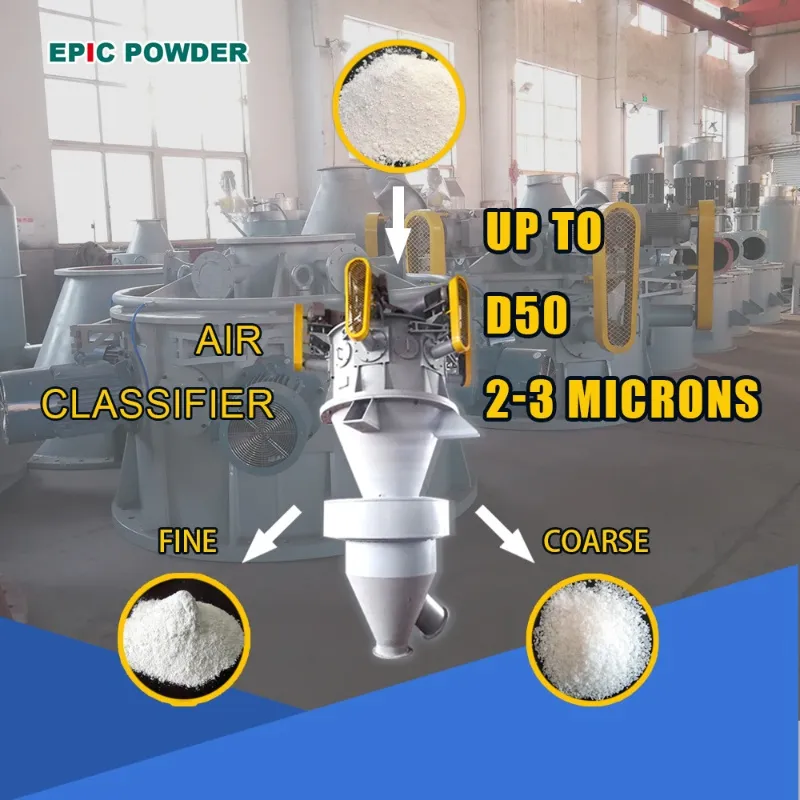
Producing ultra-fine limestone powder at D97 3–5 µm is fully achievable using a ball mill combined with a high-efficiency dynamic classifier. The classifier provides precise particle size control and minimizes over-grinding.
Role of Dynamic Air Classifiers
Dynamic classifiers—such as turbo or rotor classifiers—use centrifugal force and airflow to achieve a sharp cut-point near the target D97. This improves consistency and reduces coarse particles in the final product.
Particle Size Distribution Before vs. After Classification
| Parameter | Before Classification | After Classification |
|---|---|---|
| D97 (µm) | 10–15 | 3–5 |
| D50 (µm) | 5–7 | 1–2 |
| Coarse particles (%) | 15–20% | <3% |
This illustrates the critical role of classification in achieving narrow particle size distribution and high-quality ultra-fine limestone powder.
Key Process Parameters That Control Final Particle Size
Final particle size depends on several parameters:
| Parameter | Typical Range/Value | Effect on Particle Size |
|---|---|---|
| Mill Speed | 65-80% of critical speed | Higher speed = finer grind, up to a limit |
| Filling Ratio | 30-40% volume | Balances impact force and slurry movement |
| Grinding Media Size | Mix of 10-40 mm balls | Larger balls crush coarse, smaller refine |
| Classifier Rotor Speed | 2000-4000 rpm (variable) | Higher speed = finer cut-size |
| Airflow Rate | Adjustable based on mill airflow system | Prevents dust buildup, ensures fine separation |
| Feed Rate | Constant, matched to mill capacity | Stable particle size control |
| Moisture Content | <1.5% ideal | Prevents coating and agglomeration |
Energy Consumption Comparison
| Target Size | Traditional Ball Mill (kWh/ton) | Epic Powder Closed-Circuit System (kWh/ton) | Energy Savings |
|---|---|---|---|
| 325 mesh (~45 µm) | 20 | 15 | 25% |
| 800 mesh (~20 µm) | 40 | 28 | 30% |
| 1250 mesh (~10 µm) | 70 | 45 | 35% |
| 2500 mesh (~5 µm / D97 5 µm) | 110 | 66 | 40% |
The modern Epic Powder system consistently reduces energy consumption due to precise classification and reduced over-grinding.
If you want to know more about how this modern energy-saving grinding system works, you can check our detailed overview of the operation process of ball mill classification production lines.
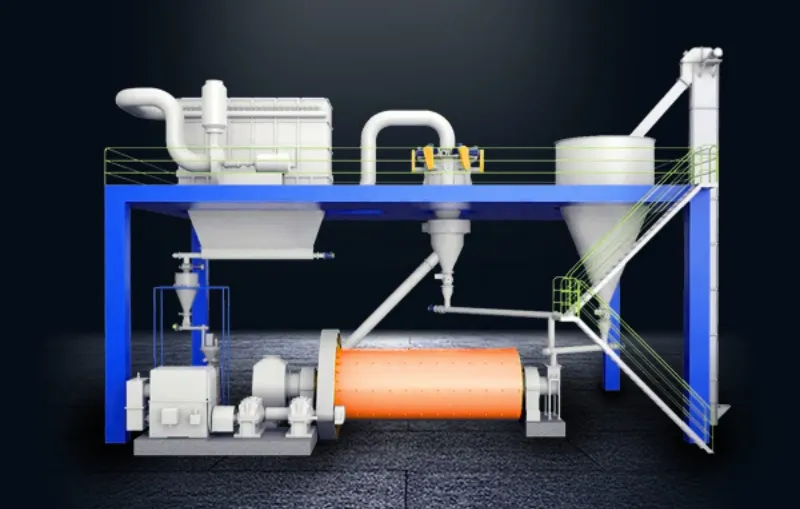
Complete Ball Mill + Classifier System Layout
A standard system includes:
- Ball mill
- High-efficiency classifier
- Dust collector
- Fan and airflow control
- Product storage silos
- Automation and PLC control points
Automation ensures stable fineness (D97), improved efficiency, and reduced operating cost.
Common Problems & Troubleshooting
Typical issues:
- Over-grinding leading to energy waste
- Coating of grinding media due to moisture or fine particles
- Classifier clogging that causes unstable D97
- Variable fineness caused by inconsistent feed or airflow
Solutions:
- Control feed moisture
- Optimize grinding media gradation
- Maintain and clean classifiers regularly
- Adjust mill speed and filling ratio
- Use high-efficiency dynamic classifiers
Industry Applications by Particle Size
Different industries require limestone powder at specific particle sizes to meet their functional needs. Here’s a quick guide to typical applications by fineness:
| Particle Size Range | Typical Application | Main Uses |
|---|---|---|
| 45–150 µm | Cement and concrete | Used as filler and performance enhancer to improve workability and strength. |
| 10–44 µm | Flue Gas Desulfurization (FGD) | Efficiently captures SO₂ in scrubbers; widely used in power plants. |
| 2–10 µm | Precipitated Calcium Carbonate (PCC) | Filler that enhances brightness, opacity, and smoothness in paper, plastics, and coatings. |
| D97 3–5 µm | High-end plastics, coatings, paper | Ultra-fine and highly uniform grade used in premium-quality products. |
Case Studies – Epic Powder Installations
30 t/h Limestone Grinding for FGD (D97 10 µm)
A closed-circuit ball mill + classifier delivers consistent 10 µm material quality, improving SO₂ absorption and reducing energy cost.
8 t/h Ultra-Fine System for PCC (D97 3.5 µm)
Equipped with a high-efficiency classifier, this system produces premium PCC filler with excellent PSD consistency.
How to Choose the Right Limestone Ball Mill Grinding System in 2025
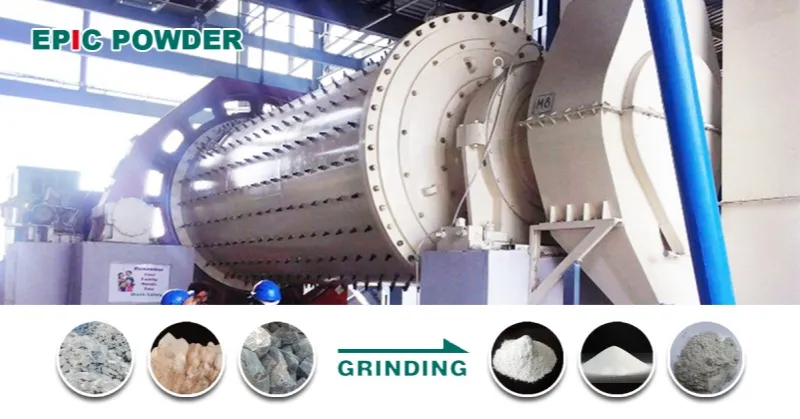
Key considerations:
- Capacity: Match tonnage and allow future expansion.
- Target Fineness: Finer powders offer higher value.
- Cost vs. Long-Term Savings: Closed-circuit systems reduce operating costs significantly.
- Automation: Ensures stability and consistency.
Why Epic Powder Closed-Circuit Systems Outperform
| System Type | Initial Cost | Energy Consumption | Maintenance | Product Fineness | ROI Period |
|---|---|---|---|---|---|
| Traditional Open-Circuit | Low | High | Moderate | Limited (150-44 µm) | Longer |
| Epic Powder Closed-Circuit | Moderate | Low | Lower | Ultra-fine (3-5 µm) | Shorter (1-2 years) |
- Energy savings
- Finer output at higher throughput
- Stable and consistent product
- Advanced PLC control and automation
Choosing Epic Powder’s closed-circuit grinding system means investing in technology designed for today’s limestone market demands—efficient, precise, and cost-effective over the long haul.
For more on ultra-fine grinding technology and its benefits, check out our detailed explanation of ultrafine grinding technology and its uses.

“Thanks for reading. I hope my article helps. Please leave a comment down below. You may also contact Zelda online customer representative for any further inquiries.”
— Posted by Emily Chen
 English
  العربية
  Español
  Português
  Français
  Türkçe
  Tiếng Việt
  Русский