
Q1: What types of industrial materials are most suitable for processing in a ball mill ?
A: A Ball mill is suitable for almost all minerals and industrial materials with a certain degree of brittleness and medium to high hardness. Globally, the most common materials processed using ball mills include:
- Non-metallic minerals (industrial minerals): Calcium carbonate (GCC/ground calcium carbonate), quartz, silica, feldspar, talc, kaolin, etc.
- Battery and energy new materials: Lithium battery anode materials (e.g., synthetic graphite, hard carbon), crushed and recycled lithium battery cathode materials, etc. (typically combined with anti-metal contamination processes).
- Chemical and construction materials: Cement clinker, gypsum, limestone, ceramic raw materials, and special chemical raw materials.
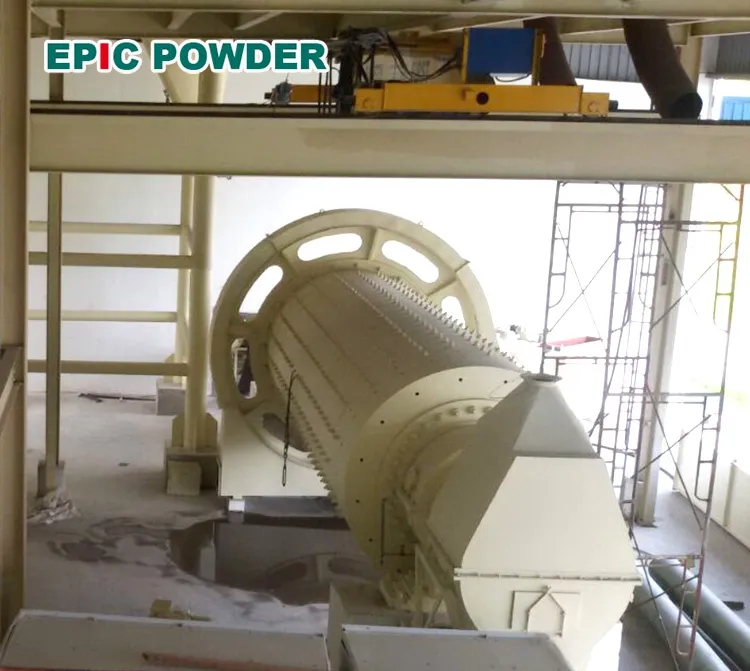
Q2: How does a ball mill solve the problem of “iron contamination” that leads to yellowing and downgraded products?
A: Traditional steel balls and metal liners generate iron filings due to friction, which contaminates the powder. For materials like quartz or calcium carbonate, where purity and whiteness are critical, a metal-free system configuration is required:
- Grinding Media: Steel balls must not be used. Instead, high-purity alumina balls, zirconia beads, or quartz balls are required.
- Mill Liners: The mill’s interior must be lined with alumina ceramic tiles, silica panels, or highly wear-resistant polyurethane/rubber liners to completely isolate the material from metal, ensuring powder whiteness above 95% and no elemental metal contamination.
Q3: Why is it said that processing “non-metallic minerals” requires a ball mill to be paired with an “air classifier”?
A: The ball mill itself is a “rough grinder”; it can break the material but cannot precisely control the fineness of the discharged powder. If the product is discharged directly, it will contain many over-sized particles and excessively ground ineffective fines.
Therefore, modern calcium carbonate or quartz production lines adopt a ball mill + air classifier closed-loop system:
- After grinding in the ball mill, the material is transported by air or elevator to the air classifier.
- The classifier separates ultra-fine powders that meet specifications (e.g., D50: 2μm–5μm, D97 ≤ 10μm) as finished products.
- Coarser particles that have not reached the required fineness are returned to the ball mill for regrinding. This avoids over-grinding (saving energy) and ensures a very narrow particle size distribution.
Q4: For extremely hard materials like “silica/quartz ” and medium-hard materials like “calcium carbonate ,” how does the ball charging strategy differ?
A: Grinding materials of different hardness requires completely different “strategies”:
- Processing hard quartz/silica: Stronger impact energy is needed. Therefore, the ball size distribution should favor larger diameters. Large balls break high-hardness lumps, while smaller balls fill gaps and grind further. The mill liners are usually wave-shaped to lift the balls higher, increasing impact energy.
- Processing calcium carbonate: Calcium carbonate is soft, mainly ground by attrition and friction. Therefore, the ball size distribution should favor small-diameter, high-density balls, increasing total grinding surface area and generating more friction and shear force to rapidly produce ultra-fine powders.
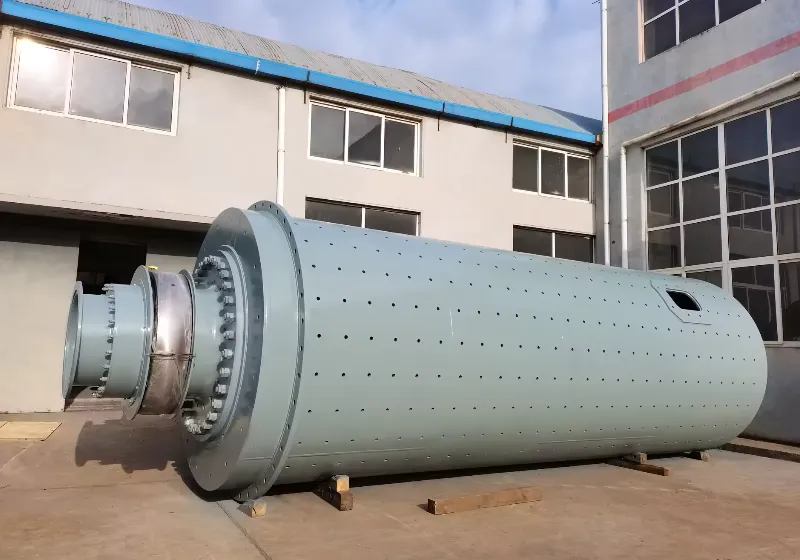
Q5: How does a ball mill achieve green and safe operation ?
A: With global environmental and safety standards rising, modern ball mill systems incorporate two major technological innovations:
- Full negative-pressure dust-free operation: The entire ball mill and air classification system operates under negative pressure. Dust does not escape the piping. Paired with a pulse-jet bag filter, emissions can easily meet the strictest global standards (<10 mg/m³).
- Inert gas protection system: For flammable, explosive, or highly oxidizable powders (e.g., certain sulfur, metal powders, organic new materials), the system can be fully enclosed and filled with inert gas such as nitrogen (N₂). Oxygen concentration is kept below a safe limit, completely eliminating sparks and explosion risks.
Q6: How to improve the grinding efficiency of a ball mill?
A: Grinding efficiency depends on many factors, including material properties, grinding media, rotational speed, ball load, and milling method. Common strategies to improve efficiency include:
- Optimizing ball load: Too few balls reduce grinding, while too many balls cause overcrowding. Generally, ball load should be 30%–50% of the mill volume, adjusted according to material hardness and particle size distribution.
- Choosing proper ball diameter: Coarse materials need large balls for rapid breakage; fine materials need small balls for precision grinding. For materials with a wide particle size range, a multi-stage ball charging strategy is used: large balls for primary crushing, small balls for fine grinding.
- Controlling mill rotational speed: Speed affects grinding media trajectories. Too fast causes the media to cling to the wall; too slow gives insufficient grinding time. Generally, 65%–80% of critical speed is suitable.
- Using a closed-loop system: For ultra-fine powders or materials requiring uniform particle size, an air classifier or screening device is installed at the mill outlet. Qualified powder is separated promptly, and unqualified particles return for regrinding. This increases yield while reducing over-grinding and energy consumption.
- Controlling feed and slurry concentration: Especially for wet milling, slurry concentration significantly affects efficiency and quality. Too high causes viscosity, restricting ball movement; too low reduces energy utilization and lowers output.
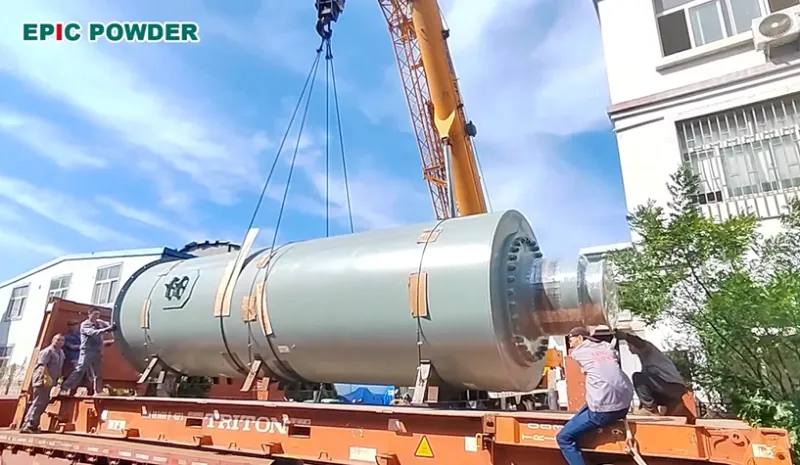
Q7: What are the future development trends of ball mills in powder production?
A: With advances in materials science and market demand, ball mill applications are constantly evolving. Key trends include:
- High efficiency and energy-saving: Optimizing mill structure, ball combinations, and drive systems reduces energy consumption per unit while increasing output.
- Intelligent control: Operators integrate PLC systems, automated monitoring devices, and online particle size analyzers into the production line. The system automatically adjusts grinding parameters and helps maintain consistent product quality.
- Functional powder production: The demand for high-end plastics, coatings, lithium battery materials, and nanomaterials continues to grow. As a result, manufacturers increasingly use ball mills to produce ultra-fine powders, composite materials, and functional powders. They also combine grinding with classification and surface modification technologies to create integrated processing solutions.
- Environmental protection and safety: Manufacturers place greater emphasis on environmental compliance and operational safety. In dry grinding and ultra-fine powder production, they install high-efficiency dust collection and powder recovery systems. These systems improve workplace safety and help plants meet environmental standards.
In summary, ball mills remain one of the most important pieces of equipment in industrial powder processing. Their adaptability, reliability, and scalability enable them to meet changing material requirements and increasingly complex process challenges. As powder technology continues to advance, ball mills will play an even greater role in modern manufacturing.

“Thanks for reading. I hope my article helps. Please leave a comment down below. You may also contact Zelda online customer representative for any further inquiries.”
— Posted by Emily Chen
 English
  العربية
  Español
  Português
  Français
  Türkçe
  Tiếng Việt
  Русский