
Under the normalization of deep peak-load regulation in thermal power plants, the disposal of low-quality fly ash has shifted from a “marginal issue” to a “systemic industry challenge.” On one hand, during deep load cycling and low-load operation, combustion conditions fluctuate significantly, leading to frequent exceedance of key indicators such as Loss on Ignition (LOI), fineness, and water demand ratio. On the other hand, downstream cement and concrete industries have increasingly strict requirements for fly ash quality, resulting in a shortage of Class I fly ash, while low-quality fly ash faces the dilemma of being “unsellable, unusable, and unstockable.” Against this background, fly ash dry modification production lines based on the integrated system of “ball milling + classification + modification” have rapidly gained attention. Some regard it as a “low-cost upgrading tool” capable of upgrading low-quality ash to Class I fly ash and generating tens of yuan per ton in added value. Others argue it is a “scam,” citing high equipment investment, high operating costs, and unstable performance.
So the key question is:
Is fly ash dry modification a technological breakthrough or merely conceptual hype?
To answer this, we must systematically analyze it from multiple dimensions, including technical principles, integrated production line processes, application boundaries, and economic feasibility.
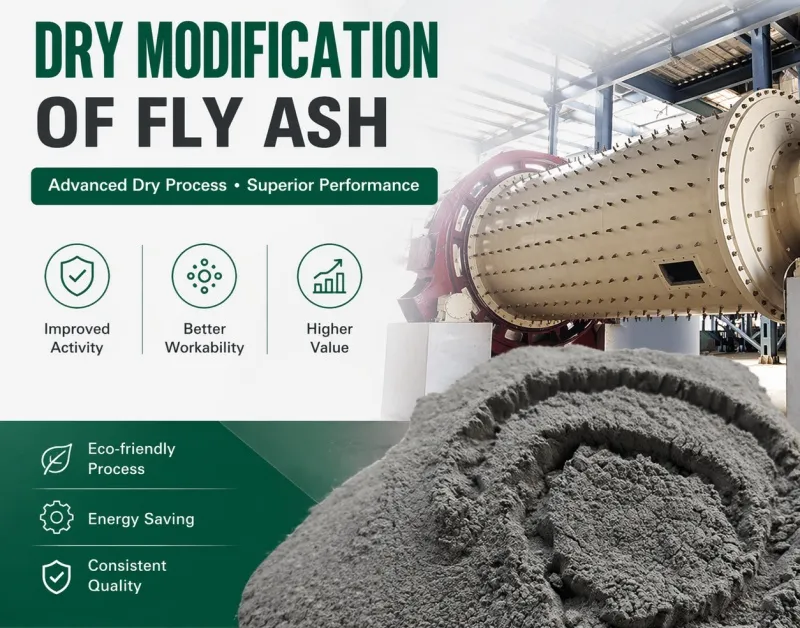
Root Cause of Fly Ash Quality Deterioration: It Is Not the Ash, But the Changing Operating Conditions
Before discussing modification technology, one key issue must be clarified: why has low-quality fly ash become more common in recent years?
The core reasons lie in changes in boiler combustion conditions:
- Deep peak-load operation: Frequent start-stop cycles and low-load combustion lead to incomplete combustion, increasing LOI (unburned carbon content).
- Complex coal blending structure: Co-firing of low-grade coal, coal slime, and biomass leads to highly variable ash composition.
- Unstable temperature field: Affects the formation of glassy phases in fly ash, significantly reducing reactivity.
- Overloaded fly ash classification system: Increased coarse particle content and excessive residue above 45 μm sieve.
These factors result in the “Three Highs and One Low” problem:
- High LOI
- High water demand ratio
- High coarse residue
- Low activity
Traditional technologies such as wet separation, chemical activation, and simple classification have shown limitations under these conditions, including high investment costs, wastewater treatment pressure, and expensive chemical additives.
It is precisely under this industrial context that the “ball milling + classification + modification” dry process production line emerged.
Essence of Dry Modification Technology: Synergy of Three Physical Mechanisms
Dry modification is not a single device or a mysterious chemical formula. Its essence is the systematic integration of powder engineering processes, including:
- Grinding and size reduction
- Air classification
- Particle shaping
- Mechanical activation
within a unified production line.
1. Ball Milling System: From “Coarse Ash” to “Usable Ash”
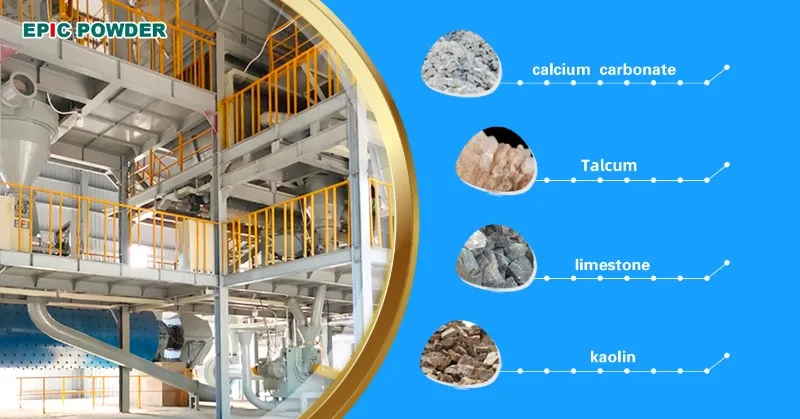
Low-quality fly ash typically contains large amounts of porous carbon particles as well as coarse quartz and feldspar crystals. The ball mill acts as the “breakthrough unit” of the entire system:
- Elimination of coarse particles: Through impact and grinding by steel balls or rods, particles larger than 45 μm are rapidly reduced, significantly lowering D50 and D97.
- Mechanical-chemical activation: High-energy impacts cause Si–O and Al–O bonds in the glassy phase to break, generating lattice defects and exposing more amorphous reactive structures. This is not only physical size reduction but also activation at the structural level.
However, grinding is not better when finer:
- Over-grinding destroys spherical glass beads
- Increases angular fragments and surface area excessively
- Causes agglomeration and higher water demand ratio
Thus, the key lies in “precise grinding + dynamic classification,” not extreme fineness.
2. Fine Classification System: The “Commander” of the Production Line
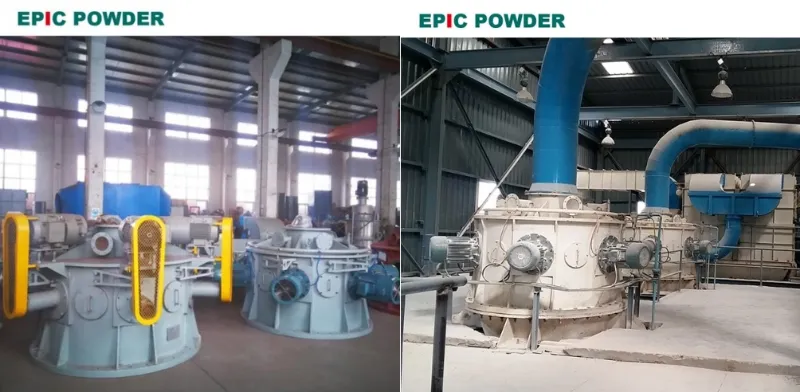
Relying solely on a ball mill is inefficient and even destructive. A high-efficiency air classification system must be introduced for dynamic control:
- Optimized particle size distribution: The classifier precisely separates particles under centrifugal force and airflow, controlling fine and coarse fractions to achieve optimal rheology.
- Closed-loop system with ball mill: Unqualified coarse particles and porous carbon particles are returned to the ball mill for reprocessing, preventing over-ground fine powder from remaining in the system.
Without classification, grinding becomes uncontrolled output rather than engineered production.
3. Particle Shaping and Modification System: The Key to Water Demand Ratio
The most critical performance indicator for downstream concrete applications is the water demand ratio.
Poor-quality fly ash has high water demand due to:
- Irregular porous carbon residues
- Angular fragments
- Rough particle surfaces
The shaping and modification system addresses this:
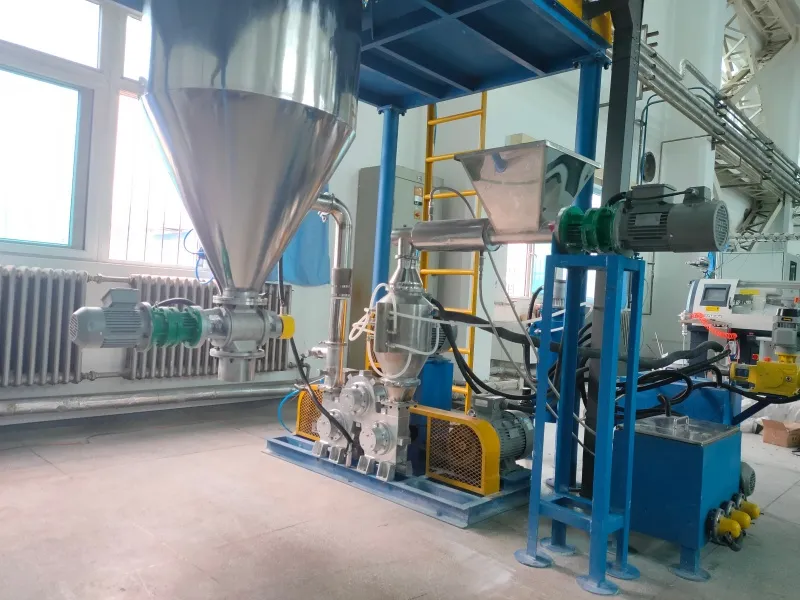
- Particle shaping: High-speed airflow and particle collision remove sharp edges and irregular structures, improving sphericity.
- Functional composite modification: A small amount of physical modifiers (e.g., amines or surfactants) can be atomized and introduced. These molecules adsorb onto micro-pores, reduce surface energy, and enhance the “ball-bearing effect” of glass microspheres.
As a result, water demand ratio can be stably controlled within 95%–100%.
Why Do Some Projects Make Money While Others Fail?
The controversy around dry modification is not about the technology itself, but whether application conditions are properly matched.
1. Successful Scenarios
Projects are more likely to succeed when:
- Raw ash is close to Class II quality
- Only partial indicators are substandard
- High glass phase content (good activation potential)
- Power plant and concrete plant are geographically close
- Stable downstream consumption channels exist
Typical economics:
- Modification cost: 20–40 RMB/ton
- Value increase: 50–100 RMB/ton
- Clear profit margin
2.Common Failure Cases
(1) Incorrect raw material selection
- High LOI (>10%)
- High carbon content
- High crystalline phase content
👉 Such ash cannot be significantly improved even with fine grinding.
(2) Improper equipment configuration
- Only ball mill, no classification system
- Weak shaping capability
- High system energy consumption
👉 Result: “finer ash, but unusable product.”
(3) Poor process control
- Over-grinding leads to agglomeration
- Low classification precision
- System instability
👉 Product inconsistency makes commercialization impossible.
(4) Misjudged market conditions
- Local Class I fly ash price too low
- Lack of acceptance by customers
- Excessive transportation distance
👉 Even if technically feasible, the business model fails.
Dry Modification vs Wet Separation vs Chemical Activation: Which Has a Future?
| Dimension | Dry Modification | Wet Separation | Chemical Activation |
|---|---|---|---|
| Process complexity | Medium | High | Medium |
| Environmental pressure | Low | High (wastewater) | Medium |
| Operating cost | Medium | High | High |
| Stability | Medium–High | High | Formula dependent |
| Application range | Medium | Wide | Limited |
Industry Trend Analysis:
- Stricter environmental policies → Wet processes restricted
- Rising cost pressure → Chemical methods less attractive
- Dry modification → Positioned in the “cost-performance sweet spot”
However, it is not a universal solution, but an optimal solution under specific conditions.
Conclusion: Not a Scam, But Not a Universal Key Either
Returning to the original question:
Is fly ash dry modification technology a scam?
The answer is clear:
- It is NOT a scam: it can significantly improve fly ash value under suitable conditions.
- It is NOT a universal solution: it is highly sensitive to raw materials, process control, and market conditions.
More accurately, it is a technology that requires:
“The right material, in the right place, using the right system.”
If you have stable raw fly ash resources (especially high-glass-phase coarse ash), accessible downstream markets, and are willing to invest in a fully integrated system consisting of ball milling, precise classification, and particle shaping modification, then this technology can indeed become a highly profitable waste-to-value industrial project.

“Thanks for reading. I hope my article helps. Please leave a comment down below. You may also contact Zelda online customer representative for any further inquiries.”
— Posted by Emily Chen
 English
  العربية
  Español
  Português
  Français
  Türkçe
  Tiếng Việt
  Русский