
The grinding efficiency of a ball mill is affected by many factors. These mainly include: the movement pattern of the steel balls within the cylinder, the rotational speed, the replenishment and size of the steel balls, the material level, and the use of grinding aids. These factors all influence the efficiency of the ball mill to some extent.
Movement Pattern of Steel Balls within the Cylinder
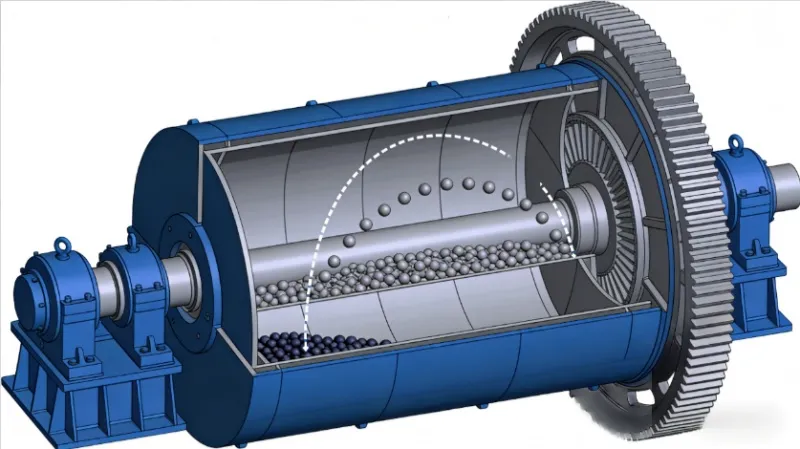
To be precise, the movement pattern of the grinding media within the cylinder affects the grinding efficiency of the ball mill to a certain extent.
The working environment of a ball mill can be divided into the following categories:
Peripheral and Cascading Motion Zone
In this zone, the filling rate inside the drum is extremely low or even zero. Consequently, the materials undergo uniform circular motion or cascading motion along the drum wall. This significantly increases the probability of ball-to-ball collisions, leading to severe wear and tear on both the steel balls and the liners, which ultimately results in low grinding efficiency.
Cataracting (Throwing) Motion Zone
This zone features an optimal filling rate. Under these conditions, the steel balls are thrown and impact the material directly, generating higher crushing forces and leading to relatively high ball mill efficiency.
Central Mixing Zone
Located around the core of the ball mill, this zone involves a mixture of circular, cascading, and cataracting motions. The movement range of the steel balls is highly restricted here, resulting in minimal wear and low impact forces.
Dead (Blank) Zone
In this region, the steel balls remain stationary. If the filling rate is excessive, the movement range of the balls becomes severely restricted or non-existent. This leads to a waste of energy and resources and makes the ball mill highly susceptible to mechanical failures.
The Shift from Horizontal to Vertical Ball Mills
As noted in the description of the peripheral zone, when the filling volume is extremely low or absent, the ball mill suffers significant wear, primarily driven by the impact of steel balls against the material. Since conventional ball mills are horizontal, vertical ball mills have been introduced to effectively reduce the wear on materials.
In traditional grinding equipment, the drum itself rotates. Conversely, in stirred-type equipment, the vessel remains stationary. It relies primarily on a screw-agitating device to disturb and stir the steel balls and materials within the tank. Driven by this vertical agitation mechanism, the balls and materials rotate inside the equipment, ensuring that the materials only interact with the steel balls until they are pulverized. As a result, this design is exceptionally well-suited for fine and ultra-fine grinding operations.
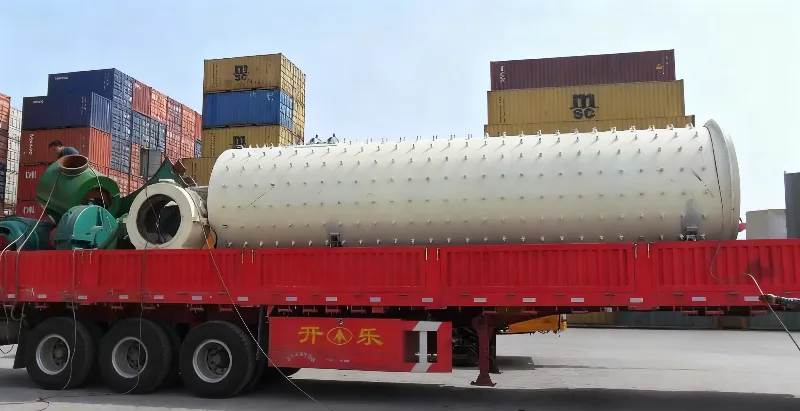
Rotation Speed Rate
The rotation speed rate is a critical operating parameter that directly influences the grinding efficiency of a ball mill. When evaluating rotation speed, the filling rate must also be considered, as there is a positive correlation between the two. Assuming a constant filling rate for this discussion, there is always an optimal rotation speed for any given motion state of the ball load.
Impact of Low Rotation Speed
When the rotation speed is low at a fixed filling rate, the steel balls acquire less kinetic energy. The resulting impact energy on the material is low and may fall below the fracture threshold of the ore particles. This leads to ineffective impacts where the ore particles fail to break, resulting in poor grinding efficiency at low speeds.
Optimal Speed vs. Critical Speed
As the rotation speed increases, the impact energy of the steel balls grows, which enhances the breakage rate of coarse particles and improves the grinding efficiency. However, if the speed continues to increase and approaches the critical speed, the breakage rate of coarse products begins to decline. This happens because, despite the higher impact energy at excessive speeds, the circulation frequency of the steel balls drops drastically. This reduction in the number of impacts per unit of time leads to a lower breakage rate for coarse particles.
Steel Ball Replenishment and Size Distribution
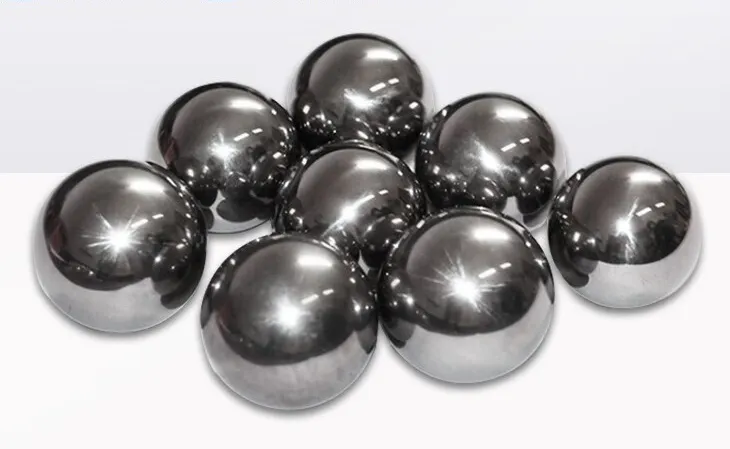
Inappropriate ball loading volumes, incorrect ball diameters, or unreasonable size ratios will inevitably lead to a decline in grinding efficiency. A large portion of the severe wear experienced during operation stems from poorly controlled manual ball addition, which causes ball accumulation, jamming, and subsequent mechanical wear.
Optimizing Media Ball Sizes
As the primary grinding medium, both the total volume and the size ratio of the steel balls must be strictly regulated. Optimizing the grinding media can improve milling efficiency by approximately 30%. During grinding, larger ball diameters provide higher impact wear but less attrition (grinding) wear. Conversely, smaller diameters yield less impact wear but greater attrition wear.
If the ball diameter is too large, the total number of balls inside the drum decreases, reducing the total grinding surface area of the ball load while accelerating liner wear and ball consumption. If the ball diameter is too small, the cushioning effect of the material increases, which weakens the impact crushing performance.
Precise Ball Loading and Replenishment Method
To further enhance grinding efficiency, a precise ball loading and replenishment method has been proposed:
Screening and Classification:
Screen and analyze specific ores to group them by particle size.
Impact Capability Analysis:
Analyze the fracture resistance of the ore and use semi-theoretical ball diameter formulas to calculate the exact ball size required for each particle group.
Optimizing Ratios via Mechanics:
Determine the proportions of various steel balls based on the particle size distribution of the feed material. This is done using the principles of breakage statistical mechanics to maximize the probability of crushing.
Streamlined Replenishment:
Use these calculations as a foundation to streamline ball replenishment, limiting the addition to just 2 to 3 optimal ball sizes to reduce complexity.
Material Level
The material level directly influences the filling rate, which in turn affects the grinding performance. If the material level is too high, it can cause coal plugging in the mill. Therefore, effective monitoring of the material level is vital.
Additionally, the energy consumption of the ball mill is closely linked to the material level. In intermediate storage pulverizing systems, the power consumption of the ball mill accounts for about 70% of the entire pulverizing system’s electricity use, and roughly 15% of the total plant power. While many variables affect intermediate storage pulverizing systems, effective material level inspection remains one of the most critical priorities.
Liner Selection
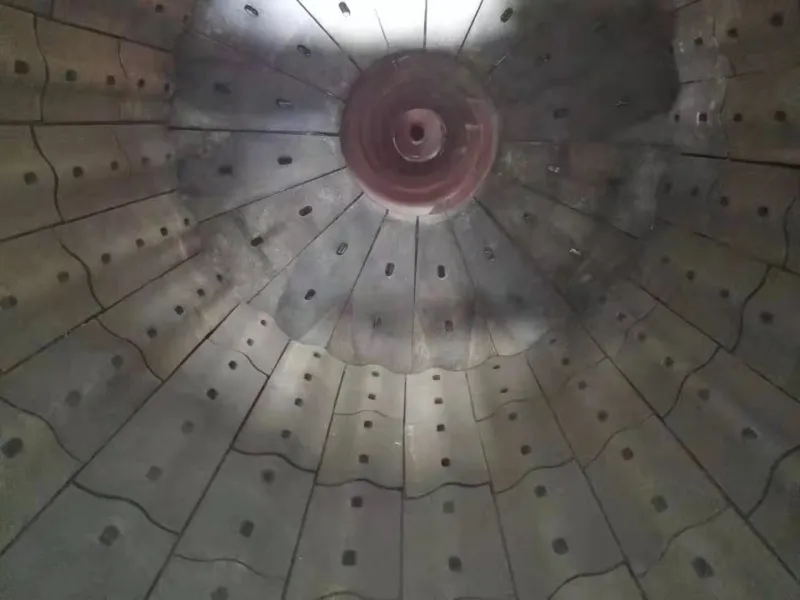
The liners of a ball mill not only protect the drum from damage but also transfer energy to the grinding media. The grinding efficiency is heavily dictated by the working profile of these liners. Practical experience shows that to minimize drum damage and maximize grinding efficiency, sliding between the grinding media and the liner must be minimized. This is typically achieved by altering the surface geometry of the liner or increasing the friction coefficient between the liner and the media.
While high-manganese steel liners were traditionally used, modern operations now utilize rubber liners, magnetic liners, and angular spiral liners. These advanced liners outperform traditional high-manganese steel in performance and effectively extend the service life of the ball mill.
Targeted improvements in the movement patterns of the steel balls, rotation speed, ball replenishment and size distribution, material levels, and liner materials can collectively and significantly boost grinding efficiency.
Conclusion
In conclusion, the grinding efficiency of a ball mill is not dictated by a single isolated variable. Instead, it is the result of a coupled, multi-parameter synergy. This process involves ball motion states, rotation speed, and media distribution. It also depends on material level control and liner configuration. An imbalance in any single component can cause several issues. It can lead to a drop in energy utilization or aggravated over-grinding. It can also accelerate equipment wear. Ultimately, these factors disrupt overall production stability and product quality.
In modern fine powder processing, advanced powder engineering enterprises—represented by industry leaders like EPIC Powder—are making grinding and classifying processes highly controllable and efficient. They achieve this by optimizing classification control systems, upgrading grinding chamber designs, and enhancing intelligent operational parameter adjustments.
This is particularly true in specific fields. Examples include ultra-fine heavy calcium carbonate, quartz/silica powder, non-metallic minerals, and high-end functional powders. In these sectors, ball mill systems must be integrated with other processes. These include precision classification, surface modification, and continuous production lines. This integration significantly reduces ineffective impacts and over-grinding. Consequently, energy is focused precisely on the active crushing process. This ensures higher unit capacity and a more stable particle size distribution.

“Thanks for reading. I hope my article helps. Please leave a comment down below. You may also contact Zelda online customer representative for any further inquiries.”
— Posted by Emily Chen
 English
  العربية
  Español
  Português
  Français
  Türkçe
  Tiếng Việt
  Русский