
In industries such as mining, building materials, metallurgy, and chemical engineering, the ball mill is one of the most essential grinding machines. However, many clients, when consulting, often focus only on the “ball mill” itself and overlook a key point: a production line that can operate stably, efficiently, and long-term is far more than just a single ball mill.
Today, from the perspective of a manufacturer, we will “break down” a complete ball mill production line.
1. Feeding System: Stability Comes First
Main equipment: Vibrating feeder, belt conveyor, bucket elevator
Function:
To deliver raw ore or material evenly, continuously, and controllably into the ball mill.
💡 Key Tip: The stability of the feeding directly affects grinding efficiency and the lifespan of the mill. Many production shortfalls are actually rooted in the feeding system.
2. Grinding System: The Core of the Entire Line
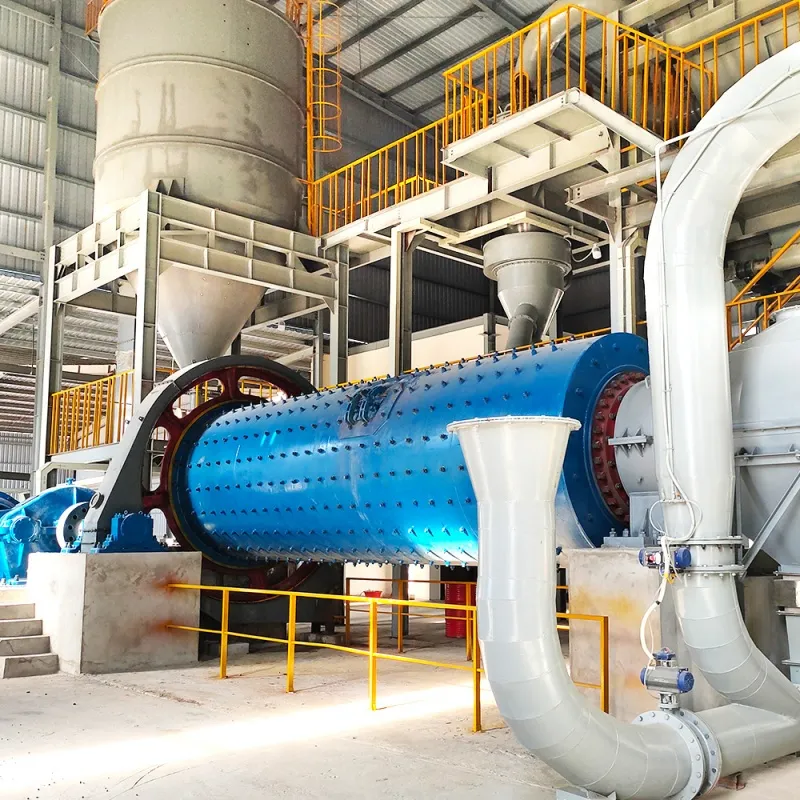
Main equipment: Ball mill (including cylinder, liner, steel balls, bearings, and transmission system)
Function: To crush large particle materials to the desired fineness through the impact and grinding of steel balls.
Two key points deserve special attention:
- Liner material: Different materials such as high-manganese steel or alloy liners directly affect service life and wear costs.
- Steel ball grading: The ratio of large to small steel balls directly determines grinding efficiency and over-grinding.
1. Cylinder: The Core Battlefield for Efficient Grinding
Customized liner and steel ball grading solutions can be provided for different ores (gold, iron, limestone, potash feldspar, etc.), balancing output, fineness, and wear resistance.
2. Transmission System: Powerful and Energy-Efficient Heart
3. Classification System: Determines Product Quality
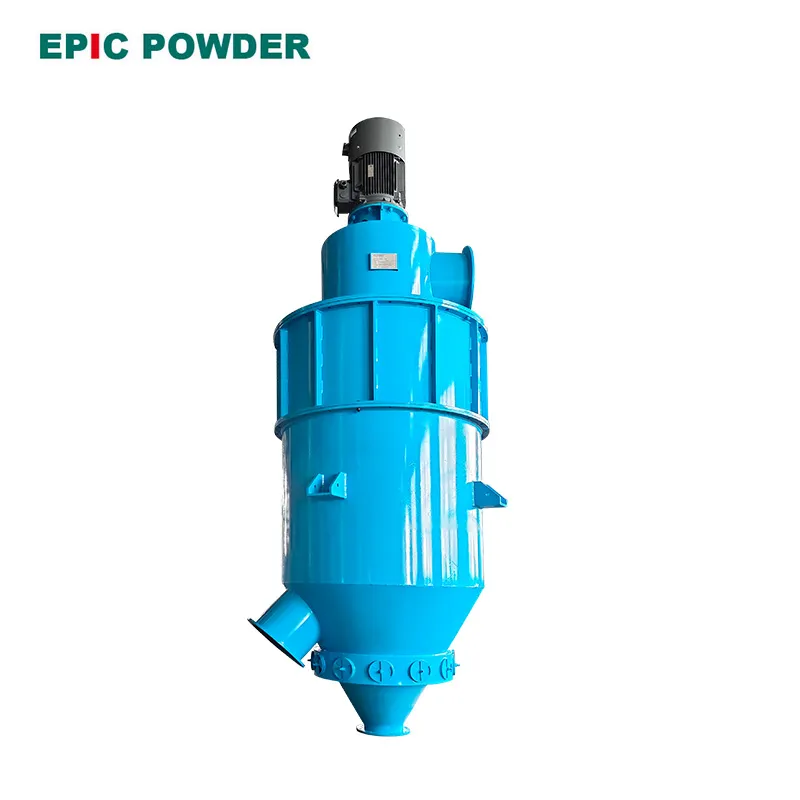
Main equipment: Air classifier (for dry processes)
Function: To separate ground material by particle size, acting as the key “gate” to ensure product quality.
- Qualified fine powder: Enters the next stage (such as product silo, screening, or packaging).
- Coarse particles: Returned to the ball mill for regrinding via the return device.
Core value: Without a classification system, the product is either too coarse or over-ground, wasting capacity and electricity.
4. Conveying and Collection System: Balancing Environmental Protection and Efficiency
Common configurations depending on process:
Dry process:
- Pulse dust collector
- Cyclone collector
- Blowers
Wet process:
- Slurry pump
- Hydrocyclone
Main functions:
- Efficiently collect finished powder, reducing spillage.
- Significantly reduce dust emissions, meeting environmental requirements.
- Achieve clean and environmentally friendly production.
Current trend: With increasingly strict environmental regulations, this system is now as important as the ball mill itself.
5. Electrical Control System: The “Brain” of the Production Line
Main equipment: PLC control cabinet, frequency converters, monitoring instruments
Function:
- Centralized control: One-key start/stop with sequential interlock protection.
- Real-time monitoring: Key parameters such as current, temperature, and vibration are visible at a glance.
- Intelligent alarm: Automatic fault alerts and protective shutdown.
Upgrade direction: The higher the level of intelligence, the more stable the production line and the lower the labor cost. This is an important modernization trend for ball mill production lines.
6. Auxiliary Systems (Optional but Very Useful)
Although not absolutely necessary, these systems greatly help improve efficiency and extend service life:
- Lubrication system: Automatically lubricates bearings and gears, reducing maintenance downtime.
- Automatic ball charging device: Supplements steel balls as needed to maintain grinding efficiency.
- Online particle size analyzer: Monitors discharge fineness in real-time, assisting parameter adjustment.
Understanding a Complete Ball Mill Production Line at a Glance
| System | Core Equipment | Main Function |
|---|---|---|
| Feeding System | Vibrating feeder, belt conveyor, bucket elevator, etc. | Uniform and stable feeding, ensuring continuous mill operation |
| Grinding System | Ball mill (liners + steel balls + transmission, etc.) | Crush materials to target fineness |
| Classification System | Spiral classifier / high-efficiency powder selector | Separate coarse and fine particles, control product fineness and quality |
| Conveying & Collection System | Dust collector, blower, pump, hydrocyclone, etc. | Product collection + environmental dust control + material transport |
| Electrical Control System | PLC cabinet, frequency converters, monitoring instruments | Intelligent control, centralized operation, and fault protection |
| Auxiliary System | Lubrication, automatic ball charging, online detection, etc. | Extend critical component life, improve operational stability |
Conclusion: Why Choose a Source Manufacturer?
A complete ball mill production line is not simply several machines put together; it is a systematic design and matching:
- Capacity must be balanced among all equipment.
- The process route must be reasonable.
- Electrical control and on-site operation must be smoothly integrated.
As a professional equipment manufacturer, we provide:
✅ One-stop service: From process design, equipment manufacturing, to installation and commissioning.
✅ Complete sets of equipment: Dry process or mobile stations can be customized.
✅ Tailored solutions: Support ball mill production lines designed to customer requirements.

“Thanks for reading. I hope my article helps. Please leave a comment down below. You may also contact Zelda online customer representative for any further inquiries.”
— Posted by Emily Chen
 English
  العربية
  Español
  Português
  Français
  Türkçe
  Tiếng Việt
  Русский