
In the manufacturing process of advanced ceramics, electronic ceramics, and special ceramics, the quality of the powder—specifically its microscopic fineness and particle size distribution—directly determines the density of the green body and the physical properties of the final sintered product. To obtain submicron or even nanoscale powders, ball milling remains the most indispensable core technology in the industrial world as a high-efficiency mechanical grinding method to optimize ceramic powder fineness.
However, in actual production, technicians often face a difficult puzzle: Ball milling speed, grinding time, and media ratio (ball-to-material ratio). These three core parameters are intertwined. Which one is the “primary contributor” affecting powder fineness? What is the balancing logic between them?
This article will start from the mechanical principles of material breakage. We will deeply analyze the impact weight and synergistic effects of these three parameters on ceramic powder fineness.
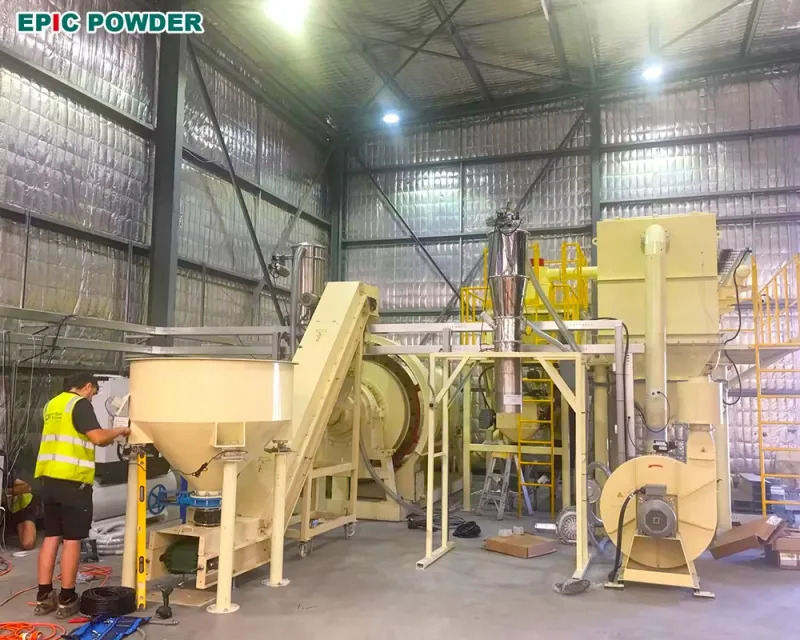
1. Energy Transfer in Ball Milling: The Essence of Refinement
To discuss which parameter is most critical, we must first understand how ceramic powder becomes finer. Inside the ball mill jar, the grinding media (grinding balls) obtain kinetic energy through rotation. Subsequently, they act on the ceramic material through impact, shear, and friction (attrition).
- Impact Force: This is mainly responsible for breaking larger particles.
- Friction and Shear Forces: These are the keys to achieving submicron-level stripping and refinement.
The improvement of fineness is essentially a process of effective energy input. Speed determines the “intensity” of energy. Time determines the “total amount” of energy. The media ratio determines the “transfer efficiency” of energy.
2. Core Parameter I: Ball Milling Speed (Ceramic Powder Fineness & Intensity Control)
Rotation speed is often considered the “soul parameter” of the ball milling process. It directly determines the motion state of the grinding balls inside the jar.
Three Typical Motion Modes
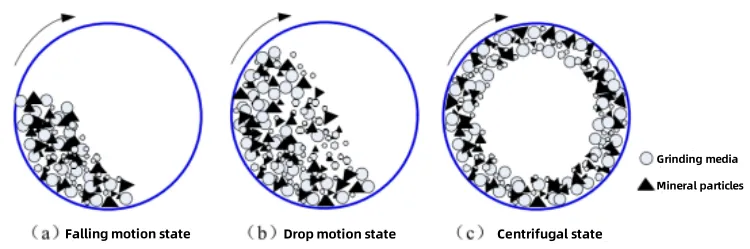
- Cascading (Low Speed): Grinding balls rise to a certain height with the jar wall and then slide down. At this time, friction and shear dominate. This is suitable for ultra-fine grinding, but efficiency is low.
- Cataracting (Critical Speed): Grinding balls are lifted to the highest point and then fall freely. This creates a huge impact force. It is the most effective state for breaking medium-to-large particles and improving fineness.
- Centrifuging (Over Speed): Grinding balls stick to the jar wall due to centrifugal force and do not fall. At this point, the grinding action almost stops. Energy is wasted completely.
Impact Weight on Fineness
The impact of rotation speed has a “threshold effect.” If the speed does not reach 70%-85% of the critical speed, the grinding balls cannot generate enough impact energy. No matter how long you grind, the ceramic powder fineness will hardly break through a certain bottleneck. Therefore, in the early stage of ball milling, speed is the first key factor in determining crushing efficiency.
3. Core Parameter II: Grinding Time (Ceramic Powder Fineness & Cumulative Effect)
If speed is instantaneous power, then time is the total work done.
The Marginal Diminishing Returns of Ceramic Powder Fineness Over Time
Experimental data shows that the relationship between ceramic powder fineness and time is not linear. In the early stage of ball milling, the particle size drops rapidly. However, after a certain period (usually 12-24 hours, depending on the material), the rate of fineness reduction slows down significantly. It even enters a “plateau period.”
The “Reverse Coarsening” Phenomenon
This is the most dangerous trap in the time parameter. When the grinding time is too long, the surface energy of the ultrafine powder increases sharply. Particles tend to undergo stress-induced physical agglomeration or chemical bonding. At this point, continuing to increase time will not make the powder finer. Instead, it leads to “pseudo-coarsening.” It also increases equipment wear and impurity introduction.
Impact Weight on Fineness
Time is the key to ensuring fineness consistency. However, it cannot compensate for defects in speed or media ratio. If the speed is set incorrectly, simply extending the grinding time is not only inefficient but also destroys the activity of the powder.
4. Core Parameter III: Media Ratio (The Transfer Network)
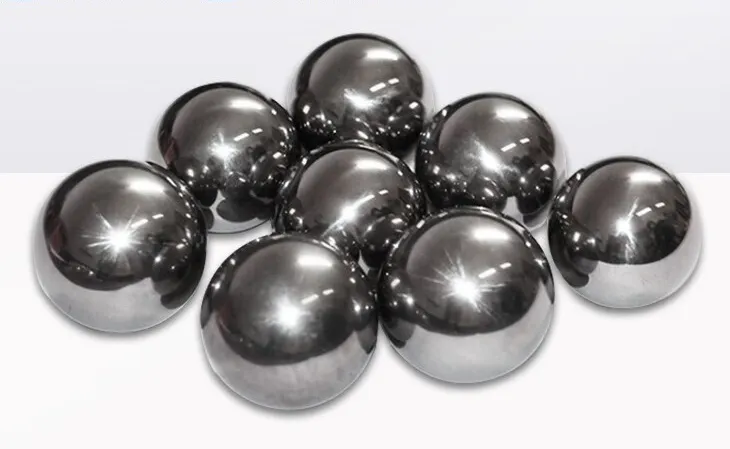
The media ratio usually includes the ball-to-material ratio (mass ratio of grinding balls to material) and grading (the proportion of grinding balls of different diameters).
Ball-to-Material Ratio: Space Occupancy and Collision Probability
The ball-to-material ratio determines the filling degree of the material in the gaps between the grinding balls.
- High Ball/Low Material: Collision frequency is high and refinement is fast. However, ineffective collisions (dry wear) between balls increase. This easily introduces media contamination.
- Low Ball/High Material: The material absorbs too much impact energy. It forms a “cushion,” causing crushing efficiency to drop significantly.
Grading: Eliminating Grinding Blind Spots
This is the most frequently ignored technical barrier. Large balls are responsible for crushing large particles. Small balls fill the gaps to increase the friction area. A scientific grading of “large balls driving small balls” can significantly reduce the Span value (particle size distribution width) of the final powder.
Impact Weight on Fineness
The media ratio is the key to affecting the ultimate fineness limit (Submicron Limit). In processes requiring a $D50$ below $0.5\mu m$, a reasonable media grading is often more effective than simply increasing the rotation speed.
5. In-depth Comparison: Which is the “Primary Key”?
To answer this question more intuitively, we can examine the weights of parameters by dividing the ball milling process into three stages:
| Stage | Core Task | Key Parameter | Weight Ranking |
| Initial (Crushing) | Reduce large particle size | Speed | Speed > Time > Media Ratio |
| Middle (Refinement) | Increase submicron content | Time + Media Ratio | Time ≈ Media Ratio > Speed |
| Late (Homogenization) | Control size distribution | Media Ratio | Media Ratio > Time > Speed |
Conclusion:
- If you pursue “Efficiency”: Speed is the key. You can complete the preliminary crushing in the shortest time by finding the best balance point of critical speed.
- If you pursue “Extreme Fineness”: The media ratio (especially the use of micro-balls) is key. It determines the physical upper limit of grinding.
- If you pursue “Stability”: Standardization of the time parameter is the key.
6. Optimization Path for Ceramic Powder Ball Milling
When determining process parameters, it is recommended to follow this scientific workflow:
- Determine the Ball-to-Material Ratio: First, set a reasonable ratio based on the density and hardness of the ceramic material. This usually fluctuates between 2:1 and 10:1.
- Find the Optimal Speed: Find the speed point that generates the maximum impact energy. You can do this by observing the operating sound of the jar or performing power analysis.
- Determine Time via Gradient Experiments: Fix the speed and ratio. Take samples to test particle size at regular intervals. Draw a “Fineness-Time Curve” to find the turning point where marginal effects are greatest.
- Refine Grading Optimization: Introduce small-diameter grinding balls for fine-tuning to address uneven particle size distribution.
7. Conclusion
In the journey of ceramic powder ultra-refinement, speed, time, and media ratio do not exist in isolation. They form a triangular support system for energy conversion.
- Speed gives the “soul” to the energy.
- Time accumulates the “work” of the energy.
- Media Ratio builds the “path” for the energy.
There is no absolute single key parameter. There is only the parameter combination that best fits the material characteristics. For manufacturers of lithium battery ceramics or structural ceramics pursuing high purity and high performance, the true key to competitiveness is finding the “Golden Intersection” of these three variables through Design of Experiments (DOE).

“Thanks for reading. I hope my article helps. Please leave a comment down below. You may also contact Zelda online customer representative for any further inquiries.”
— Posted by Jason Wang
 English
  العربية
  Español
  Português
  Français
  Türkçe
  Tiếng Việt
  Русский