
Limestone (CaCO3) is one of the most versatile industrial minerals on the planet. From its role as a critical reagent in Power Plant Flotation Desulfurization (FGD) to its use in cement production, Autoclaved Aerated Concrete (AAC) blocks, and the chemical industry, the demand for finely ground limestone is insatiable. However, the question for plant managers and engineers remains: Which grinding technology is best? While Vertical Roller Mills (VRM), Raymond Mills, and Hammer Mills all have their place, the Ball Mill remains the global industry standard for limestone processing. This article explores the mechanical, operational, and financial reasons why the ball mill is the superior choice for limestone grinding in 2026.
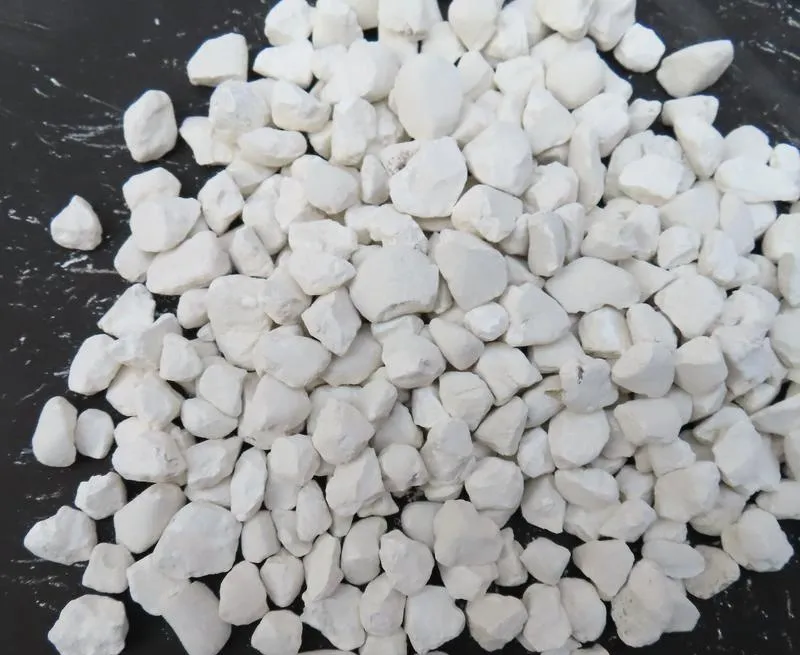
Unmatched Product Fineness and Distribution
The primary goal of limestone grinding is often to increase the surface area for chemical reactions.
A. Achieving the “Sweet Spot” (200-325 Mesh)
In applications like FGD (Flue Gas Desulfurization), limestone must be ground to a point where 90% passes through a 325-mesh screen. A Limestone Grinding Ball Mill excels at this fine-grinding range. Unlike impact-based mills which struggle to produce consistent fines below 100 mesh, this equipment uses a combination of impact and attrition to ensure every particle meets the required specification.
B. Narrow Particle Size Distribution (PSD)
Because the material stays in the ball mill for a controlled residence time, the resulting powder has a very consistent particle size distribution. In the production of AAC blocks or high-grade cement, a “tight” PSD is critical for the structural integrity of the final product. Other mills often produce “oversize” particles that can ruin a batch of chemical reagent.
Superior Reliability and Mechanical Simplicity
In industrial operations, downtime is the silent profit killer.
A. High Operational Rate
A ball mill is essentially a robust steel drum with very few moving parts compared to a Vertical Roller Mill (VRM). A VRM has complex hydraulic systems, internal rollers, and high-pressure seals that are prone to failure. A ball mill, once aligned, can run for 24 hours a day, 365 days a year, with an availability rate often exceeding 95%.
B. Ease of Maintenance
Maintaining a ball mill does not require highly specialized hydraulic technicians. Replacing liners or adding grinding media (steel balls) is a straightforward process that can be performed by a standard site maintenance team. This simplicity is a massive advantage in remote mining locations or developing industrial zones.
Versatility: Wet vs. Dry Limestone Grinding Ball Mill
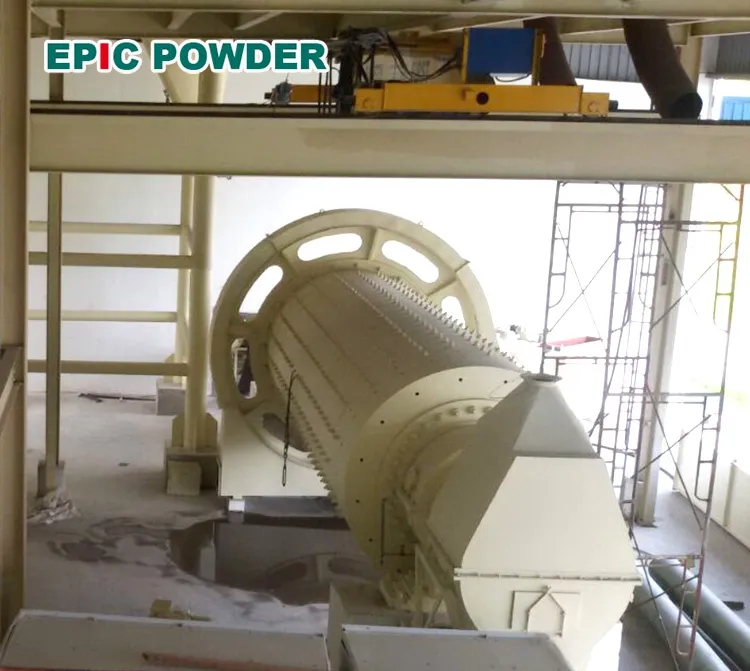
Limestone processing often requires different moisture environments, and the ball mill is the only technology that masters both.
A. The FGD Wet Advantage
In most power plant desulfurization units, the limestone needs to be turned into a slurry. A wet-type Limestone Grinding Ball Mill grinds the limestone and mixes it with water simultaneously. This eliminates the need for expensive drying equipment and dust collection systems required by dry-process mills like Raymond Mills.
B. Dry Grinding for Fillers
If the end goal is paper filler or plastic additives, a Dry Ball Mill coupled with a high-efficiency air classifier can produce ultra-fine powders (D97 < 10μm ) that other mechanical mills simply cannot reach without excessive wear.
Cost-Effectiveness: CAPEX and OPEX
When evaluating the Total Cost of Ownership (TCO), the ball mill presents a compelling case.
A. Initial Investment (CAPEX)
Generally, for the same production capacity, a ball mill system has a lower initial purchase price than a Vertical Roller Mill. For small to medium-sized enterprises (SMEs), this lower barrier to entry is often the deciding factor.
B. Low Grinding Media Cost
Limestone is relatively soft (Mohs hardness 3), but it is often accompanied by silica impurities which are abrasive. In a ball mill, you can use low-cost forged or cast steel balls. In a roller-based mill, abrasive impurities can cause “pitting” on expensive rollers, requiring costly resurfacing or replacement.
Scalability for Large Projects
For massive infrastructure projects or 1000MW power plants, scale is everything.
Ball mills can be manufactured in enormous sizes (up to 5 meters in diameter and 15 meters in length). This allows a single machine to handle 50, 100, or even 200 tons per hour (TPH). While VRMs can also reach these scales, the mechanical stress on a VRM at that size is exponentially higher, leading to increased risk of structural fatigue.
Comparing the Competitors
To understand why the ball mill wins, we must look at where others fail:
| Feature | Ball Mill | Raymond Mill | Vertical Roller Mill |
| Max Fineness | Excellent (up to 2500 mesh w/ classifier) | Moderate (max 400-600) | Good |
| Durability | Very High | Moderate | Moderate (Hydraulic issues) |
| Wet Grinding | Yes (Industry Leader) | No | Limited |
| Maintenance | Simple/Low Cost | Frequent/Manual | Complex/Specialized |
| Noise Level | High | Moderate | Moderate |
Adaptation to 2026 Technology: The “Smart” Ball Mill
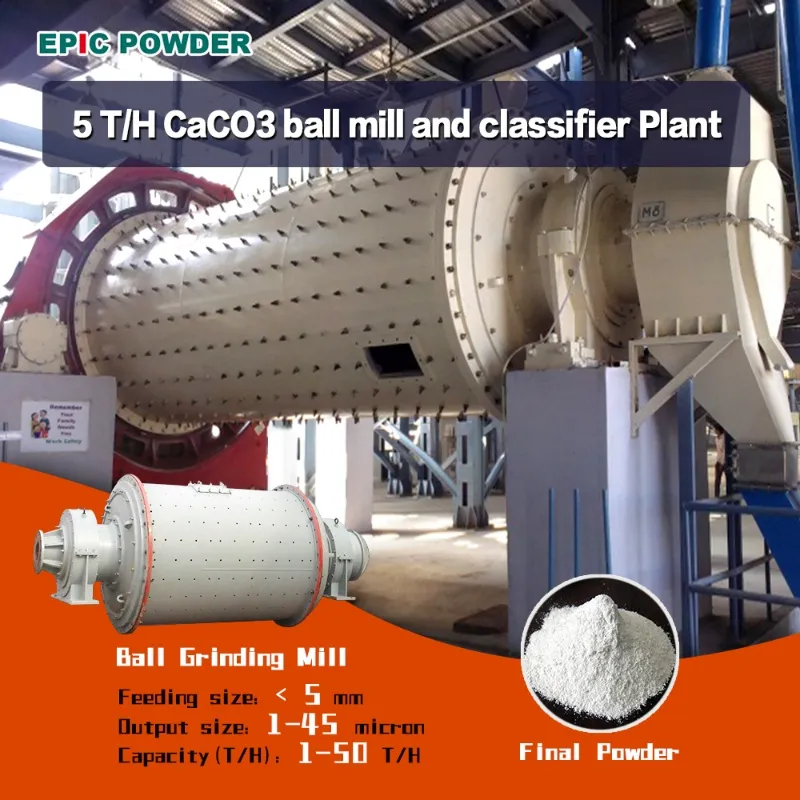
One historical criticism of ball mills was their energy consumption. However, modern ball mills for limestone have evolved:
- VFD Drives: Variable Frequency Drives allow operators to slow down the mill when the feed is soft, saving up to 15% in electricity.
- Rubber Liners: For limestone (which isn’t extremely hard), rubber liners can be used to drastically reduce noise and decrease the weight of the mill, lowering the starting torque required.
- AI Monitoring: New acoustic sensors can “hear” the fill level inside the mill, ensuring the ball-to-ore ratio is always at the mathematical optimum.
Conclusion
Why choose a ball mill for limestone? Because it offers a fail-safe balance of precision and power.
If your project requires high-purity limestone slurry for a desulfurization plant, or high-volume fine powder for cement, the Limestone Grinding Ball Mill provides a level of reliability that complex roller mills cannot match. Its ability to handle abrasive impurities without mechanical failure and its straightforward maintenance make it the most “future-proof” investment for mineral processing.

“Thanks for reading. I hope my article helps. Please leave a comment down below. You may also contact Zelda online customer representative for any further inquiries.”
— Posted by Emily Chen
 English
  العربية
  Español
  Português
  Français
  Türkçe
  Tiếng Việt
  Русский