
Powder materials serve as the foundation of modern industry. They play a key role in coatings, plastics, ceramics, pharmaceuticals, batteries, and many other fields. The performance of ultrafine powders directly determines the quality of final products. Mechanical grinding is one of the core technologies used to achieve ultrafine size, uniformity, and high activity. Among these technologies, Ball Mill VS. Sand Mill is a central topic in powder processing. These two methods represent the most widely used wet and dry grinding solutions. They operate through different mechanical mechanisms, which significantly influence particle size distribution, morphology, surface characteristics, dispersibility, and functional performance. This article systematically explains their principles, process parameters, differences, and application cases. It aims to provide a reference for powder engineering professionals.
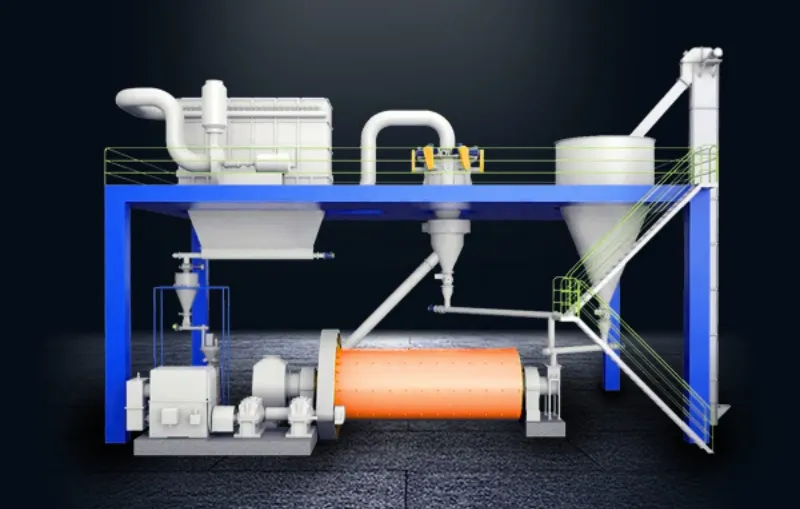
1. Basic Principles of Ball Milling and Sand Milling
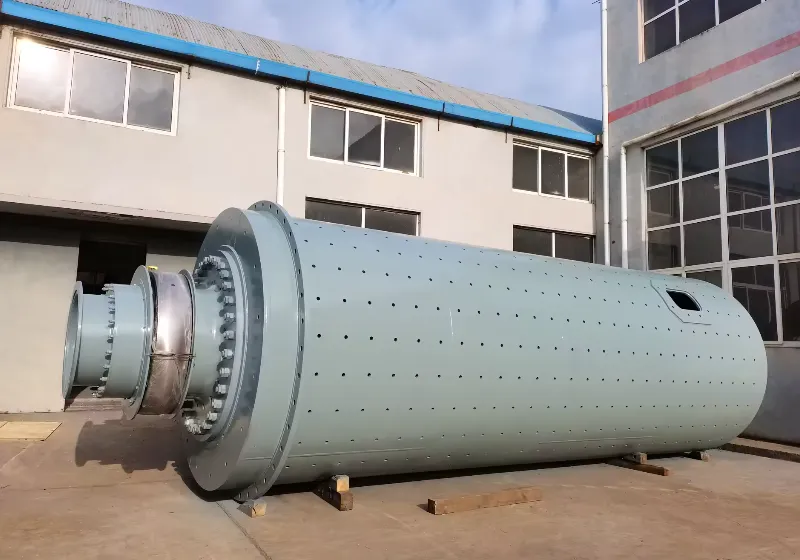
Ball milling uses a rotating cylinder filled with grinding media (steel or ceramic balls) to generate impact, friction, and shear forces that break and refine particles. It can be performed in dry or wet modes. Dry milling suits moisture-sensitive powders, while wet milling uses solvents and dispersants to prevent re-agglomeration and is commonly applied in nanoscale preparation. Planetary ball mills, with combined revolution and rotation, produce high centrifugal forces and significantly improve efficiency.
Sand milling, or bead milling, employs a vertical or horizontal chamber with a high-speed agitator and fine grinding media (0.1–3 mm). The slurry circulates rapidly, generating intense shear, collision, and extrusion forces. As a continuous wet process with high energy density, sand milling enables ultrafine “microscopic grinding,” achieving high shear rates (10–20 m/s) and uniform force distribution. It is particularly suitable for medium-viscosity slurries.
While both processes rely on mechanical energy, ball milling is dominated by intermittent impact and friction, whereas sand milling relies on continuous high-frequency shear and collision. This fundamental difference determines their effectiveness in modifying powder properties.
2. Effects of Process Parameters on Powder Properties
Powder properties include physical, chemical, and application performance. In the context of Ball Mill VS. Sand Mill, these properties are influenced differently due to distinct grinding mechanisms.
2.1 Particle Size and Particle Size Distribution
Grinding time, media size, and rotational speed are key parameters. In ball milling, the initial stage is dominated by particle breakage. Particle size decreases rapidly. In the later stage, friction dominates. Over-grinding may occur, leading to a broader particle size distribution.
Typical wet ball milling can reduce precipitated barium sulfate (BaSO₄) from micron size to 0.5–2 μm. However, further refinement to submicron size requires several hours or even dozens of hours.
Sand milling, due to its higher energy input, achieves faster size reduction within the same time. It can stably reach D50 < 0.3 μm or even nanoscale (50–100 nm). The particle size distribution is also narrower (Span < 1.0).
This is because the shear force in sand milling acts uniformly on each agglomerate. It avoids the “dead zones” seen in ball milling, which can lead to uneven particle sizes.
Experimental results show that after sand milling, the specific surface area of BaSO₄ increases from about 5 m²/g to 30–50 m²/g. In contrast, ball milling typically increases it only to 15–25 m²/g.
2.2 Particle Morphology and Surface Properties
The impact forces in ball milling tend to produce angular particle fracture. This results in irregular polyhedral shapes. Surface defects increase, and lattice distortion becomes more severe. In some cases, amorphization may occur, as indicated by the broadening of X-ray diffraction peaks.
This increases surface energy and reactivity. However, it may also introduce mechanochemical effects such as phase transformation. For example, anatase TiO₂ may transform into rutile.
In contrast, the shear forces in sand milling tend to “peel” the particle surface. This leads to more spherical or flaky particles. Surface smoothness improves, and sharp edges are reduced.
Surface modifiers (such as polycarboxylates) can be added during sand milling. This allows in-situ coating. It further reduces surface free energy and suppresses re-agglomeration caused by van der Waals forces and liquid bridges.
2.3 Dispersibility and Agglomeration Behavior
Agglomeration is a major issue in ultrafine powders. In Ball Mill VS. Sand Mill evaluations, sand milling clearly shows superior performance in breaking hard agglomerates due to its strong shear forces.
Wet ball milling improves dispersion when dispersants are added. However, the effect is limited.
Sand milling, with its high shear force and circulation, can completely break hard agglomerates (solid bridges). When combined with dispersants, it can achieve a zeta potential greater than ±40 mV. This ensures long-term stable dispersion.
In coating systems, sand-milled BaSO₄ shows significantly improved dispersibility. The sedimentation volume ratio decreases by more than 50%. In contrast, ball-milled products often require additional ultrasonic or high-speed dispersion.
2.4 Purity and Contamination
Media wear is a common issue in ball milling. Steel balls may introduce impurities such as Fe and Cr during long grinding processes. This affects the whiteness of powders like BaSO₄.
Ceramic balls or polyurethane linings can reduce contamination, but they increase costs.
Sand milling uses small-diameter, high-hardness zirconia beads. The wear rate is extremely low (<0.01%). Contamination is minimal. This makes it suitable for high-purity powder production.
In addition, sand milling allows temperature control through jacket cooling. This prevents thermal degradation of heat-sensitive powders.
2.5 Flowability, Bulk Density, and Functional Performance
After grinding, the specific surface area increases. Flowability usually decreases, as indicated by a higher Carr index. However, optimization of media ratio and post-processing methods (such as spray drying) can improve flowability.
Bulk density first decreases and then increases as particle size decreases. This is due to the filling effect.
In applications, ball milling and sand milling significantly enhance powder performance:
- In plastics, refined BaSO₄ improves compatibility and increases tensile strength by 20–40%.
- In ceramics, it promotes densification and reduces sintering temperature by 100–200°C.
- In battery materials, it increases active surface area and improves ion diffusion rates.
3. Comparison of Ball Milling VS. Sand Milling Processes
| Item | Advantages of Ball Milling | Disadvantages of Ball Milling | Advantages of Sand Milling | Disadvantages of Sand Milling |
|---|---|---|---|---|
| Equipment & Investment | Simple structure, low investment, flexible operation | – | – | High initial investment |
| Production Efficiency | – | High energy consumption, low efficiency, batch operation | High efficiency (5–10× output of ball milling), continuous | – |
| Particle Size Control | Suitable for coarse grinding | Weak nanoscale control | Strong ultrafine/nano capability, narrow distribution | Sensitive to slurry viscosity (>1000 mPa·s reduces efficiency) |
| Contamination Control | – | Easy to introduce metal impurities | Extremely low contamination, suitable for high-purity powders | High wear resistance requirements |
| Application Scenarios | Small batch, multi-variety, dry grinding, brittle materials | Not suitable for large-scale ultrafine production | Large-scale wet ultrafine processing | Not suitable for dry or very high-viscosity systems |
4. Application Example and Quantitative Impact
| Process | Grinding Conditions | D50 Particle Size | Specific Surface Area | Coating Gloss Improvement | Plastic Impact Strength Improvement (vs untreated) |
|---|---|---|---|---|---|
| Raw Material | – | ≈5 μm | <5 m²/g | – | – |
| Planetary Ball Milling Only | 300 rpm, ball/material ratio 10:1, wet, 4 h | 1.2 μm | 18 m²/g | +10% | – |
| Ball Milling + Sand Milling (Recommended) | Sand milling: bead size 0.8 mm, linear speed 12 m/s, 2 h | 0.25 μm | 42 m²/g | +25%+ | +35% (vs ball milling only) |
5. Process Optimization and Development Trends
Key optimization factors include:
- Media filling rate: 60–80%
- Gradient distribution of media size
- Dispersant dosage: 0.5–2 wt%
- pH control
- Temperature below 50°C
The introduction of online particle size monitoring (laser particle size analyzer) and intelligent control systems enables closed-loop regulation. This helps avoid over-grinding.
Under the trend of green manufacturing, low-energy sand mills (such as stirred bead mills) and media-free grinding technologies (such as high-pressure homogenization) are emerging.
In the future, combining mechanochemical modification will enable integrated processes. Grinding, coating, and activation can be achieved in a single step. This will further enhance the value of powder materials.
6. Conclusion
In summary, Ball Mill VS. Sand Mill is not simply a comparison of two machines. It represents two fundamentally different grinding philosophies.
Ball milling offers flexibility and simplicity. Sand milling provides efficiency and precision. In modern powder processing, combining both processes is often the optimal solution.
As technology advances, the importance of understanding Ball Mill VS. Sand Mill will continue to grow. It will play a critical role in achieving high-performance powder materials and driving industrial innovation.

“Thanks for reading. I hope my article helps. Please leave a comment down below. You may also contact Zelda online customer representative for any further inquiries.”
— Posted by Emily Chen
 English
  العربية
  Español
  Português
  Français
  Türkçe
  Tiếng Việt
  Русский